How to Propagate Succulents: Leaf, Stem, and Offset Methods
Echeveria, Sedum, Crassula, Haworthiopsis, Aloe — these genera share one propagation characteristic that distinguishes them from most other houseplants: a detached leaf or stem section can produce a new plant without water, without soil contact at first, and without any intervention beyond leaving it alone in a bright, dry location. The cut surface needs to callous — to dry and seal over, typically within 24–72 hours — before contact with moisture. A freshly cut succulent leaf placed directly into wet soil will rot rather than root. This callousing step is the central rule of succulent propagation.
How to propagate succulents — quick overview
- Leaf cuttings: Works for Echeveria, Sedum, Crassula, and many others. Remove a healthy leaf, let it callous, lay on dry soil, and wait. Slowest method.
- Stem cuttings: Works for Jade Plant, Burro’s Tail, Aeonium, and elongated succulents. Cut a stem, callous, plant in dry soil. Faster than leaf cuttings.
- Offsets (pups): Works for Haworthiopsis, Aloe, Agave, and clustering rosette types. Separate a pup from the mother plant and pot it independently. Fastest method.
- Division: Works for clump-forming succulents. Separate root-bound clusters into individual sections at repotting time.
Method 1: Leaf cuttings (Echeveria, Sedum, Crassula)
Roots: 2–4 weeks · Usable plant: 3–5 months
Leaf propagation works for many, but not all, succulents. It works reliably for Echeveria and Sedum. It works less reliably for Haworthiopsis and does not work at all for Aloe or Agave (which must be propagated from offsets).
How to take a leaf cutting:
- Select a plump, healthy leaf from the lower portion of the plant — middle or outer leaves on Echeveria, along the stem on Sedum.
- Remove the leaf by wiggling it gently side to side while pulling slightly away from the stem. The goal is a clean separation at the attachment point. A leaf that tears and leaves the base attached to the stem will not root; a leaf removed cleanly will. Do not cut — remove by gentle pulling.
- Check the base of the leaf. A clean, flat base means successful removal. A ragged or partial base means the leaf is unlikely to produce roots.
- Allow the leaf to callous. Lay it flat on a dry paper towel or tray in indirect light for 24–72 hours. The cut end should seal over and appear dry before you proceed.
After callousing:
- Lay the calloused leaf flat on the surface of dry cactus or succulent mix. Do not bury it. Do not water.
- Place in bright indirect light — a bright windowsill is ideal. Direct sun at this stage can desiccate the leaf before it roots.
- Check weekly. After 1–3 weeks, tiny pink or red roots will emerge from the base of the leaf. After 3–6 weeks, a small rosette of new leaves appears at the base alongside the roots.
- Once the new plantlet is clearly developing (small leaves visible), you can begin misting the soil lightly around the roots every 5–7 days. Do not water the parent leaf — it will shrivel and die naturally as it transfers its energy to the new plantlet. This is expected.
- Continue misting lightly until the new plantlet is 2–3cm across, then transition to normal care with a dedicated small pot.
Timeline: First roots: 2–4 weeks. New rosette visible: 4–8 weeks. Transplantable: 8–12 weeks.
Method 2: Stem cuttings (Jade Plant, Burro’s Tail, Aeonium)
Roots: 3–6 weeks · Usable plant: 6–10 weeks
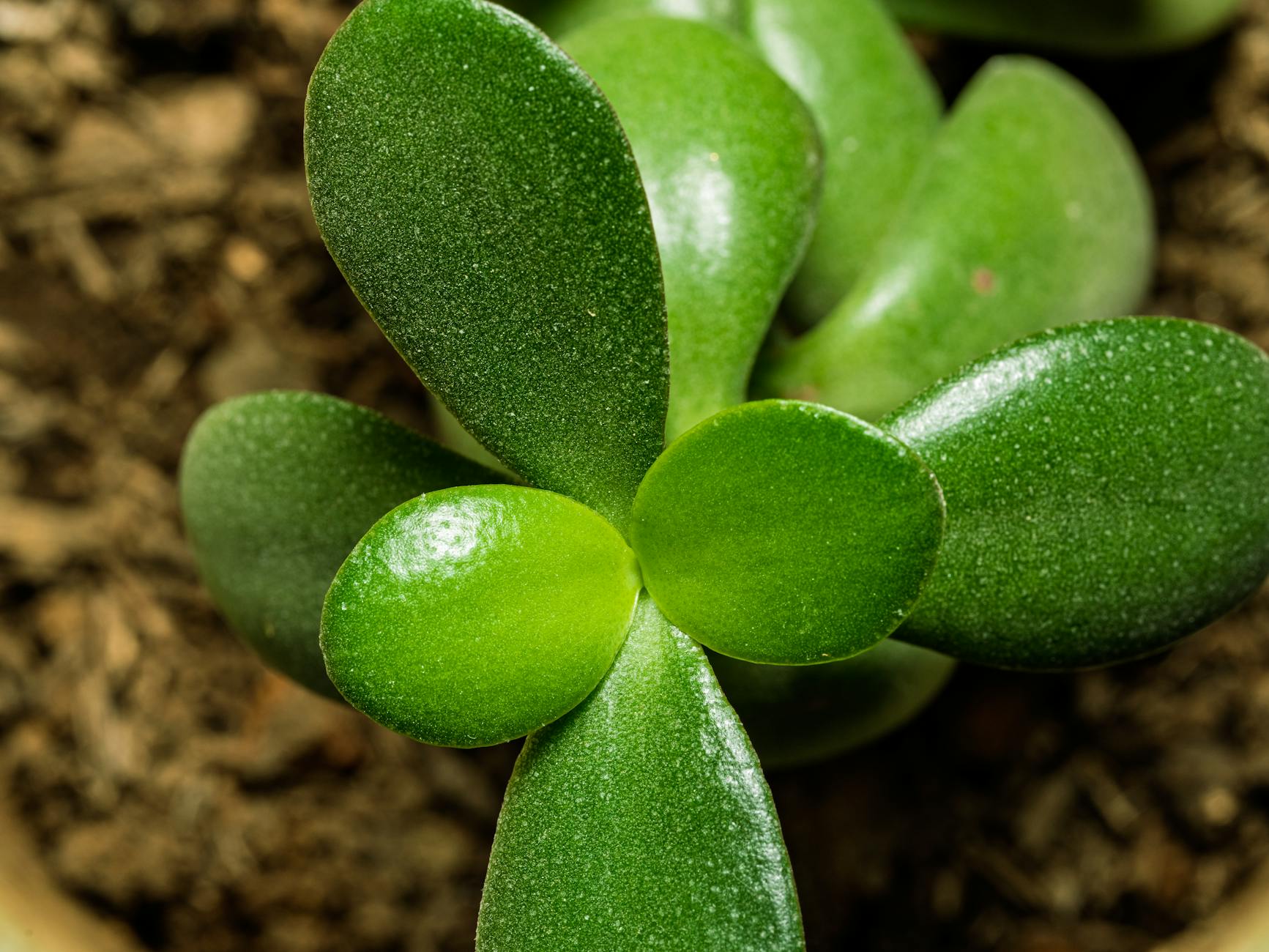
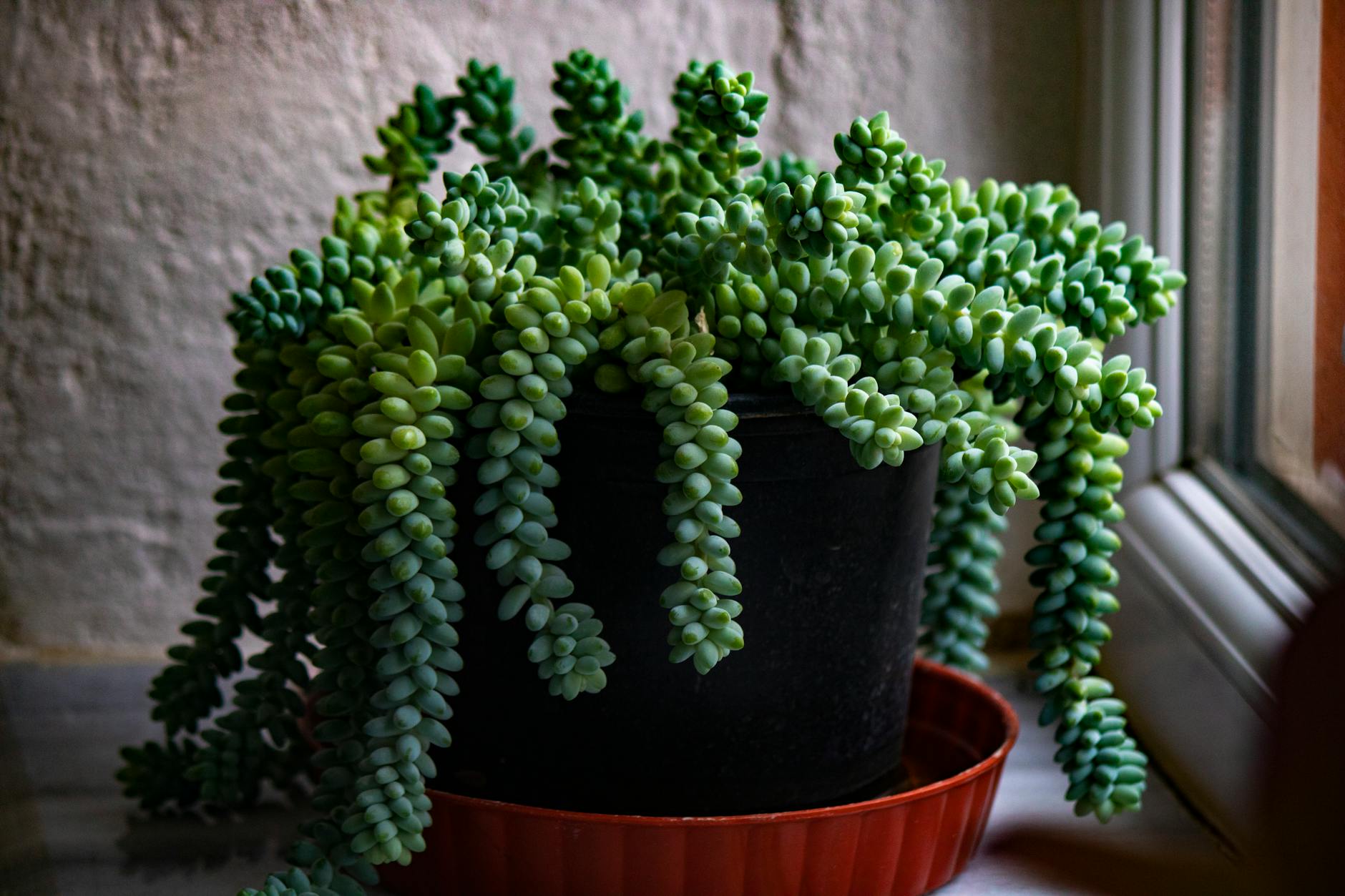
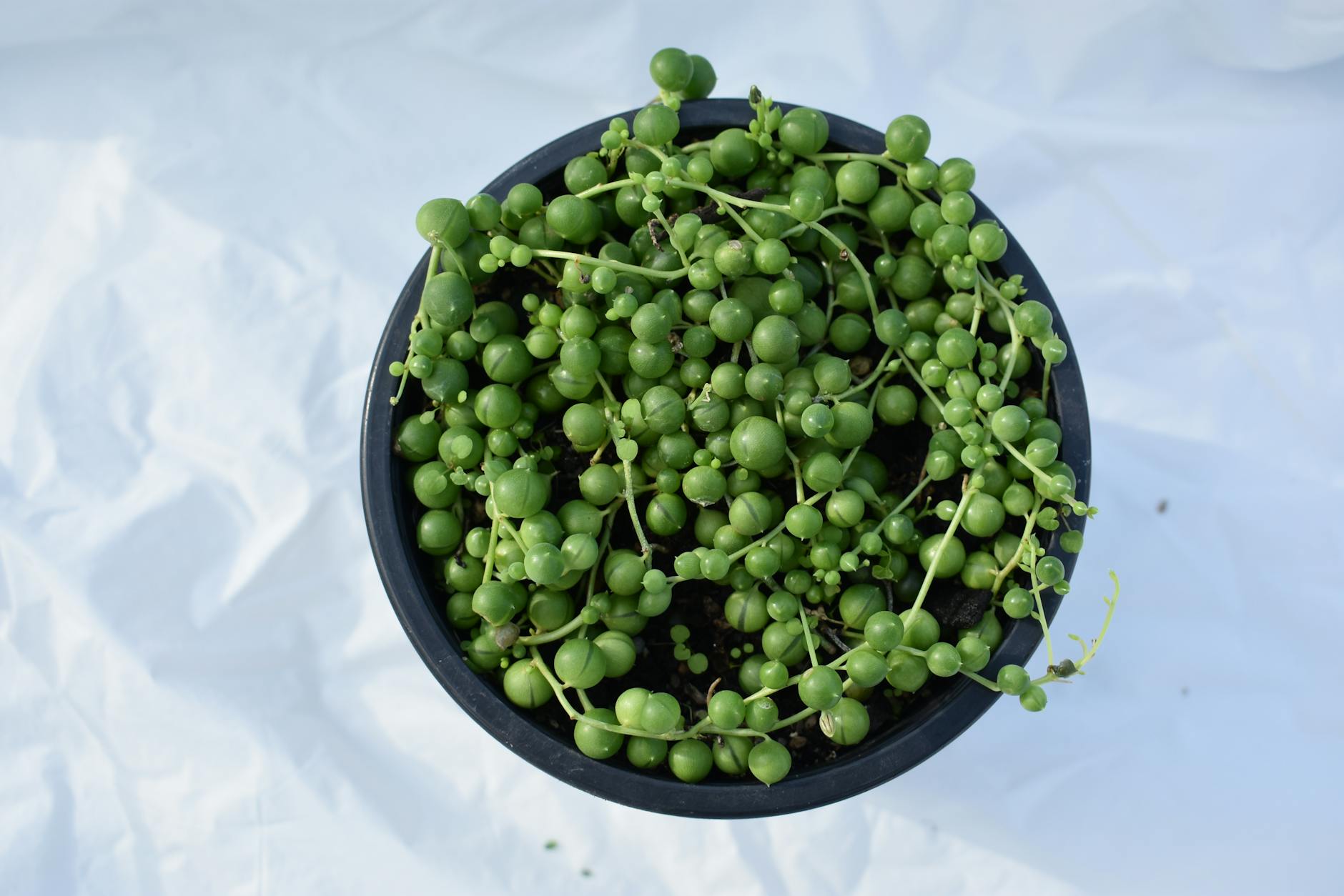
Stem cuttings are faster and produce larger plants more quickly than leaf cuttings. They work well for succulents with distinct stems rather than tight rosettes — Crassula ovata (Jade Plant), Sedum morganianum (Burro’s Tail), Aeonium, Graptopetalum, and Senecio rowleyanus (String of Pearls).
- Cut a healthy stem section 5–10cm long using a clean, sharp blade. For Jade Plant, cut just below a leaf node. For Burro’s Tail, cut carefully — the leaves fall off at the slightest contact.
- Remove the lower leaves from the bottom 2–3cm of the cutting, leaving a clean stem section to be buried.
- Allow to callous. Set the cutting upright in a dry location for 2–5 days. The cut end should form a visible dry seal before planting. This step is critical — planting too soon causes rot.
- Plant the calloused end 2–3cm deep in dry cactus mix. Do not water.
- Place in bright indirect light. Allow the soil to remain completely dry for the first 10–14 days.
- After 14 days, water very lightly — a small amount around the base of the cutting. The soil should dry out within 3–4 days.
- Repeat light watering every 7–10 days. The cutting is rooted when it resists a gentle tug (typically 3–6 weeks) and begins producing new growth.
For Jade Plant (Crassula ovata), see the full Jade Plant care guide. For Burro’s Tail (Sedum morganianum), see the Burro’s Tail care guide. For String of Pearls (Senecio rowleyanus), see the String of Pearls care guide.
Method 3: Offsets / pups (Haworthiopsis, Aloe, Agave)
With roots: already present · usable in 4–8 weeks. Without roots: 2–4 weeks to root · usable in 6–10 weeks.
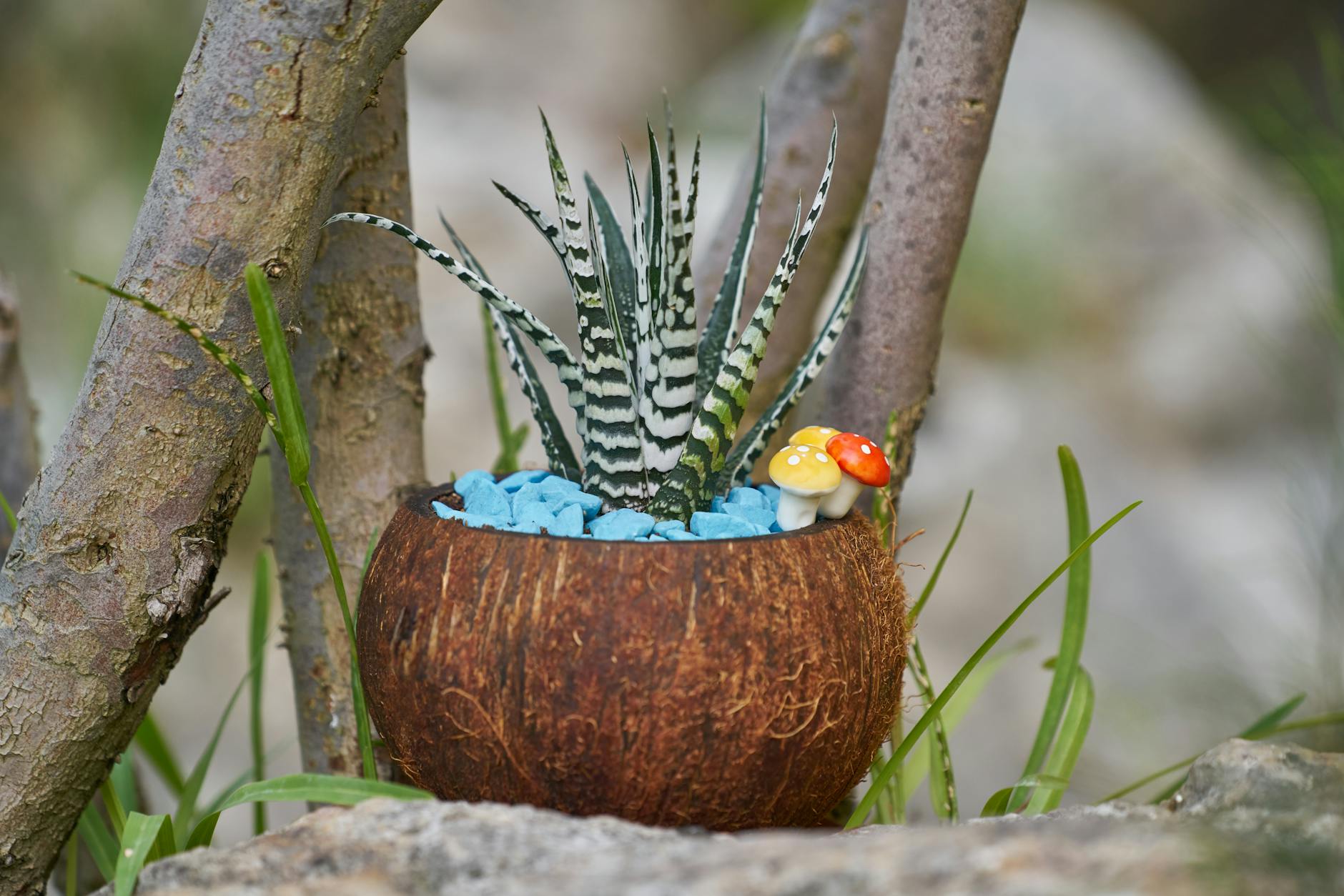
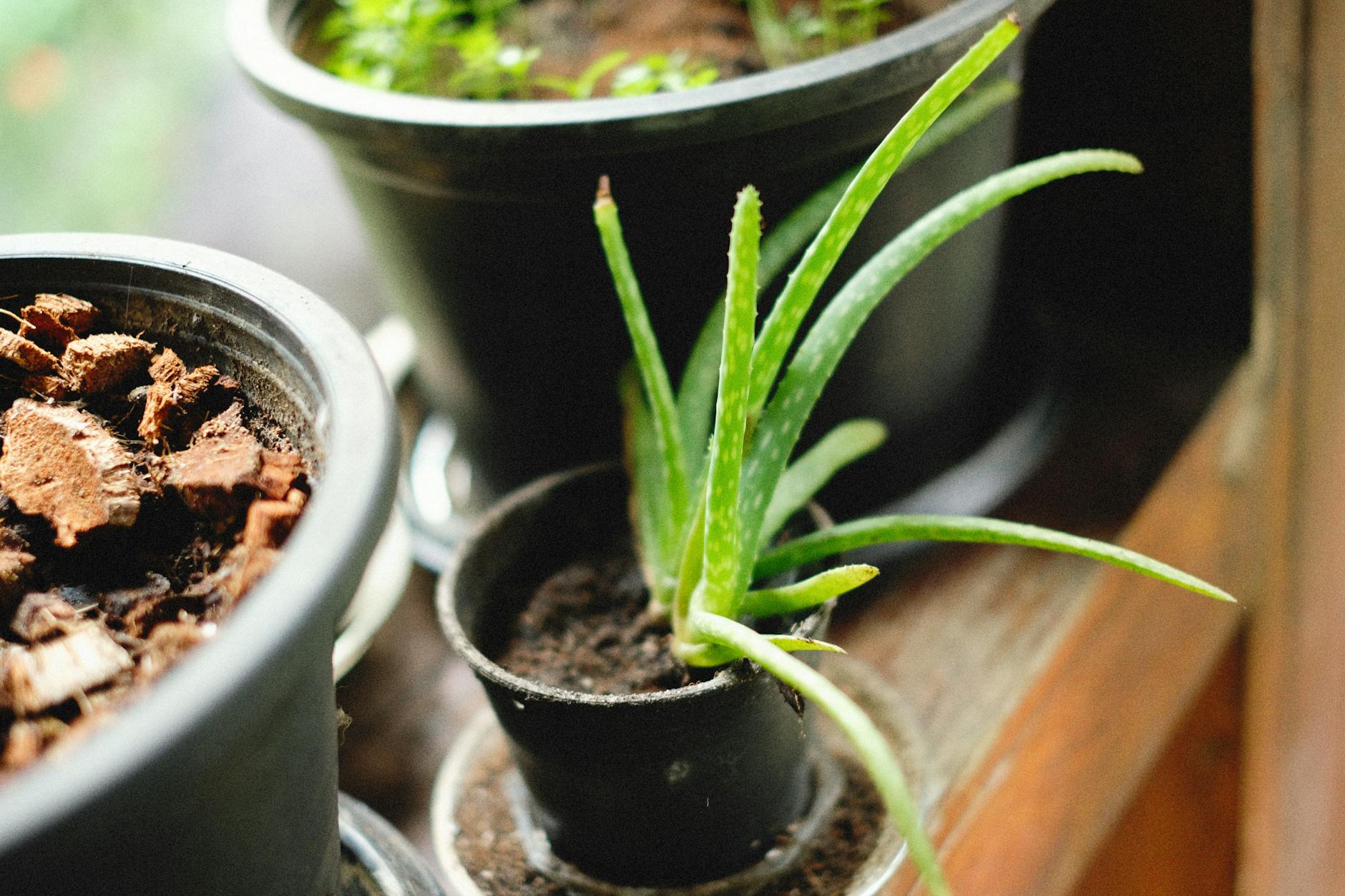
Many succulents reproduce by producing offsets — small rosettes that emerge from the base of the mother plant. Haworthiopsis fasciata (Zebra Haworthia), Aloe vera, and Agave all propagate readily by this method. For these plants, offset division is the primary and often the only practical propagation method.
- Wait for the offset to reach appropriate size. An offset that is less than one-third the size of the mother plant will struggle to establish independently. Wait until it is at least one-third the size and has its own visible leaf structure.
- Remove the plant from its pot to access the base. The offset will be connected to the mother plant at the root level.
- Separate the offset by pulling gently or cutting the connecting root tissue with a clean knife. Each offset needs at least a small root system of its own — a completely rootless pup is harder to establish but usually succeeds with care.
- If the offset has roots: allow any cut surfaces to dry for 30–60 minutes, then pot in dry cactus mix.
- If the offset has no roots: allow the base to callous for 1–2 days before placing on dry cactus mix. Treat similarly to a leaf cutting — minimal water until roots develop.
- Do not water for the first 5–7 days. After that, water lightly every 10–14 days.
For Haworthiopsis fasciata offset propagation, see the Zebra Haworthia care guide. For Aloe vera pup separation, see the Aloe Vera care guide.
Division (for clump-forming rosette types)
Roots: already present · Usable plant: 4–8 weeks adjustment
Some succulents — Haworthiopsis, Sempervivum, and other varieties that form tight clusters of rosettes rather than producing separate pups on stolons — are more easily separated as a full division at repotting time than by removing individual offsets one by one. Remove the plant from its pot and gently tease the root ball apart by hand, separating along the natural divisions where a cluster of leaves has its own root mass attached. Pot each division individually in dry cactus mix, following the same aftercare as a rooted offset: withhold water for 5–7 days, then water lightly every 10–14 days. Because the roots stay attached to each division throughout, there is little to no rooting delay — divisions typically resume normal growth within 4–8 weeks, the same adjustment period as an offset that already had roots.
When is the best time to propagate succulents?
Spring and summer produce the fastest results across all succulent propagation methods. The combination of warmth (22–28°C) and longer day length accelerates root development significantly. Leaf cuttings laid in March or April produce rosettes by June. Stem cuttings planted in April typically root within 3–4 weeks.
Autumn propagation is possible but timelines extend — stem cuttings that root in 3–4 weeks in May may take 6–8 weeks in October. In winter, leaf cutting success rates drop noticeably; stem cuttings from robust species can succeed above 20°C, but timelines are unpredictable.
Common propagation problems
Patience is the primary requirement for succulent propagation. The main variables are temperature (warmer = faster) and light (brighter = faster). Checking too frequently and watering in response to apparent lack of progress is the most common cause of failure.
Leaf rotting at the base before roots appear: The leaf was planted in wet soil, placed in a humid environment, or watered before roots were established. Succulents rot easily at the cut surface if moisture is present before callousing is complete. Retrieve the leaf, remove any rot, allow to callous again for 24–48 hours, and replace on dry (not damp) soil.
No roots or new growth after 6 weeks: Check that leaf cuttings are in adequately bright conditions — indirect bright light, not a dim interior room. At temperatures below 18°C, succulent leaf propagation slows to almost nothing. Move to a warmer location. Also check that the leaf had a clean removal — a leaf with a torn or partial base will not root.
Stem cutting collapsing and shrivelling: The cutting used up its moisture reserves before roots developed. This happens when the callousing period was too long (over 7 days) or when the cutting was very small and started with limited water reserves. Start again with a slightly larger cutting and shorten the callousing period to 3–4 days.
Offset establishing but then dying 2–3 weeks later: The offset was too small when separated, or was completely rootless. Rootless pups have a higher failure rate than those with some root development. In future, wait for the offset to reach one-third to half the size of the mother plant before separating.
How to care for newly propagated succulents
Once rooted leaf cuttings or stem cuttings have established — roots present and new growth visible — transition to normal succulent care:
- Watering: Soak the soil thoroughly, then wait until completely dry before watering again. For small newly propagated plants, this is typically every 10–14 days in summer. Cactus mix dries faster than standard potting soil, which is the intent.
- Light: Move to the brightest available position. Newly established succulents benefit from 4–6 hours of direct or very bright indirect light for fastest development.
- Potting: Move newly rooted leaf cuttings to individual 6–8cm pots once the new rosette is 2–3cm across. Use cactus mix with additional perlite.
- First repotting: Most succulents need repotting 6–12 months after establishment, once roots have filled the starter pot.
Wondering if your cutting is ready to pot up yet?
GreenIQ tracks progress per cutting and reminds you at the right moment — water changes, potting, first feeding.
Free, no account, no tracking.
Install GreenIQFrequently asked questions
Why is my succulent leaf not producing growth after 6 weeks?
Two causes: the leaf did not separate cleanly at the base (rooting requires the full attachment point), or conditions are too cool and dim. Move to a brighter, warmer location and check for small pink roots at the leaf base.
Do I need to water succulent cuttings during rooting?
No, not until roots or a plantlet begin to develop. For leaf cuttings, keep the soil completely dry until a new rosette is visible, then mist lightly around the roots every 5–7 days — do not water the parent leaf itself. For stem cuttings, keep the soil dry for the first 10–14 days, then water lightly every 7–10 days once rooting begins. Overwatering before roots establish is the most common cause of rot in succulent propagation.
Can I propagate succulents in water?
No. Succulent cuttings root by first forming a callus — a dry seal over the cut surface — which typically takes 24–72 hours. Water propagation keeps the cut surface constantly moist, which prevents that seal from forming and causes the cutting to rot instead of root. This is the same failure mode described for leaf and stem cuttings placed in wet soil too early: use dry soil and minimal moisture, and let the cut heal before it ever touches water.
Which succulents cannot be propagated from leaf cuttings?
Aloe and Agave do not root from leaf cuttings at all — both must be propagated from offsets instead. Haworthiopsis can produce roots from leaf cuttings, but less reliably than Echeveria or Sedum, so offset division is the more dependable method for it too. Cactus propagation from cuttings follows a different process than the one described in this guide.