Plant Care Guide
Zebra Haworthia Care: The Complete Guide
Zebra Haworthia (Haworthiopsis fasciata) is a compact rosette succulent native to South Africa, known for its dark-green leaves crossed by raised white bands, slow growth that stays under 15 cm, and complete pet safety verified by toxicity databases. Water deeply every 2–3 weeks in summer and every 4–6 weeks in winter, allowing the soil to dry fully between waterings.
Quick facts
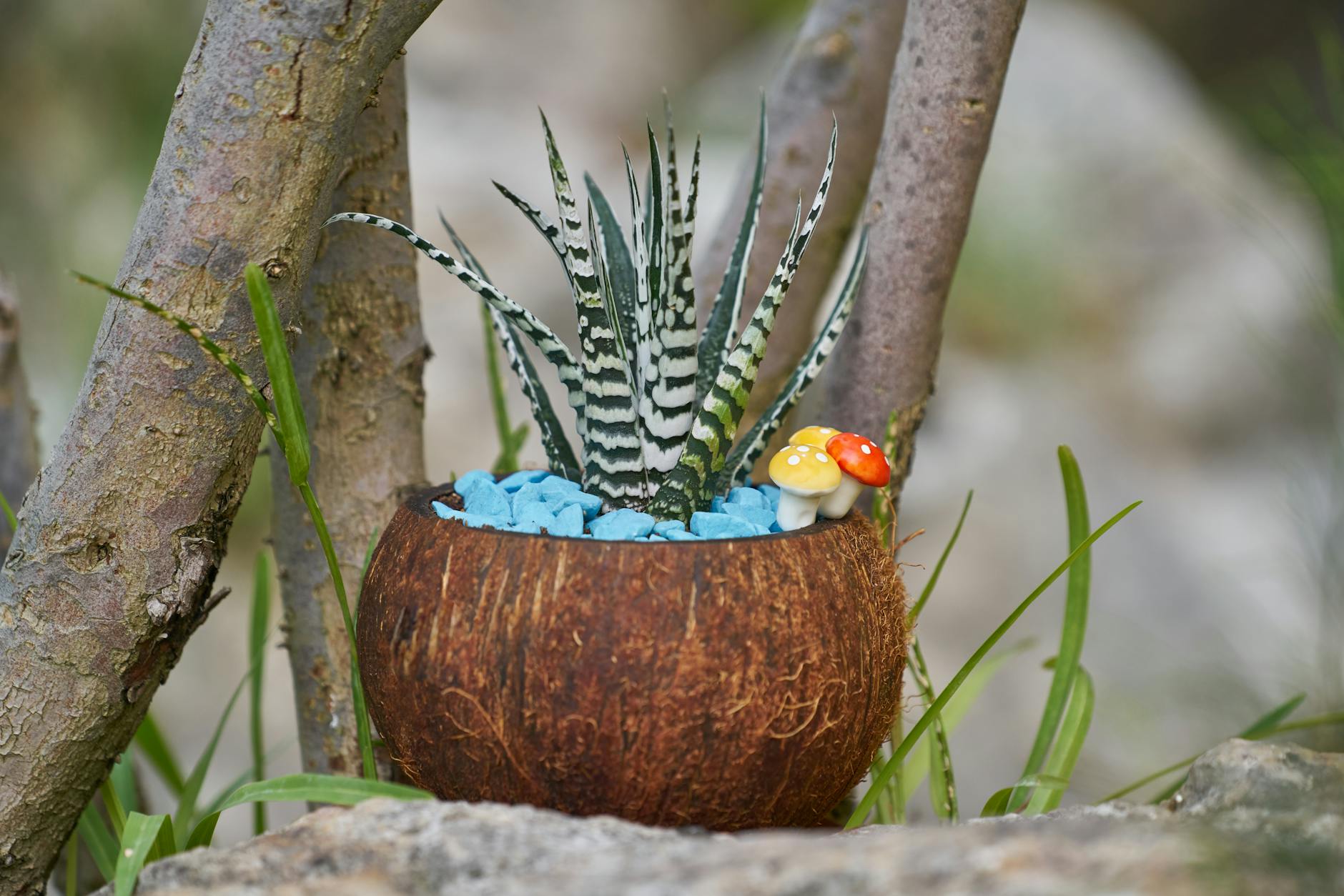
Haworthiopsis fasciata is the correct scientific name for the plant sold in most shops as Zebra Haworthia — not Haworthia fasciata, the name used in most care guides and on most retail labels. In 2013, a genetic reclassification separated the harder-leaved, tuberculate species into a new genus, Haworthiopsis, while retaining the name Haworthia for the softer-leaved windowed species. Both names remain in wide circulation, and the older name persists in most commercial listings. What the name does not change is what makes the plant recognisable: rows of white, raised tubercles running across the outer surface of each dark green leaf — a three-dimensional zebra pattern that is structural, not painted on, and visible from across a room.
At a glance: Zebra Haworthia care
- Light: Bright, indirect. Tolerates some direct morning sun. Avoid prolonged direct midday sun.
- Water: Soak when soil is completely dry — every 2–3 weeks. Very drought tolerant.
- Humidity: Low. Normal indoor conditions are entirely suitable.
- Temperature: 10–30°C. Handles cool rooms well; avoid frost and cold-wet combination.
- Toxicity: Non-toxic to cats, dogs, and horses — confirmed by ASPCA.
- Difficulty: Easy. Compact, slow, and forgiving of dry conditions.
What is a Zebra Haworthia?
Haworthiopsis fasciata is native to the Eastern Cape province of South Africa, growing in rocky, semi-arid terrain under the partial shade of shrubs and rock outcroppings — conditions of low rainfall, rocky well-drained soil, and bright but filtered light. The detail that matters most for indoor care: despite its South African origins, this is not a full-sun desert plant. It grows in the shade of rocks, not in direct open sun.
The genus Haworthiopsis was split from Haworthia in the 2013 reclassification based on genetic analysis. H. fasciata — along with several other hard-leaved, white-banded species — was moved into the new genus. For the home grower, the practical consequence is mainly label confusion: products, databases, and care guides may use either name interchangeably, and both refer to the same plant.
An important disambiguation: “Zebra Plant” is also a common name for Aphelandra squarrosa, a flowering tropical plant in the Acanthaceae family. These two plants share a common name and nothing else. Aphelandra squarrosa requires high humidity, consistently moist soil, warmth above 18°C, and regular fertilizing; Haworthiopsis fasciata is a drought-tolerant succulent from a semi-arid environment that thrives on neglect. If a care guide recommends moist soil and 60%+ humidity for a “Zebra Plant,” it is describing Aphelandra — not this plant.
How much light does a Zebra Haworthia need?
Haworthiopsis fasciata needs bright, indirect light — a well-lit windowsill or bright ambient room light. An east-facing position, with gentle morning sun and indirect light through the rest of the day, is close to ideal. It tolerates 1–2 hours of direct morning sun without damage, and in the lower-intensity light of autumn and winter some direct sun is beneficial for maintaining colour.
Prolonged direct midday or afternoon sun in summer causes leaf discolouration. Despite growing in South Africa, H. fasciata evolved in the shade of rocks — not in open sun exposure.
Signs your Zebra Haworthia needs more light:
- Leaves turning pale green or yellowish rather than the characteristic dark olive-to-deep green
- The rosette opening up and stretching outward (etiolation) rather than remaining compact
- Slower growth even by this plant’s already unhurried standard
Signs of too much direct sun:
- Reddish or brown discolouration on the outer leaf surfaces
- Bleached white patches on the upper portions of leaves exposed to direct sun
- Leaf tips turning dry and papery
How often to water a Zebra Haworthia
Soak thoroughly when the soil is completely dry throughout, then wait until it is completely dry again before repeating. In summer at room temperature, this is typically every 14–21 days. In winter, monthly watering or less is appropriate — the plant is in minimal growth and requires very little water.
Use the soak-and-dry method: water until water runs from the drainage holes, then do not water again until the mix has dried completely. Haworthiopsis fasciata is far more tolerant of drought than overwatering — the succulent leaves store significant water reserves, and the plant survives 4–6 weeks without water without permanent damage, similar to a Burro’s Tail or String of Pearls.
Signs of overwatering:
- The base of the rosette becoming soft or mushy — the most serious symptom, indicating root rot
- Leaves turning pale or translucent from the base upward
- A sour smell from the potting mix
Signs of underwatering:
- Leaves becoming very slightly wrinkled or less firm — the outer layer contracts as stored water is depleted
- Leaf tips drying slowly
The right humidity for a Zebra Haworthia
Low humidity is ideal. Normal indoor conditions (40–60%) are entirely adequate. The plant handles the dry winter air of a centrally heated home without any special attention. In unusually humid conditions (above 70% consistently), reduce watering frequency to compensate for slower evaporation.
Best temperature range for a Zebra Haworthia
10–30°C is the comfortable range. Haworthiopsis fasciata handles cooler rooms — unheated spare rooms, cool windowsills in winter — down to about 5°C without damage. What it cannot tolerate is frost, or the combination of cold and wet soil simultaneously.
What to avoid:
- Frost — cold damages the leaf cells even when conditions are otherwise acceptable
- Cold and wet conditions together — this is the fastest path to root rot in this genus
- Very hot conditions above 35°C for extended periods, which stress the leaves even in dry conditions
The best soil and pot for a Zebra Haworthia
A cactus and succulent mix is appropriate. A purpose-formulated cactus mix needs no amendment; if using standard potting mix, add 30–40% perlite or coarse grit to achieve adequate drainage.
Haworthiopsis fasciata has compact, shallow roots. A small pot with 2–3cm clearance around the rosette is appropriate — a large container holds excess moisture in un-rooted soil, increasing rot risk without benefit. Terracotta pots are particularly useful for this genus: moisture evaporates through the pot walls, which helps the mix dry to the correct level between waterings — the same reasoning behind terracotta for an Aloe Vera.
A drainage hole is essential.
When and how to fertilize a Zebra Haworthia
Fertilize every 3–4 months during the growing season (spring and summer) with a diluted cactus and succulent fertilizer at half strength. Haworthiopsis is a light feeder — monthly fertilizing produces soft growth that is more susceptible to rot and physical damage. Skip autumn and winter entirely.
How to propagate a Zebra Haworthia
Offset (pup) division is the standard method. Mature plants produce small rosettes at the base, which can be separated and potted independently.
- Wait until the offset has produced at least 4–6 leaves and is visibly a complete, independent rosette rather than just a cluster of leaf buds.
- Remove the parent plant from its pot to access the base of the offset.
- Gently separate the offset from the parent by pulling apart or cutting the connecting tissue cleanly.
- Allow the offset’s base to callous on a dry surface for 24–48 hours.
- Pot in dry cactus mix and do not water for the first week.
- Water sparingly — once every 10–14 days — while roots establish, then transition to the normal soak-and-dry schedule.
A healthy H. fasciata produces offsets regularly once it reaches maturity. A well-established specimen can generate a cluster of 6–10 pups over several years, each propagatable independently.
Is Zebra Haworthia toxic to pets?
No — Haworthiopsis fasciata is non-toxic to cats, dogs, and horses, confirmed by the ASPCA. The plant contains no known toxic compounds and is safe in households with animals. Its compact size and slow growth keep it desk- or shelf-sized indefinitely, and a pet that does investigate the plant will encounter no toxicological risk — though the firm, pointed leaf tips make a chewed Haworthiopsis an unrewarding experience for a curious animal.
Cultivars at a glance
Haworthiopsis fasciata 'Big Band'
Wider, more pronounced white bands than the standard species. The banding is the defining ornamental feature — this cultivar emphasises it.
Haworthiopsis fasciata 'Variegata'
Cream variegation running through the leaves alongside the white bands. Rare and slower-growing than the standard form.
Quick problem look-up
Soft or mushy base
Root rot from overwatering is the primary threat to Zebra Haworthia. If caught early — base soft but rosette still firm — unpot, remove mushy roots and tissue, let it callous 48 hours, and repot in fresh dry cactus mix, withholding water two weeks. Otherwise, water only when soil is bone-dry at least 5 centimetres deep, typically every two to three weeks, using well-draining cactus soil with perlite.
Brown dry leaf tips
Brown leaf tips result from inconsistent watering or fluoride in tap water. Switch to distilled or filtered water and maintain regular watering schedules, allowing soil to dry between applications. Mist occasionally with filtered water to increase humidity around the plant. Trim affected tips with clean scissors. Consistency prevents future browning problems.
Colour fading or bleaching
Direct afternoon and midday sun bleaches Zebra Haworthia foliage, causing colour fading. Move the plant to bright indirect light near an east or west-facing window. Intense sun exposure lasting over four hours daily causes stress. Once relocated, the plant typically regains vibrant colouration gradually over the following growing season as new growth emerges.
Seemingly no growth
Zebra Haworthia grows extremely slowly, averaging only one to two centimetres annually. This slow growth is completely normal and not a health concern — only if there has been no new leaf at all across a full growing season, spring through autumn, is it worth checking light and watering. Consistent care with proper light, drainage, and seasonal fertilization supports this natural pace. Patience is essential with this species.
Do you ever wonder when your plant needs water or feeding?
GreenIQ tracks it per plant and reminds you at the right moment — adjusted to the season, not a fixed day.
Free, no account, no tracking.
Download GreenIQWant to multiply this plant?
Step-by-step methods to grow new plants from cuttings, leaves, or division — with timings, success rates, and common problems.
View propagation guide →You might also like
Haworthiopsis fasciata · Last updated June 2026 · Photo by Engin Akyurt on Pexels