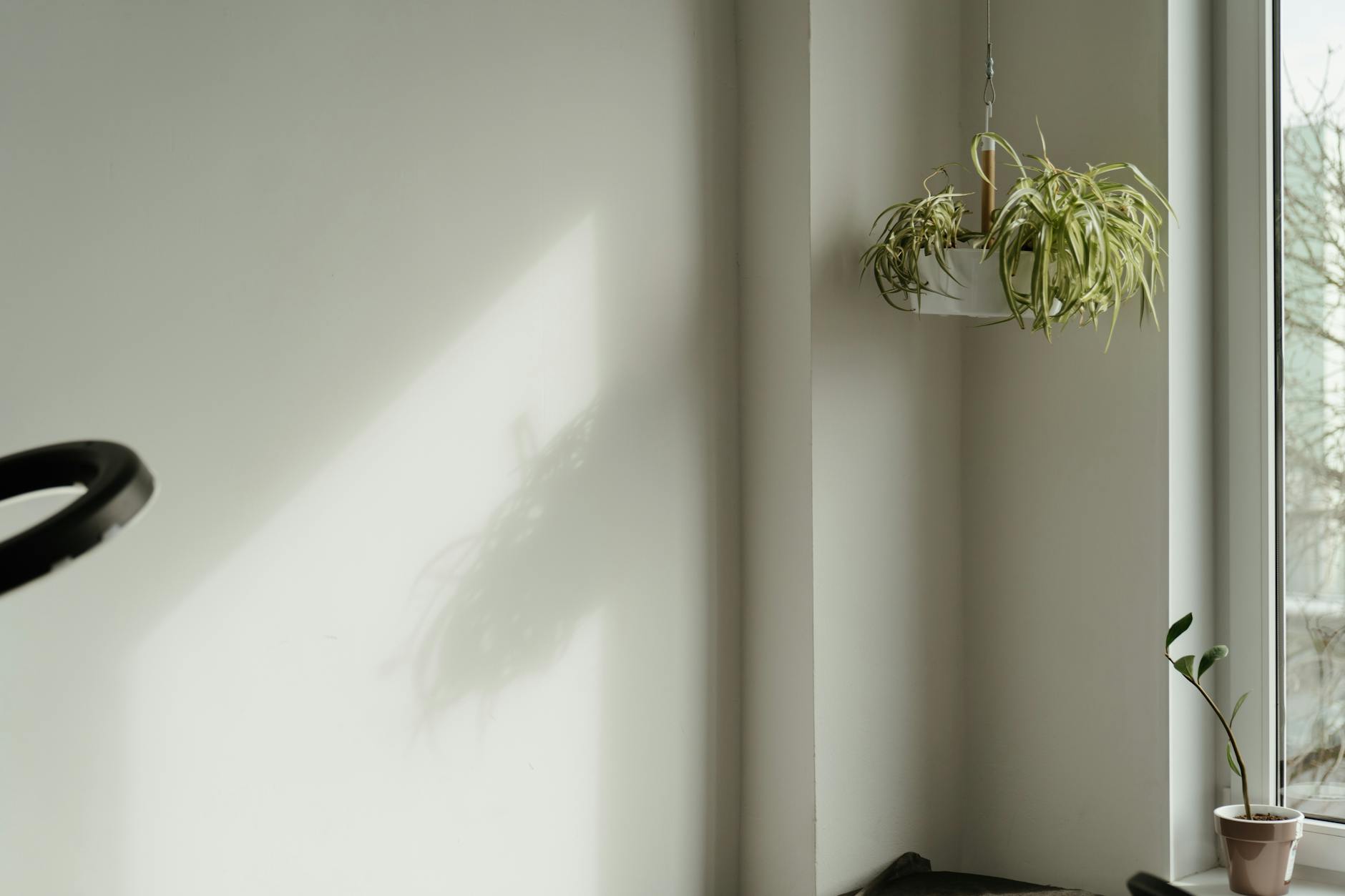
Plant Care Guide
Spider Plant Care: The Complete Guide
Spider Plant (Chlorophytum comosum) is a clumping perennial native to southern Africa, known for its arching variegated leaves, prolific production of plantlets on long stems, and complete pet safety. Water when the top 2–3 cm of soil dries out, typically every 7–10 days.
Quick facts
Chlorophytum comosum — the Spider Plant — is one of the very few common houseplants that is genuinely safe for cats and dogs, which alone makes it worth knowing. It is also one of the few plants that actively produces baby plants of its own, offering a built-in propagation supply without any intervention required. This guide covers what it needs to grow well and produce those distinctive hanging spiderettes.
At a glance: Spider Plant care
- Light: Bright, indirect light. Will survive lower light but produces fewer spiderettes.
- Water: When the top 2-3cm of soil is dry.
- Humidity: Medium. Handles average home conditions well.
- Temperature: 18-27°C ideal. Tolerates down to 10°C briefly.
- Toxicity: Non-toxic. Safe for cats, dogs and horses.
- Difficulty: Medium. Forgiving but has one persistent issue (brown tips).
What is a Spider Plant?
Chlorophytum comosum is a member of the family Asparagaceae — the same family as the Snake Plant — and is native to the coastal and forest margins of South Africa. In its natural habitat it grows as a ground cover in dappled shade, spreading via long stolons (runners) that carry small plantlets. This runner-and-plantlet habit is what gives the plant its common names: the long arching stems with baby plants dangling at the ends resemble a spider’s legs.
The plant became widely popular as a houseplant in the 1970s and has remained a staple ever since, partly because of its air-purifying reputation. A NASA study from 1989 identified Spider Plants as effective at removing certain volatile organic compounds (VOCs) from enclosed spaces. The effect in a typical well-ventilated home is modest — you would need many plants to achieve meaningful air quality improvement — but the study established a reputation that has persisted.
The Spider Plant is one of the few common houseplants confirmed to be non-toxic to cats and dogs. Most aroids — Pothos, Philodendron, Peace Lily — are toxic. This makes the Spider Plant a practical choice for households where pets have access to plants.
How much light does a Spider Plant need?
Chlorophytum comosum grows best in bright, indirect light. A spot near an east- or west-facing window — or a metre or two back from a south-facing window — is ideal. The plant will tolerate lower light, but growth slows considerably and it is unlikely to produce many spiderettes in dim conditions.
Variegated forms like Vittatum (white-striped) and Variegatum (white-margined) need more light than the plain green form to maintain their colouring. In low light, the white areas may fade and the plant will revert toward solid green.
Signs your Spider Plant needs more light:
- Few or no spiderettes forming
- Pale, washed-out leaf colour
- Very slow growth during spring and summer
- Loss of variegation in striped varieties
Signs of too much direct sun:
- Bleached, white or brown patches on leaves
- Crispy, scorched edges
- Leaf tips burning within days of a change in position
Midday summer sun through glass is too intense. Morning sun or bright, filtered light is the upper limit.
How often to water a Spider Plant
Water when the top 2-3cm of soil is dry — the same standard rule that applies to most houseplants. The Spider Plant is moderately drought-tolerant in short spells but does not like consistently dry soil for extended periods; prolonged drought causes brown tips and suppresses spiderette production.
In a warm, bright room this typically means watering every 5-7 days in summer. In winter, every 10-14 days is common. The plant’s thick, fleshy roots store some moisture, so it handles the occasional missed watering better than most.
Signs of overwatering:
- Yellow leaves, especially at the base of the plant
- Soft stems or a mushy, dark base
- Soil staying wet for more than a week
- A sour smell from the potting mix
Signs of underwatering:
- Leaf tips turning brown and dry
- Leaves losing their upright posture, lying flat
- Soil pulling away from the pot sides and crumbling when dry
The right humidity for a Spider Plant
The Spider Plant prefers medium humidity — 40-60% — and handles the conditions in most homes without difficulty. In dry winter air (below 35%), the leaf tips are more likely to turn brown.
If brown tips are a consistent problem:
- Move the plant away from heating vents and radiators
- Group it with other plants, which slightly raises ambient humidity
- Use a pebble tray with water beneath the pot — evaporation helps without wetting the roots
One important note: if you are using tap water to water your Spider Plant, fluoride and chlorine are also significant causes of brown tips — often more so than humidity. Let tap water stand in an open container overnight before using it, or switch to filtered or rainwater.
Best temperature range for a Spider Plant
Chlorophytum comosum grows best between 18-27°C. It tolerates brief drops to 10°C but stops growing below about 12-13°C and may show cold damage — dark patches or wilting — in sustained cold.
What to avoid:
- Cold drafts from open windows or air conditioning vents
- Frost or temperatures below 5°C, which will kill the plant
- Sudden shifts between warm and cold environments
The plant is more cold-tolerant than many tropical houseplants but is still a warm-climate species that prefers stable temperatures.
The best soil and pot for a Spider Plant
A standard, well-draining potting mix works well. Avoid heavy, moisture-retaining mixes — the Spider Plant has thick, fleshy roots that store water and are prone to rot in consistently wet soil.
The pot must have drainage holes. Spider Plants are particularly susceptible to root rot when waterlogged. Terra cotta pots are a good choice because they allow excess moisture to escape through the walls.
Spider Plants grow quickly and will fill a pot with roots in 1-2 years. When the plant becomes root-bound — roots visibly circling or emerging from the drainage hole — it is time to repot into a container 2-3cm larger. A root-bound Spider Plant is also more likely to start producing spiderettes, since some mild stress encourages flowering and runner production.
When and how to fertilize a Spider Plant
Fertilize monthly from spring through early autumn with a balanced liquid houseplant fertilizer at half the recommended strength. Overfeeding is counterproductive: too much fertilizer, especially high levels of fluoride-containing fertilizers, contributes to the brown tip problem the plant is already prone to.
Stop fertilizing in winter. Skip the first 4-6 weeks after repotting, as fresh mix already contains nutrients.
How to propagate a Spider Plant
Spider Plant propagation is uniquely simple: the plant does most of the work itself.
A healthy, well-lit Spider Plant produces long arching stolons (runners) with small plantlets — the “spiderettes” — at the ends. Each spiderette is a complete young plant that can be rooted independently.
- Wait until the spiderette has developed small, visible root nubs at its base (usually 1-3cm long).
- Pin the spiderette into a small pot of moist potting mix using a hairpin, wire, or small stone to hold it in contact with the soil — while it is still attached to the parent plant.
- Keep the soil lightly moist. Roots establish in 2-4 weeks.
- Once rooted, cut the runner connecting it to the parent.
- Alternatively, cut the spiderette from the parent first and root it directly in a glass of water.
There is no faster or easier way to multiply a houseplant. A single mature Spider Plant can produce dozens of spiderettes in a growing season.
Is Spider Plant toxic to pets?
No — Spider Plants are non-toxic to cats, dogs and horses. This is one of the few common trailing houseplants that is genuinely safe for households with pets. There are no toxic compounds in the leaves or roots.
That said, cats are sometimes attracted to Spider Plants and may chew the leaves. Ingesting large amounts can occasionally cause mild gastrointestinal upset — not from toxins, but simply from eating plant material. It is worth placing the plant out of reach if your cat regularly chews it, to protect the plant as much as the cat.
Cultivars at a glance
Chlorophytum comosum 'Vittatum'
Central white stripe on each green leaf. The most commonly sold form.
Chlorophytum comosum 'Variegatum'
Cream-white leaf margins with a green centre — the reverse of Vittatum. Equally easy to grow.
Chlorophytum comosum 'Bonnie'
Curly, spiralling leaves instead of straight ones. Compact and distinctive, same care requirements.
Quick problem look-up
Brown leaf tips
Brown tips indicate fluoride or chlorine sensitivity in your tap water. Use distilled or filtered water instead, or let tap water sit 24 hours before using. Low humidity also causes this; mist foliage weekly or place the pot on a pebble tray with water. Trim affected leaf tips with clean scissors for better appearance.
Pale or washed-out leaves
Pale leaves mean inadequate light. Spider plants need bright, indirect light for 12 to 14 hours daily. Move your plant closer to an east or west-facing window. If leaves appear bleached or scorched, reduce direct afternoon sun exposure. Consistent bright conditions restore normal green coloration within 3 to 4 weeks.
No baby plants (spiderettes)
Spider plants produce baby plantlets only when mature and receiving sufficient light. Ensure your plant gets bright, indirect light for at least 12 hours daily. Young plants may need 18 months to 2 years before flowering and producing spiderettes. Check that the plant is established in its pot before expecting babies to form.
Root rot
Root rot develops from overwatering or poorly draining soil. Always use a pot with drainage holes and water only when the top 2 cm of soil feels dry. In winter, reduce watering frequency significantly. If rot occurs, repot into fresh, dry soil immediately. Remove any blackened roots with sterile scissors before replanting to prevent spread.
Do you ever wonder when your plant needs water or feeding?
GreenIQ tracks it per plant and reminds you at the right moment — adjusted to the season, not a fixed day.
Free, no account, no tracking.
Download GreenIQWant to multiply this plant?
Step-by-step methods to grow new plants from cuttings, leaves, or division — with timings, success rates, and common problems.
View propagation guide →You might also like
Chlorophytum comosum · Last updated May 2026 · Photo by Kenneth Surillo on Pexels