Plant Care Guide
Pothos Care: The Complete Guide
Pothos (Epipremnum aureum) is a trailing tropical vine native to French Polynesia, known for its heart-shaped variegated leaves, rapid growth in low to medium light, and forgiving nature with irregular watering. Water when the top 3–5 cm of soil dries out, typically every 7–10 days.
Quick facts
Epipremnum aureum — better known as Pothos, and commonly sold under names like Golden Pothos, Devil’s Ivy, and Money Plant — grows in almost any indoor condition: low light, irregular watering, average humidity, no specialist soil — tougher in low light than an Arrowhead Plant. What many owners don’t realise is how much better it looks and grows with just a little more attention than pure neglect. This guide covers light, water, and propagation, plus how to tell Pothos apart from the Philodendron it’s so often confused with.
At a glance: Pothos care
- Light: Low to bright indirect. Grows in almost any indoor setting.
- Water: When the top 2-3cm of soil is dry.
- Humidity: Medium. Average home humidity is fine.
- Temperature: 18-27°C ideal. Tolerates down to 10°C briefly.
- Toxicity: Toxic to cats, dogs and horses.
- Difficulty: Easy. One of the best first houseplants.
What is a Pothos?
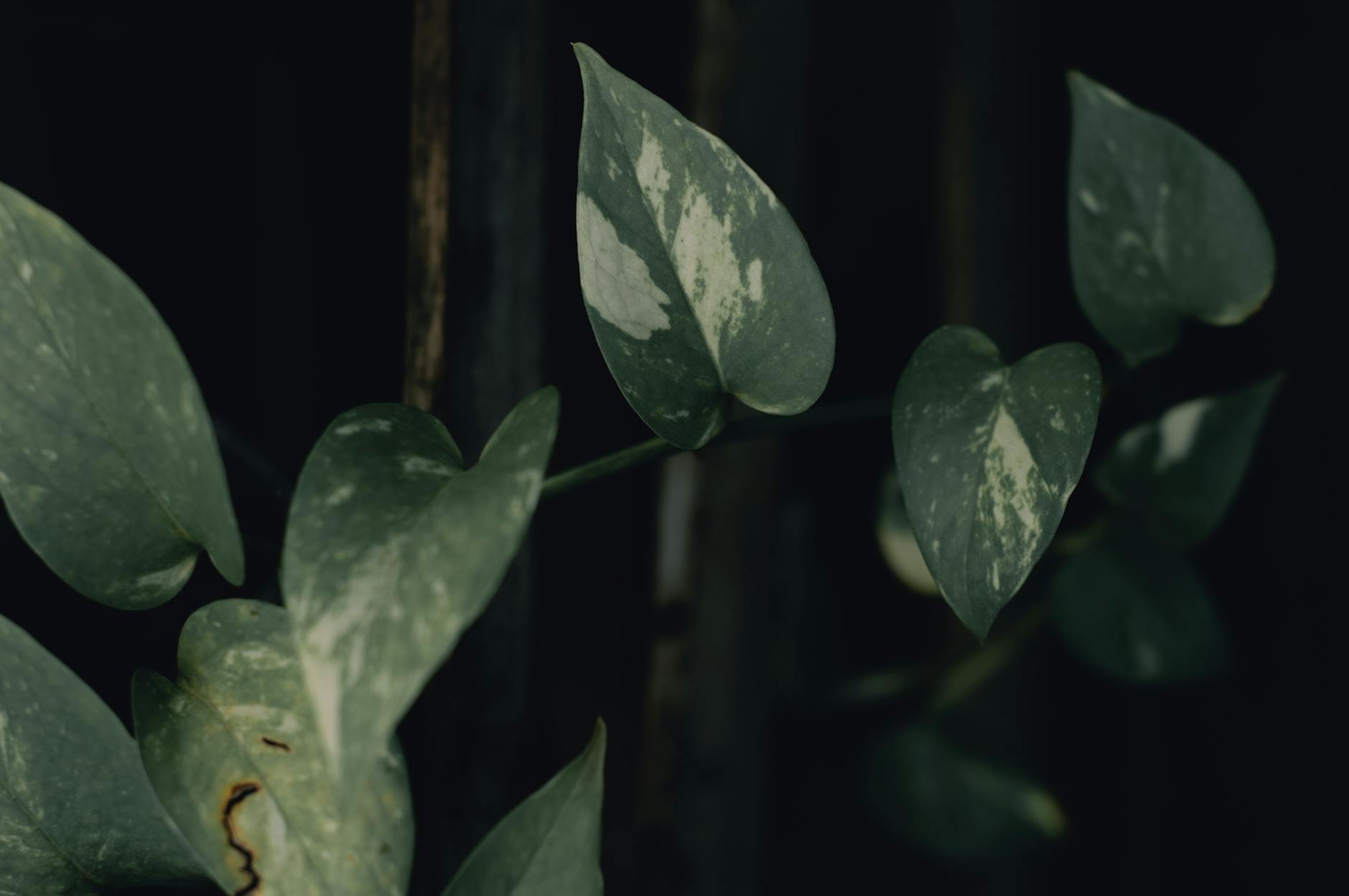
Epipremnum aureum is a member of the Araceae family — the same family as Philodendron, Peace Lily, and Monstera. It’s native to the Mo’orea island in French Polynesia and has naturalised across Southeast Asia, where it climbs the trunks of large trees and can reach leaves 30cm or more wide in its mature, climbing form. The small, heart-shaped leaves sold in shops are juvenile growth; the plant needs to climb to reach its full potential.
The common name “Devil’s Ivy” comes from its near-indestructibility — it stays green even in very low light or in complete neglect, a trait that has made it invasive in parts of Australia and Southeast Asia. In those regions it is classified as a pest. Indoors, that same tenacity is an asset.
Pothos is frequently confused with Heartleaf Philodendron (Philodendron hederaceum), which has similar heart-shaped leaves and the same trailing habit. The easiest way to tell them apart: Pothos leaves have a slightly waxy texture and a distinct ridge running down the leaf stem (petiole), while Philodendron leaves are thinner and matte with a round, smooth stem. The care requirements overlap considerably, but they are different plants.
How much light does a Pothos need?
Pothos handles low to bright indirect light — one of the genuinely widest light ranges of any common houseplant. It will trail from a shelf in a north-facing room with no complaints, similar to a Chinese Evergreen in the same spot. It will also grow vigorously near a bright east- or west-facing window. The difference is in growth speed and leaf size: brighter conditions mean faster growth, larger leaves, and more vivid variegation.
Variegated varieties like Marble Queen and Pearls and Jade need meaningfully more light than the plain Golden Pothos to maintain their white patterning. In low light, the white areas shrink and the leaves revert towards solid green — a common disappointment.
Signs your Pothos needs more light:
- Stems growing long with increasing gaps between leaves
- Variegation fading or disappearing
- New leaves arriving noticeably smaller than older ones
- Very slow growth even during spring and summer
Signs of too much direct sun:
- Yellow or bleached patches on leaves
- Brown, scorched edges
- Leaves wilting even when the soil is moist
Pothos does not like sustained direct sun through glass. Bright, indirect light — or direct morning sun only — is the upper limit.
How often to water a Pothos
The standard rule applies: water when the top 2-3cm of soil is dry, then water thoroughly until water drains freely from the bottom. Empty the saucer afterward.
In a warm, bright room this might be every 5-7 days in summer. In a cool room or in winter, every 10-14 days is typical. The plant tolerates some drought between waterings — briefly dry soil will not cause lasting damage — but does not recover as easily from root rot caused by consistently wet conditions.
Signs of overwatering:
- Yellow leaves, typically starting with older leaves near the base
- Wilting or limpness despite wet soil
- A sour smell from the potting mix
- Soil remaining soggy more than a week after watering
Signs of underwatering:
- Leaves that look dull or slightly wilted
- Stems losing their firmness
- Soil pulling away from the pot edges and feeling completely dry and compacted
Overwatering and underwatering can look deceptively similar in Pothos — both cause wilting. Check the soil before adding more water.
The right humidity for a Pothos
Pothos is comfortable at medium humidity — the 40-60% range typical of most homes. It does not need special humidity management, and handles the drier air from central heating in winter without serious problems.
In very dry conditions (below 30%), the leaf tips may turn brown. If this is a consistent issue:
- Group the Pothos with other plants to raise ambient humidity slightly
- Move it away from heating vents or radiators
- Run a humidifier nearby in winter
Misting is minimally effective — the droplets evaporate within minutes and don’t materially affect the humidity the roots and stems experience.
Best temperature range for a Pothos
Epipremnum aureum grows best between 18-27°C. It tolerates brief dips to 10°C but will stop growing below about 15°C and may show cold damage — dark, water-soaked patches on leaves — below 10°C.
What to avoid:
- Cold drafts directly on the plant from open windows or air conditioning
- Prolonged exposure below 12°C
- Sudden temperature changes, such as moving from a warm room to a cold space
The plant handles heat well and grows faster in warm conditions, provided it is not in direct sun.
The best soil and pot for a Pothos
A chunky, well-draining potting mix works best. You can use a standard indoor potting mix improved with 15-20% perlite to open the structure, or a pre-made aroid mix. Avoid heavy, peat-dense mixes that stay wet for a long time.
The pot must have drainage holes. Like most aroids, Pothos is highly susceptible to root rot in waterlogged conditions. Use a nursery pot with drainage inside a decorative outer pot, and always empty the outer pot after watering.
For pot size, choose one 2-3cm wider than the current root ball. Going much larger means excess wet soil that the plant’s roots aren’t yet using — a direct route to rot.
When and how to fertilize a Pothos
Fertilize monthly during spring and summer with a balanced liquid houseplant fertilizer at half the recommended strength. The plant is a relatively fast grower and will reward regular feeding with larger leaves and denser growth.
Stop feeding in autumn and skip winter entirely — growth slows significantly and unused nutrients accumulate in the soil, eventually causing salt burn visible as yellowed or crispy leaf margins. After repotting into fresh mix, skip fertilizer for 4-6 weeks.
How to propagate a Pothos
Pothos is one of the easiest plants to propagate — stem cuttings root in water with minimal effort.
- Find a stem with at least one node — the small brown bump on the stem from which roots will grow — and one or two leaves.
- Cut just below the node with clean scissors. Remove any leaves that would sit below the waterline.
- Place the cutting in a glass or jar of water, node submerged, in indirect light.
- Change the water every 5-7 days to prevent bacterial growth.
- Roots appear in 2-4 weeks.
- Pot up once roots are 3-5cm long — waiting longer is fine but very long water roots may be slower to adapt to soil.
Multiple cuttings from one long stem all root independently. A single trailing Pothos can produce a dozen new plants. Keep the parent plant fuller by not cutting too heavily in one go.
Is Pothos toxic to pets?
Yes, Epipremnum aureum is toxic to cats, dogs and horses. Like all aroids, the leaves and stems contain calcium oxalate crystals — tiny needle-like structures that embed in soft tissue and cause:
- Immediate mouth and throat irritation
- Drooling and pawing at the mouth
- Difficulty swallowing
- Occasional vomiting
The reaction is rarely life-threatening but is painful and distressing. If a pet has chewed on the plant, rinse their mouth with water and contact a vet if symptoms persist. If you have pets that chew houseplants, keep Pothos out of reach — its trailing habit makes it tempting and accessible.
Cultivars at a glance
Epipremnum aureum 'Golden Pothos'
Yellow marbled variegation on green leaves. The most common variety. Thrives even in low light.
Epipremnum aureum 'Marble Queen'
Heavy white and cream variegation. Slightly slower growing and needs more light to maintain the pattern.
Epipremnum aureum 'Neon'
Chartreuse-yellow leaves with no variegation. Very striking; the brighter the light, the more vivid the colour.
Quick problem look-up
Yellow leaves on Pothos
Yellow leaves on Pothos typically signal overwatering, the most common problem. Check soil moisture by feeling the top 2-3cm—it should be dry before watering again. If light is also limited, move your plant closer to a window. Ensure the pot has drainage holes and use well-draining soil to prevent water from sitting around roots.
Brown leaf tips
Brown leaf tips usually indicate low humidity or inconsistent watering patterns. Pothos prefers steady moisture without waterlogging. Mist leaves occasionally or place the pot on a pebble tray with water to increase humidity. Use filtered water or let tap water sit overnight, as mineral buildup from chlorine can also cause brown tips.
Long stems with small or sparse leaves
Leggy stems with sparse leaves result from insufficient light. Move your Pothos closer to a bright window or well-lit area immediately. While existing stems won't fill in retroactively after growing 50cm in darkness, new growth will emerge fuller and more compact once light conditions improve consistently.
Root rot
Root rot develops from overwatering in poor-draining soil, causing dark, mushy roots, yellow leaves, and sour-smelling soil. Remove the plant from its pot, trim away all soft roots with clean scissors, repot in fresh well-draining mix, and water sparingly for several weeks while roots recover.
Do you ever wonder when your plant needs water or feeding?
GreenIQ tracks it per plant and reminds you at the right moment — adjusted to the season, not a fixed day.
Free, no account, no tracking.
Download GreenIQWant to multiply this plant?
Step-by-step methods to grow new plants from cuttings, leaves, or division — with timings, success rates, and common problems.
View propagation guide →You might also like
Epipremnum aureum · Last updated May 2026 · Photo by Jessika Arraes on Pexels