Plant Care Guide
Arrowhead Plant Care: The Complete Guide
Arrowhead Plant (Syngonium podophyllum) is a tropical aroid native to Mexico, Central and South America, known for arrow-shaped leaves that develop additional lobes as the plant matures, versatile trailing or climbing growth habit, and tolerance of moderate to bright indirect light. Water when the top 2–3 cm of soil dries out, typically every 7–10 days.
Quick facts
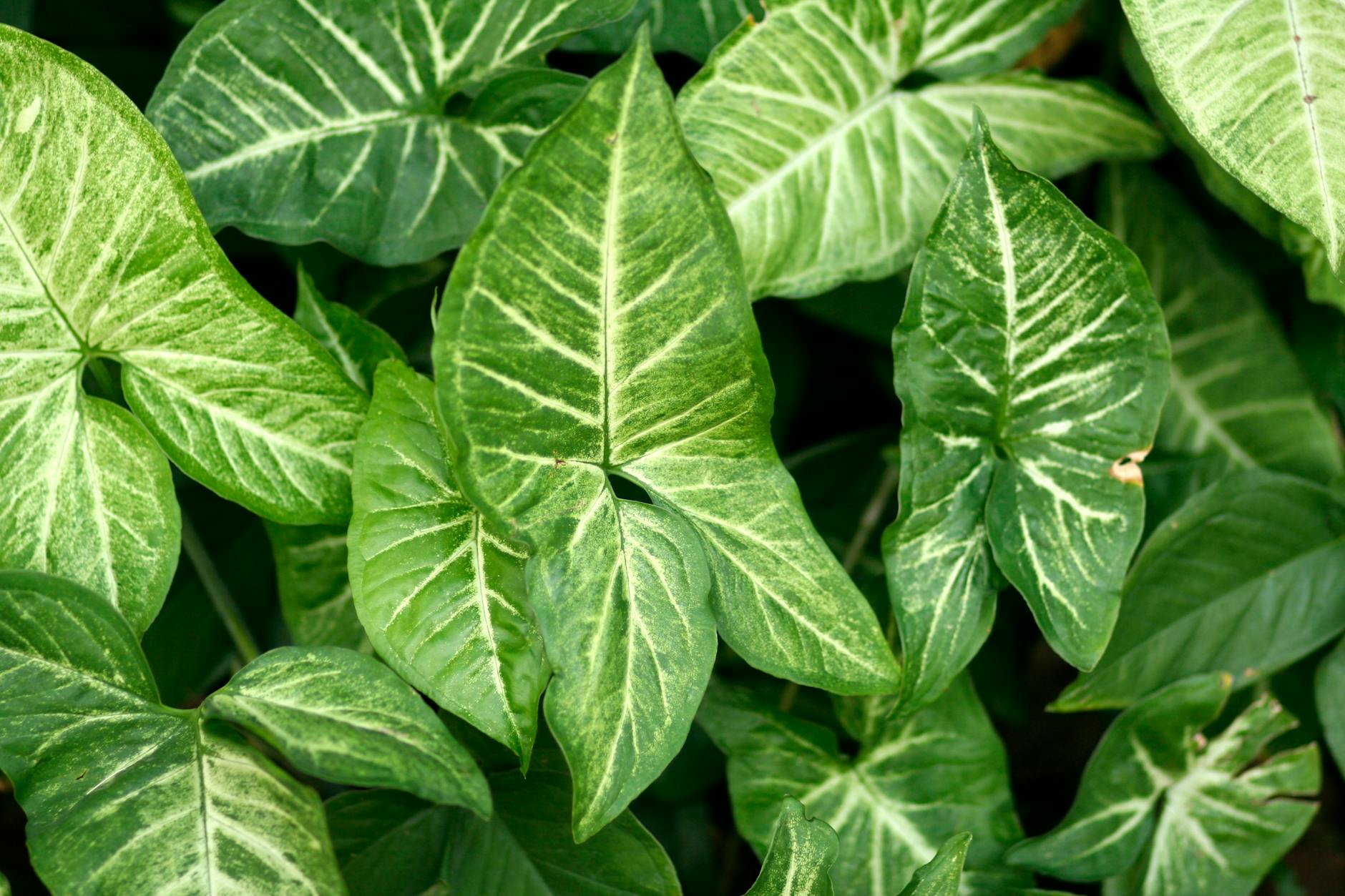
Why does the Arrowhead Plant you bought look different from the one in the photo that made you want it? The answer is almost always age. Syngonium podophyllum changes its leaf shape as it matures — what starts as a neat, pointed arrowhead becomes progressively more lobed and multi-segmented. A young plant produces the clean, arrow-shaped leaves that appear in most photographs and on most shop labels. An older or longer-vined plant produces leaves with three, five, or more distinct lobes arranged in a spreading hand shape. Both forms belong to the same species at different growth stages, and the transition is reversible: cutting the plant back to shorter stems produces new juvenile arrowhead-shaped leaves again.
At a glance: Arrowhead Plant care
- Light: Medium to bright, indirect. Coloured cultivars need more light to hold their pink or cream tones.
- Water: When top 2–3cm of soil is dry. Tolerates occasional neglect.
- Humidity: High ideal, but adapts to medium without significant decline.
- Temperature: 16–30°C.
- Toxicity: Toxic to cats, dogs, and horses — contains calcium oxalate crystals.
- Difficulty: Easy. Fast-growing, easy to propagate, and handles variable conditions reasonably well.
What is an Arrowhead Plant?
Syngonium podophyllum is native to Mexico, Central America, and tropical parts of South America, where it grows as a climbing and trailing plant in humid tropical forest understoreys. In the wild it begins as a low-growing juvenile plant close to the forest floor, then climbs upward as it matures — the leaf shape shifting progressively at each growth stage. The mature leaves of a climbing plant growing high into a tree canopy bear little resemblance to the juvenile leaves near the base.
The genus name Syngonium means “united ovaries” in Greek, referring to the plant’s floral structure. Podophyllum means “foot-leaved” — a reference to the lobed adult leaf shape. The plant goes by several common names: Arrowhead Plant and Arrowhead Vine describe the juvenile leaf shape; Goosefoot Plant describes the adult lobed form; Nephthytis is an older trade name that persists in some markets, though it technically refers to a different genus entirely.
Syngonium podophyllum is available in a wide range of cultivars. The coloured forms — including ‘Pink Allusion’ (pink veining), ‘White Butterfly’ (cream and pale green), ‘Strawberry Cream’ (pink-flushed), and ‘Berry Allusion’ (red and burgundy tones) — share the same care requirements as the plain green species but require more light to maintain their colour intensity.
The leaf shape transition from juvenile to adult form takes place across many growth cycles and is reversible. A plant kept compact by regular pruning produces juvenile arrowhead-shaped leaves indefinitely — cutting back to shorter stems resets the leaf development to the juvenile stage. Left to climb with support, the plant produces progressively larger, more deeply lobed adult leaves that look substantially different from the leaves it had as a young plant. The trailing form produces intermediate shapes depending on vine length. All three presentations are the same species at different developmental stages, and none requires care adjustments relative to the others.
How much light does an Arrowhead Plant need?
Syngonium podophyllum grows in medium to bright, indirect light. The plain green species is among the more light-tolerant aroids and handles lower light without significant decline, similar to a Pothos or Heartleaf Philodendron. Variegated and coloured cultivars require more: without adequate brightness, pink or cream tones fade progressively toward plain green as the plant produces more chlorophyll to compensate.
A spot 60cm–1.5m from a window is appropriate for the plain green species. For coloured cultivars, keep within 60cm of an east- or west-facing window for best colour retention.
Signs your Arrowhead Plant needs more light:
- Growth slowing significantly despite otherwise adequate conditions
- Coloured cultivars losing their pink or cream tones across successive new leaves
- New leaves arriving small with visibly extended internodes between nodes
Signs of too much direct sun:
- Bleached or burned patches on leaf surfaces
- Leaves becoming papery and drying at the margins
- Colours washing out rather than deepening
How often to water an Arrowhead Plant
Water when the top 2–3cm of soil is dry. In summer at room temperature, this is typically every 5–7 days. In winter, every 10–14 days is more common. The Arrowhead Plant tolerates occasional missed waterings better than ferns and most high-humidity aroids, but consistent underwatering leads to stunted growth and eventual yellowing.
Signs of overwatering:
- Yellow leaves, particularly on older growth
- Soil staying wet for more than 10 days between waterings
- A musty smell from the potting mix
Signs of underwatering:
- Leaves wilting and losing their upright posture
- Soil dry throughout when checked
- Leaf tips browning and curling inward
The right humidity for an Arrowhead Plant
The Arrowhead Plant adapts to a wider humidity range than many tropical aroids. Medium to high — 50–70% — is the target, but it handles the drier conditions of a typical home (40–50%) with only minor tip browning. In genuinely dry environments below 35%, growth slows and leaf edges brown progressively.
Practical approaches in dry conditions:
- Grouping with other plants raises the local microclimate modestly
- A pebble tray with water beneath the pot contributes humidity at leaf level
- A humidifier nearby is the most effective solution in winter
Best temperature range for an Arrowhead Plant
16–30°C suits Syngonium well — a forgiving range for a tropical plant. It handles the cooler end without significant stress. Do not allow temperatures to drop below 10°C for sustained periods.
What to avoid:
- Temperatures below 10°C
- Cold drafts from open windows or exterior doors
- Very hot, dry air from heating vents directed at the plant
The best soil and pot for an Arrowhead Plant
A well-draining standard potting mix with 15–20% added perlite is appropriate. Syngonium is not demanding about substrate provided drainage is adequate. A drainage hole is essential — the plant does not handle waterlogged conditions for extended periods.
As the plant matures and begins climbing, a moss pole or bamboo cane provides support for the aerial roots. A supported climbing plant produces progressively larger, more deeply lobed leaves — the fully adult multi-segment form is more prominent on climbing stems than on trailing ones. Trailing the plant from a shelf produces the juvenile arrowhead leaves indefinitely on shorter growth.
When and how to fertilize an Arrowhead Plant
Fertilize monthly during spring and summer with a balanced liquid fertilizer at half to full recommended strength. The Arrowhead Plant grows quickly in good conditions and benefits from consistent feeding. Stop in autumn. Skip winter.
How to propagate an Arrowhead Plant
Stem cuttings in water is the standard method and one of the most reliable in the aroid family.
- Cut a stem section with at least one node and one leaf, just below a leaf junction.
- Remove any leaves that would be submerged.
- Place in a jar of room-temperature water with the node submerged.
- Keep in indirect light. Change the water every 3–5 days.
- Transfer to potting mix once roots reach 3–4cm.
Roots develop within 7–14 days under good conditions. This ease of propagation — and the fact that every stem node is a potential cutting — makes Syngonium a reliable first water-propagation project, alongside Monstera Adansonii, and a straightforward plant for sharing cuttings.
A single established plant produces enough stem material for several cuttings per pruning session. Cuttings taken while trimming a leggy plant serve the double purpose of improving the parent plant’s shape and providing multiple new plants simultaneously. For coloured cultivars, take cuttings from the most variegated sections of the stem to maximise the colour expression in new growth.
Is Arrowhead Plant toxic to pets?
Yes — Syngonium podophyllum is toxic to cats, dogs, and horses. The plant contains insoluble calcium oxalate crystals throughout its leaves and stems. Ingestion causes immediate burning and irritation of the mouth and throat, excessive drooling, and vomiting. Keep out of reach of pets that chew houseplants.
Cultivars at a glance
Syngonium podophyllum 'Pink Allusion'
Soft pink veining on light green leaves. More compact than the standard species and a popular choice for small spaces.
Syngonium podophyllum 'White Butterfly'
Cream and pale green variegation with a butterfly-wing pattern. Needs slightly more light than plain green forms to maintain colour.
Syngonium podophyllum 'Strawberry Cream'
Pink-flushed leaves with a warm cream tone. Colour intensity varies with light levels.
Syngonium podophyllum 'Berry Allusion'
Red and burgundy tones throughout the leaf. Striking colourway with the same easy care as the standard species.
Quick problem look-up
Yellow leaves
Yellow leaves indicate overwatering, the most common problem with Syngonium — but a single yellow leaf on an otherwise healthy plant is often just natural aging of the oldest growth, not a watering issue. Allow the top 2 centimetres of soil to dry completely between waterings. Use well-draining potting mix and ensure pots have drainage holes. During winter, reduce watering frequency significantly. Check roots for rot and repot if necessary.
Leggy or stretching growth
Leggy, stretched growth results from insufficient light. Move your Syngonium closer to a bright, indirect window, ideally within 1 metre. East or west-facing locations work well. Pinch stem tips monthly to encourage bushier branching. Adequate light produces compact, vigorous plants with closely-spaced leaves and stronger stems.
Coloured cultivars losing colour
Variegated and pink Syngonium cultivars lose colour under low light. These forms require bright, indirect light positioned within 60cm of a window to maintain their distinctive patterns. Move the plant closer to natural light or supplement with grow lights. Without sufficient brightness, plants revert to solid green within weeks or months; once relocated, new growth typically shows colour returning within 2-3 leaves.
Spider mites
Spider mites thrive in dry air and favour undersides of leaves. The first sign is often a fine stippling on the leaf surface before webbing becomes visible, so inspect closely and regularly. Increase humidity by misting foliage twice weekly or placing the pot on a pebble tray with water. Isolate affected plants immediately. Spray with neem oil or insecticidal soap every seven to ten days until pests disappear.
Do you ever wonder when your plant needs water or feeding?
GreenIQ tracks it per plant and reminds you at the right moment — adjusted to the season, not a fixed day.
Free, no account, no tracking.
Download GreenIQYou might also like
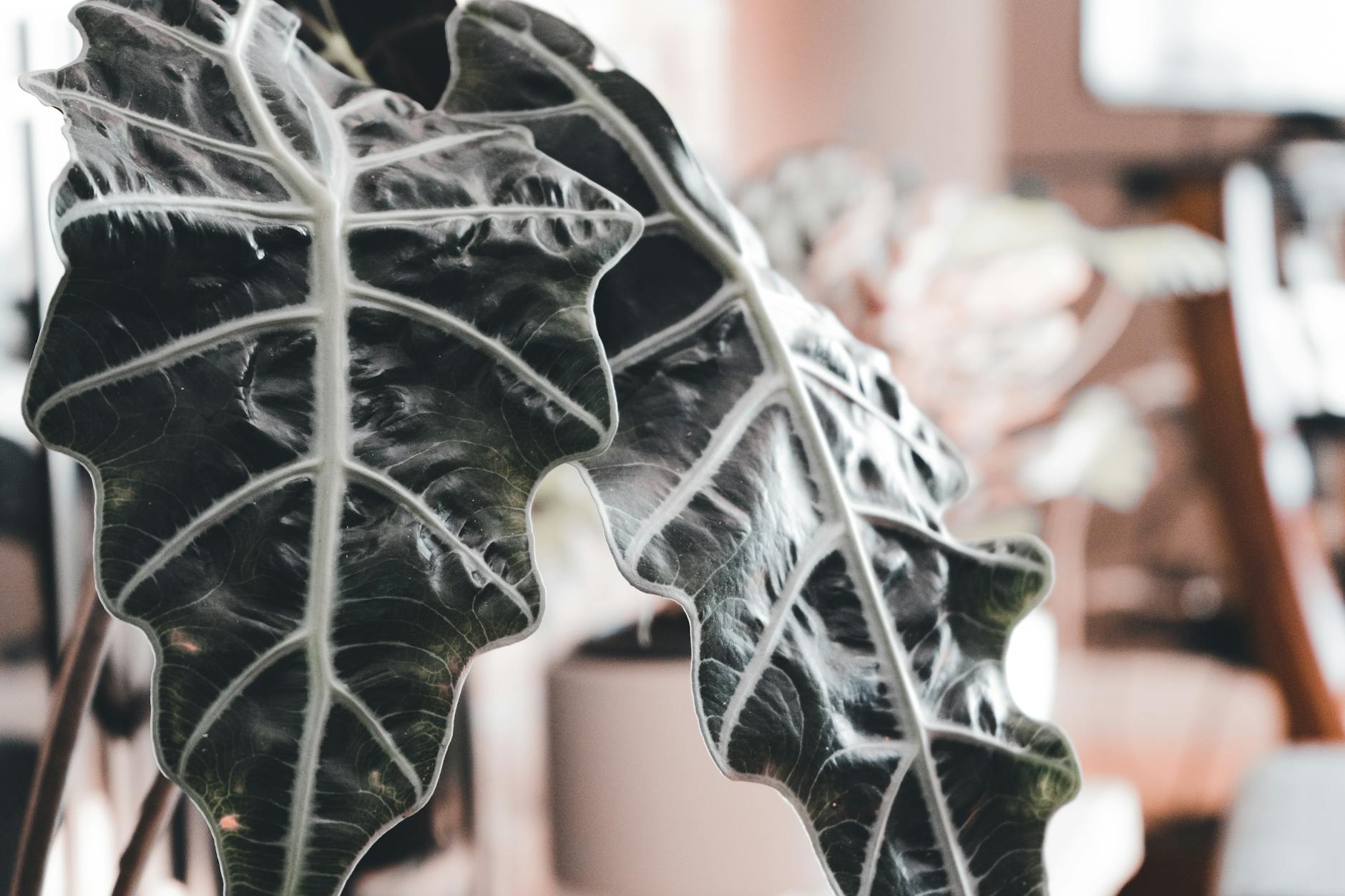
Syngonium podophyllum · Last updated June 2026 · Photo by wutthichai charoenburi on Pexels