Plant Care Guide
Alocasia Polly Care: The Complete Guide
Alocasia Polly (Alocasia × amazonica 'Polly') is a compact hybrid cultivar of tropical jewel alocasia, known for its arrow-shaped dark-green leaves with prominent silver veins, dramatic upright growth habit, and demanding humidity above 60 percent. Water when the top 2–3 cm of soil dries out, typically every 5–7 days.
Quick facts
An Alocasia Polly can drop every leaf it has in autumn and appear completely dead. It is not dead. The plant retreats into dormancy, consolidating its energy into underground corms — small bulb-like structures at the base — and will produce new leaves again when temperatures rise and light increases in spring. Most Alocasia Polly plants are discarded during this phase by owners who mistake normal dormancy for plant death. If your Alocasia has lost all its leaves but the soil has not been waterlogged, check the base: if the corms are firm, the plant is alive and will return.
At a glance: Alocasia Polly care
- Light: Bright, indirect. Essential for leaf quality and growth rate.
- Water: When the top 2-3cm of soil is dry. More careful than most aroids — soggy soil causes rapid decline.
- Humidity: High. 60%+ is the target. Spider mites attack in dry conditions.
- Temperature: 18-27°C, always above 12°C. Warmth is non-negotiable.
- Toxicity: Toxic to cats, dogs and horses.
- Difficulty: Medium. The dormancy cycle and humidity requirements catch most owners off-guard.
What is an Alocasia Polly?
Alocasia × amazonica is a hybrid — a plant created in horticulture rather than found in the wild. Its precise parentage is not officially documented, but horticultural records suggest a cross involving Alocasia longiloba and Alocasia sanderiana, both native to Southeast Asia. The “amazonica” in the name is misleading: this plant has no connection to the Amazon rainforest. The name was applied by a Florida nurseryman, Salvadore Mauro, who developed the hybrid in the late 1950s and named it after his nursery, Amazon Nursery.
“Alocasia Polly” is a trade name, not a botanical name — it refers specifically to a compact, widely-sold cultivar of the Alocasia × amazonica hybrid. The compact form stays under 60cm, which makes it manageable for indoor spaces where full-size Alocasias (which reach 1.5m or more) would be impractical.
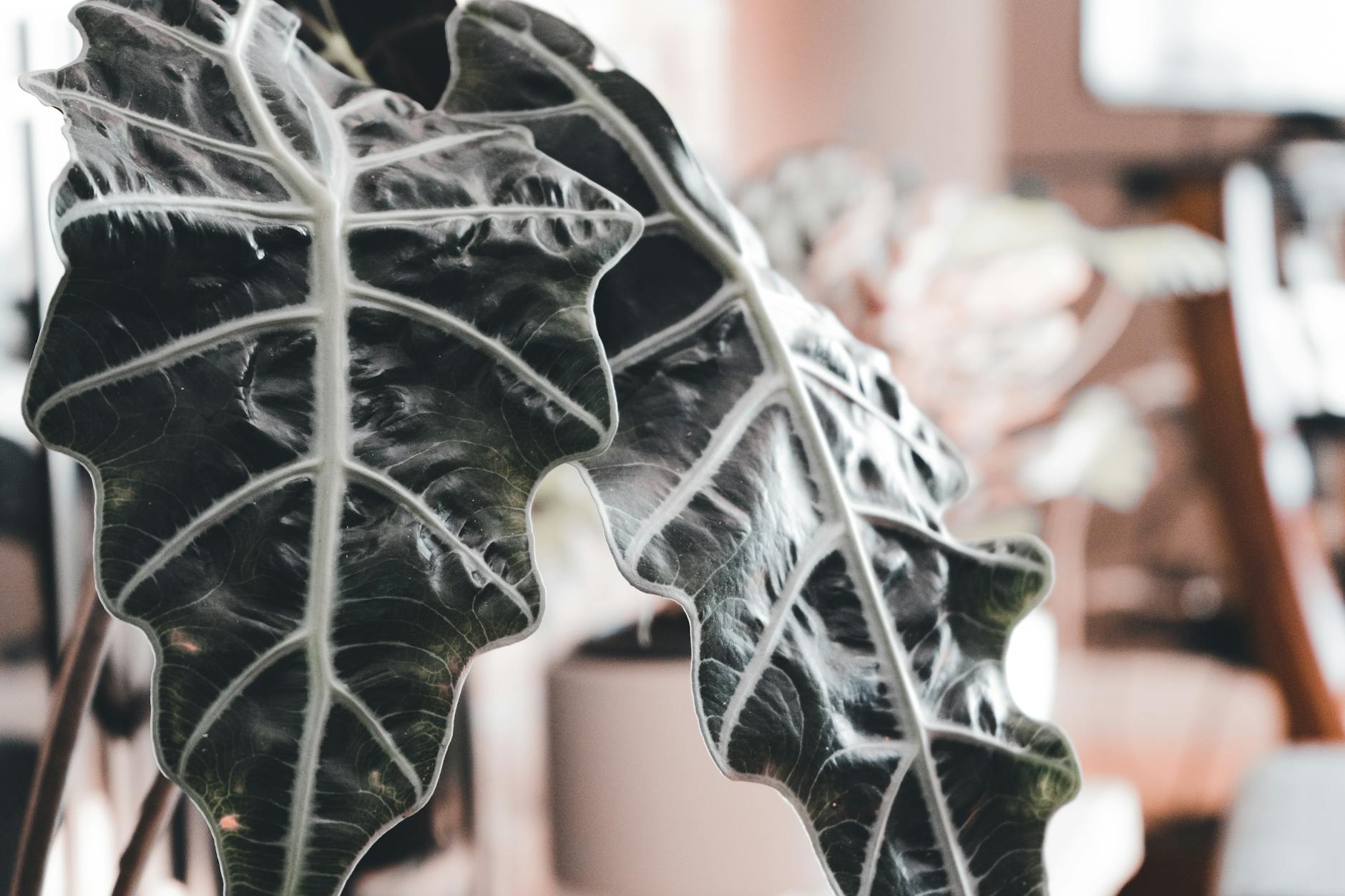
The visual identity of the plant is unmistakable: dramatically dark green leaves with prominent bright white or silver midribs and veins, scalloped or wavy leaf edges, and a deeply glossy surface. The underside of each leaf is a contrasting burgundy-purple. These are tropical adaptation features — the dark surface absorbs light in shaded conditions; the large veins move water efficiently through the leaf.
How much light does an Alocasia Polly need?
Alocasia Polly needs bright, indirect light. A spot near an east- or west-facing window, or 1-2 metres back from a south-facing window, produces the best leaf size, colour, and overall vigour. In lower light, the plant survives but the characteristic dark colouring fades, growth slows significantly, and the plant is more prone to problems from overwatering (because the soil dries more slowly).
No direct sun — the dark leaves absorb heat intensely and burn quickly in direct midday sun, leaving bleached patches that are immediately visible against the deep green surface.
Signs your Alocasia Polly needs more light:
- New leaves arriving paler and smaller than established ones
- The deep green darkening toward olive or losing its saturation
- Very slow growth, even in spring and summer
Signs of too much direct sun:
- Bleached white or pale patches on leaf surfaces
- Leaf edges crisping and browning within days of a position change
- The plant appearing washed out rather than deep, saturated green
How often to water an Alocasia Polly
Water when the top 2-3cm of soil is dry, then water thoroughly until it drains. In a warm, bright room in summer, this is typically every 5-7 days. In winter, when growth slows or the plant enters dormancy, every 2-3 weeks is appropriate.
The Alocasia Polly is sensitive to overwatering. The combination of warm, humid care conditions and too-frequent watering is the most common cause of decline. The roots are relatively shallow and do not need as much water as the large, dramatic leaves might suggest.
During dormancy: reduce watering to the minimum necessary to keep the corms from desiccating — once every 3-4 weeks is typically sufficient. The corms store moisture and need only occasional watering, not active growth-season care.
Signs of overwatering:
- Yellow leaves, particularly appearing across multiple leaves simultaneously
- Soft, dark stem sections at the base of the plant
- A sour smell from the potting mix
- Soil remaining wet for more than a week
Signs of underwatering:
- Leaves drooping and losing their upright posture
- Leaf edges becoming brown and dry
- Soil completely dry and pulling away from the pot sides
The right humidity for an Alocasia Polly
High humidity — 60% or above — is critical. Below 50%, two problems emerge consistently: brown tips on the dramatic leaves, and spider mite infestations. Spider mites thrive in dry conditions and have a particular affinity for Alocasias. Once established, they are difficult to eliminate. Maintaining adequate humidity is the most effective prevention.
Practical approaches:
- A humidifier running nearby is the most reliable solution, especially in winter — the same fix that helps a Calathea Ornata through the same season
- Group with other plants to raise ambient humidity slightly
- Use a pebble tray with water beneath the pot
- Check the undersides of leaves weekly — spider mites appear as tiny dots and leave fine webbing
If spider mites do appear: rinse the leaves thoroughly with water (both sides), apply insecticidal soap or neem oil solution weekly for 3-4 weeks, and increase humidity significantly.
Best temperature range for an Alocasia Polly
Alocasia Polly grows best between 18-27°C and requires temperatures to remain above 12°C at all times. Below 15°C, growth stops. Below 12°C, cold damage — dark, water-soaked patches on leaves — appears quickly.
Warmth is particularly important because the plant needs warm soil as well as warm air. Placing the pot on a cold stone or tile floor in winter can chill the roots significantly even if the air temperature is adequate.
What to avoid:
- Cold drafts from windows or air conditioning directly on the plant
- Temperatures below 15°C sustained for more than a day or two
- Cold floors — place the pot on a mat or raised surface in winter
The best soil and pot for an Alocasia Polly
A chunky, well-draining aroid mix is essential: a standard indoor mix combined with 25-30% perlite, or a purpose-made aroid blend. The roots need fast drainage and air circulation — they do not tolerate sitting in wet soil.
A drainage hole is non-negotiable. The combination of the plant’s intolerance of overwatering and the risks from spider mites in dry conditions means that root rot from waterlogged soil can quickly become fatal.
Choose a pot that fits the root ball snugly. An oversized pot holds excess wet soil that the shallow roots cannot access — a reliable route to root rot in a plant already sensitive to it.
When and how to fertilize an Alocasia Polly
Fertilize monthly during spring and summer with a balanced liquid fertilizer at half the recommended strength. Stop completely in autumn as the plant slows down, and apply nothing during dormancy — the corms are not actively feeding and excess fertilizer accumulates as damaging salts.
Resume fertilizing in spring when new leaves begin to emerge from the corms.
How to propagate an Alocasia Polly
Division of offsets or corms is the standard method, best done in spring at repotting time.
Offset division:
- Remove the plant from its pot and gently clear soil from the base.
- Identify small offset plants growing alongside the main stem — these have their own roots and are ready to separate.
- Pull or cut the offsets free from the main root ball.
- Pot each offset in fresh, moist aroid mix.
Corm propagation (slower):
- At repotting, you may find small corms — marble-sized bulb-like structures — in the soil.
- Remove these and allow to air-dry for 24 hours.
- Plant 2-3cm deep in moist potting mix.
- In warm conditions, new shoots emerge in 4-8 weeks.
After dormancy: do not discard a bare-root Alocasia in winter. Leave the corms in their pot with minimal watering. New growth will emerge from the base in spring — often as a tightly rolled leaf emerging directly from the soil.
Is Alocasia Polly toxic to pets?
Yes, Alocasia × amazonica is toxic to cats, dogs and horses. The plant contains calcium oxalate crystals throughout its leaves and stems — the same compounds found in Pothos and Philodendron, but present in higher concentration in Alocasia species, causing a more severe reaction:
- Immediate and intense burning in the mouth and throat
- Excessive drooling and pawing at the mouth
- Difficulty swallowing, sometimes difficulty breathing if large amounts are ingested
- Vomiting
The reaction is more serious than with most aroids. If a pet has ingested any part of the plant, contact a vet immediately rather than waiting to see if symptoms develop. The dramatic leaves are visually striking — place the plant well out of reach of animals.
Quick problem look-up
Dropping all leaves (dormancy)
Leaf drop in autumn and winter is normal dormancy. Your Alocasia Polly stores energy in its underground corm and will regrow fresh leaves in spring. Stop fertilizing and reduce watering during this period. Keep the plant in a warm location above 15 Celsius and wait patiently for new growth.
Yellow leaves
Overwatering is the primary cause of yellowing in Alocasia Polly during the growing season — allow the top 3 centimeters of soil to dry between waterings, ensure drainage holes, and use well-draining mix. In late autumn after a summer of healthy growth, yellowing more often signals the start of natural dormancy rather than a watering problem. Check roots for rot and repot if necessary using fresh soil to save the plant.
Spider mites
Alocasia Polly attracts spider mites in low humidity environments. Inspect leaf undersides weekly for tiny webs and stippling. Increase humidity to 60 percent or higher using a humidifier or pebble tray. Spray affected leaves with water and insecticidal soap every seven days until mites disappear completely.
Brown leaf tips
Brown leaf tips result from low humidity or fluoride in tap water. Boost humidity to 65 percent minimum using a humidifier or misting. Switch to filtered or distilled water instead of tap water. Trim brown tips with clean scissors once humidity improves and new growth appears healthy.
Do you ever wonder when your plant needs water or feeding?
GreenIQ tracks it per plant and reminds you at the right moment — adjusted to the season, not a fixed day.
Free, no account, no tracking.
Download GreenIQYou might also like
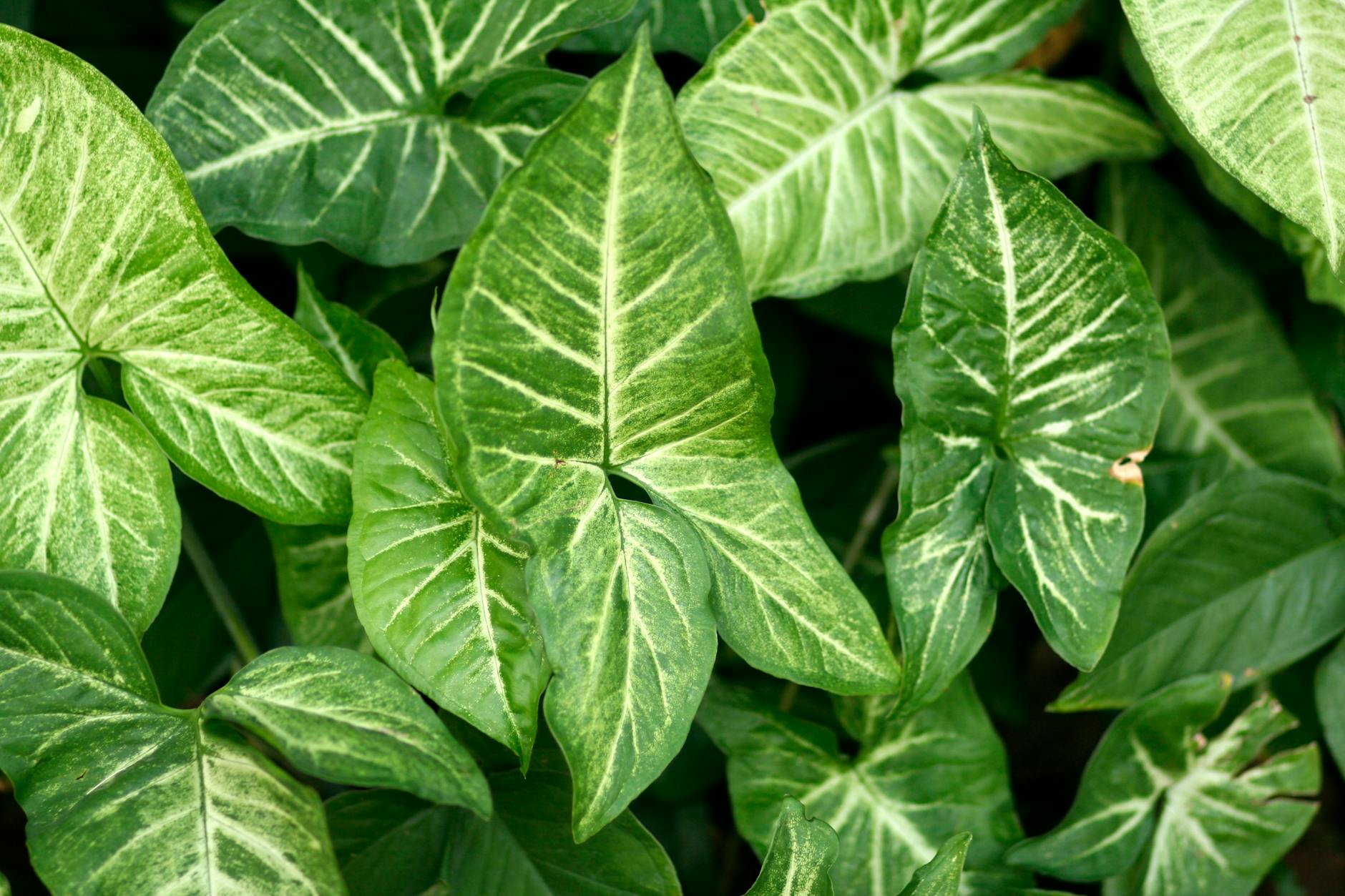
Alocasia × amazonica · Last updated May 2026 · Photo by Erik Mclean on Pexels