Plant Care Guide
Monstera Deliciosa Care: The Complete Guide
Monstera Deliciosa (Monstera deliciosa) is a climbing tropical aroid native to the rainforests of southern Mexico and Central America, known for its large glossy leaves that develop characteristic splits and holes with age, vigorous climbing habit on supports, and bright indirect light requirements. Water when the top 3–5 cm of soil dries out, typically every 7–10 days.
Quick facts
Caring for a Monstera deliciosa — also known as the Swiss Cheese Plant — is easier than most owners realize, but its reputation for being “easy” leads to the single most common mistake: overwatering. This guide covers what genuinely matters for keeping a Monstera healthy: light, water, the climbing requirement most guides skip, and how to read what your plant is telling you.
At a glance: Monstera deliciosa care
- Light: Bright, indirect. Tolerates lower light but won’t develop properly.
- Water: When the top 2-3cm of soil is dry.
- Humidity: Likes high (above 60%), accepts average home humidity.
- Temperature: 18-27°C ideal. Avoid below 12°C.
- Toxicity: Toxic to cats, dogs and horses.
- Difficulty: Easy. Good first houseplant.
What is a Monstera deliciosa?
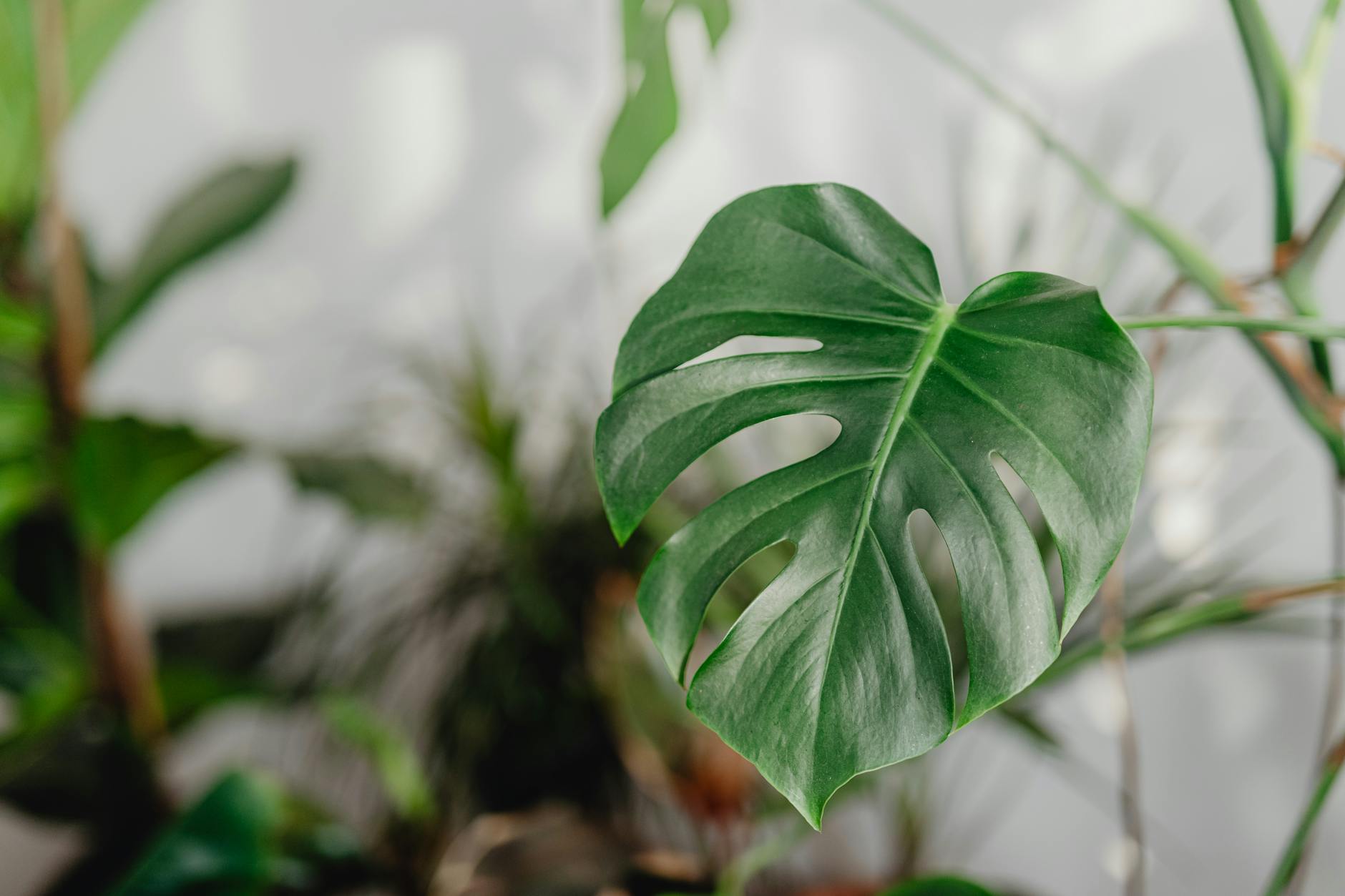
The Monstera deliciosa is an aroid — part of the same plant family (Araceae) as Philodendron, Pothos and Peace Lily. It’s native to the tropical rainforests of southern Mexico and Central America, where it climbs trees and develops the iconic fenestrations (the holes in the leaves) as it matures.
This matters because the Monstera is a climber, not a freestanding plant. The leaves get bigger and more split as it climbs. A young plant with small, solid heart-shaped leaves is not a different species — it just hasn’t matured yet.
The common name “Swiss Cheese Plant” refers to those holes. You may also see “Ceriman” in older plant nurseries. The widespread name “Split-leaf Philodendron” is incorrect — the Monstera is not a Philodendron, despite looking similar.
How much light does a Monstera deliciosa need?
A Monstera needs bright, indirect light. A spot a meter or two back from a south or west-facing window is ideal. North-facing windows are usually too dim for proper growth and leaf development.
Signs your Monstera needs more light:
- New leaves stay small and don’t develop holes
- No new fenestrations on mature leaves
- Slow or stalled growth
- Long gaps between leaf nodes (leggy stems)
Signs of too much direct sun:
- Pale or yellow patches on the leaves
- Crispy, dried edges
- Brown scorch marks on top-facing leaves
The plant will survive in low light. It just won’t develop into the dramatic specimen you bought it for.
How often to water a Monstera deliciosa
The single most common mistake with this plant is watering too often. The rule: wait until the top 2-3cm of soil is dry, then water thoroughly until water drains out the bottom. Empty the saucer afterward.
In a warm, bright room this might mean every 5-7 days. In a cool room in winter, every 10-14 days. There is no fixed watering schedule. Always check the soil first.
Signs of overwatering a Monstera:
- Yellow leaves, usually older ones at the base
- Brown, mushy stems
- A sour smell from the soil
- Soil staying wet days after watering
Signs of underwatering:
- Leaves drooping noticeably
- Brown, crispy edges
- Soil pulling away from the pot sides
If you cannot tell which it is, check the soil before adding more water. Overwatering and underwatering can look surprisingly similar.
The right humidity for a Monstera deliciosa
The Monstera is a rainforest plant. It prefers humidity above 60%. Most homes sit at 30-50%, which the plant tolerates but does not love.
For a happier Monstera:
- Group it with other plants — they raise humidity around each other
- Place it in a bathroom with a window
- Run a humidifier nearby in winter when central heating dries the air
Misting the leaves doesn’t help much. The effect lasts minutes. Ambient humidity is what matters.
Best temperature range for a Monstera deliciosa
The Monstera is comfortable between 18-27°C. It tolerates brief drops to 12°C, but shows stress below that: drooping, dark patches on leaves, slowed growth.
What to avoid:
- Cold drafts from windows, doors, or air conditioning
- Sitting against a cold window pane in winter
- Sudden temperature swings
Sudden drops cause more damage than steady cool conditions.
The best soil and pot for a Monstera deliciosa
Standard potting mix is too dense for a Monstera. The roots need air to thrive.
A workable Monstera soil mix:
- 60% standard potting mix
- 20% orchid bark or coco chunks
- 20% perlite
Or buy a pre-made aroid mix from a plant shop — same idea, less effort.
The pot must have drainage holes. A pot without drainage will not work for this plant.
For pot size: choose one that is 2-3cm wider than the current root ball. Going bigger means too much wet soil sitting around small roots, which leads to root rot.
When and how to fertilize a Monstera deliciosa
Fertilize monthly from spring through early autumn with a balanced liquid houseplant fertilizer at half the recommended strength. Stop fertilizing in winter — growth slows and excess nutrients build up in the soil.
After repotting into fresh soil, skip fertilizer for 4-6 weeks. The new soil already contains enough nutrients.
Why a Monstera deliciosa needs a climbing pole
This is the part most care guides skip.
The Monstera is a climber. Without something to climb, it sprawls sideways and the leaves stay smaller. With proper support, the leaves grow bigger and develop more dramatic splits.
Common climbing support options:
- Moss pole — kept slightly damp so aerial roots can attach (most popular)
- Coir pole — coconut-fiber alternative to moss
- Textured wooden plank — works for larger plants
You don’t need to add support immediately. But as the plant matures, climbing support makes a noticeable difference in leaf size and fenestration.
How to propagate a Monstera deliciosa in water
Monstera stem cuttings root in water without much fuss. Here is the full propagation process:
- Find a stem with at least one node — the bump where a leaf meets the stem — and ideally an aerial root.
- Cut just below the node with clean scissors or pruning shears.
- Place the cutting in water with the node submerged, in indirect light.
- Change the water once a week.
- Roots appear in 2-4 weeks.
- Pot up in well-draining soil once the roots reach about 5cm.
That is the whole process. Propagating a Monstera is one of the most rewarding parts of owning one.
Is Monstera deliciosa toxic to pets?
Yes, Monstera deliciosa is toxic to cats, dogs and horses. The leaves and stems contain calcium oxalate crystals, which cause:
- Mouth and throat irritation
- Drooling and difficulty swallowing
- Sometimes vomiting
The toxicity is not lethal for healthy adult pets, but it is painful and unpleasant. If your pets chew houseplants, keep the Monstera out of reach or choose a non-toxic alternative.
Cultivars at a glance
Monstera deliciosa 'Variegata'
Heavy white or cream variegation. Striking, but slower-growing and needs more light. Significantly more expensive than the standard.
Monstera deliciosa 'Thai Constellation'
Stable cream-spotted variegation, less prone to reverting than Variegata. Sought after by collectors, often hard to find.
Quick problem look-up
Yellow leaves on Monstera
Yellow leaves typically indicate overwatering. Allow the top 2-3cm of soil to dry between waterings. Occasionally, nutrient deficiency causes yellowing; apply monthly fertilizer during the growing season. Ensure pots have drainage holes and use well-draining soil to prevent water accumulation and root damage.
Brown leaf tips
Brown leaf tips usually result from low humidity or mineral buildup from tap water. Mist your Monstera regularly or place on a pebble tray with water to increase humidity. Use filtered water when possible to minimize mineral deposits on foliage and prevent tip browning.
Leaves not developing holes
Fenestrations develop as Monstera matures and receives adequate light. Young plants lack holes naturally. Ensure bright, indirect light exposure; low light delays fenestration development significantly. Mature plants in insufficient light stop producing characteristic split leaves, so relocate to a brighter location for optimal leaf development.
Drooping Monstera leaves
Drooping leaves indicate either underwatering or root rot. Check soil moisture: if dry, water thoroughly until it drains. If soil is soggy, the plant likely has root rot; repot into fresh, well-draining soil immediately. Keep temperatures between 18-27°C and allow top 2-3cm soil to dry between waterings.
Do you ever wonder when your plant needs water or feeding?
GreenIQ tracks it per plant and reminds you at the right moment — adjusted to the season, not a fixed day.
Free, no account, no tracking.
Download GreenIQWant to multiply this plant?
Step-by-step methods to grow new plants from cuttings, leaves, or division — with timings, success rates, and common problems.
View propagation guide →You might also like
Monstera deliciosa · Last updated May 2026 · Photo by Kaboompics on Pexels