Plant Care Guide
Swiss Cheese Vine Care: The Complete Guide
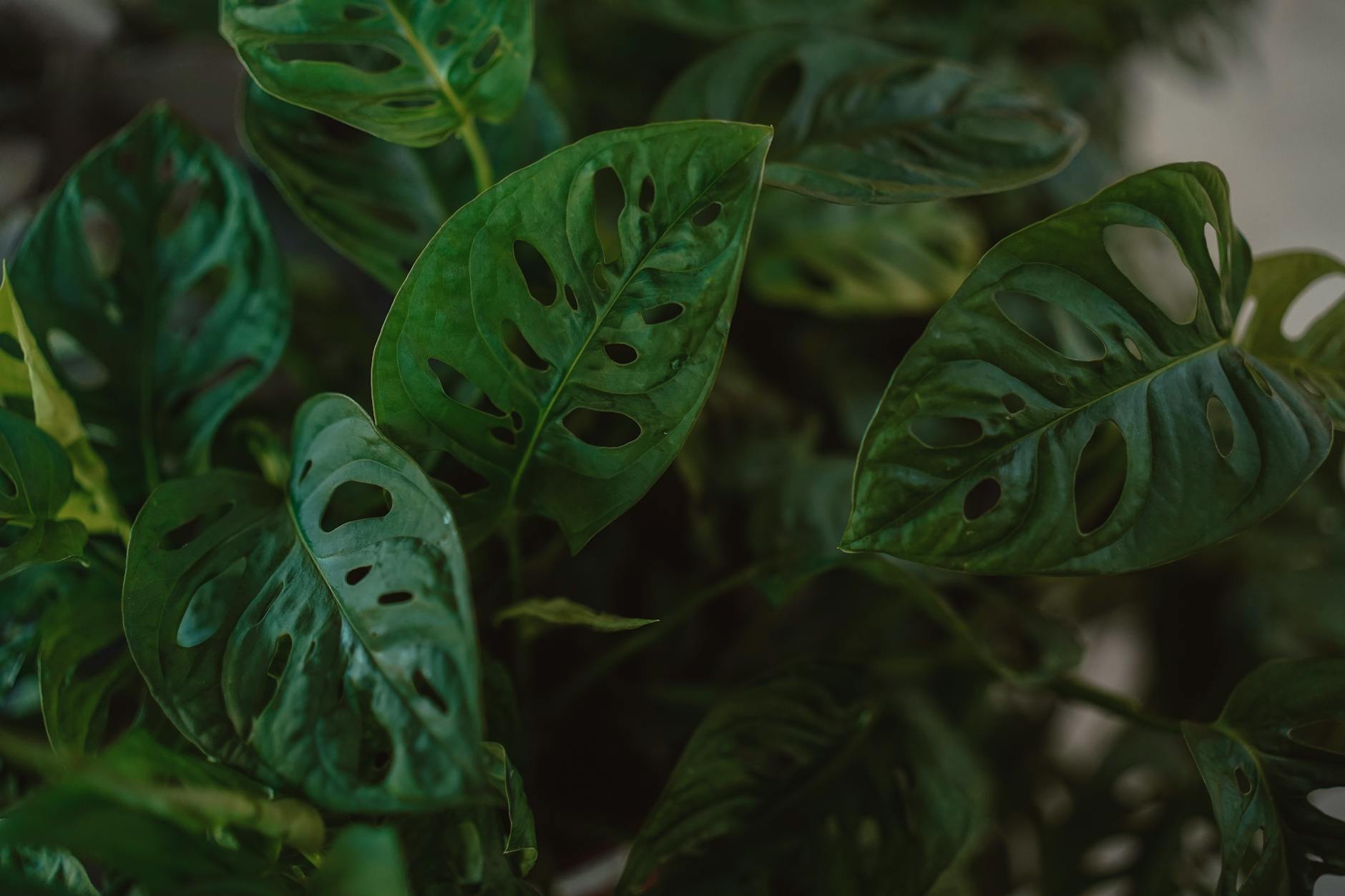
Monstera Adansonii (Monstera adansonii) is a climbing tropical aroid native to Central and South America, known for its smaller heart-shaped leaves perforated with characteristic oval holes, vigorous climbing or trailing habit, and preference for bright indirect light. Water when the top 3–5 cm of soil dries out, typically every 7–10 days.
Quick facts
Why does Monstera adansonii have holes from the time the leaves are young, while Monstera deliciosa only develops its characteristic splits and fenestrations on mature, large leaves? The leading explanation is that the holes allow wind to pass through vines hanging in the forest canopy without tearing the leaf — and that adansonii, growing in a more exposed vining position than deliciosa, develops them earlier as a result. Indoors, the holes appear regardless of conditions; they are genetic, not a response to care. What care does affect is how large those leaves get, and how many holes each one contains.
At a glance: Swiss Cheese Vine care
- Light: Bright, indirect. More light-demanding than Monstera deliciosa.
- Water: When the top 2-3cm of soil is dry.
- Humidity: High. More demanding than its larger relative.
- Temperature: 18-27°C ideal. Tolerates down to 12°C briefly.
- Toxicity: Toxic to cats, dogs and horses.
- Difficulty: Easy. Fast-growing and forgiving — humidity is the main challenge.
What is a Swiss Cheese Vine?
Monstera adansonii is native to tropical Central and South America, from Mexico down through Peru and Brazil, growing as a vine in humid rainforests. It belongs to the same genus as the much more famous Monstera deliciosa — the Swiss Cheese Plant — but is a smaller, faster-vining species with different leaf proportions.
The common names reflect the visual similarity to Monstera deliciosa while distinguishing the two: “Swiss Cheese Vine” (versus “Swiss Cheese Plant”) and “Five Holes Plant” describe the fenestrated leaves. The name Adanson’s Monstera references Michel Adanson, the French botanist after whom the species is named.
Two forms are sold in the houseplant trade, often without clear labelling:
- Round Form: Wider, heart-shaped leaves with oval fenestrations. The form most people mean when they say “adansonii.”
- Narrow Form: Longer, more elongated leaves with a different arrangement of holes. Less common but occasionally available.
Both grow identically and require the same care. The round form is the more sought-after of the two.
Compared to Monstera deliciosa, adansonii grows faster, stays smaller-leafed, and requires more humidity. It is better suited to shelves, hanging baskets, and climbing moss poles in smaller spaces than the deliciosa, which requires considerable floor space as it matures.
How much light does a Swiss Cheese Vine need?
Monstera adansonii needs bright, indirect light — more than Monstera deliciosa, which tolerates lower light reasonably well. In dim conditions, new leaves arrive smaller and with fewer holes, or no holes at all. The fenestrations are not something the plant skips in low light — they are genuinely fewer and smaller.
A spot near an east- or west-facing window, or back from a bright south-facing window, is ideal. Direct midday sun should be avoided — it bleaches and scorches the leaves.
Signs your Swiss Cheese Vine needs more light:
- New leaves arriving without holes, or with noticeably fewer holes than established leaves
- Leaves getting progressively smaller rather than larger
- Very slow growth during spring and summer despite consistent watering and warmth
Signs of too much direct sun:
- White or pale bleached patches on leaves
- Brown scorched edges
- Leaves appearing washed out rather than deep green
How often to water a Swiss Cheese Vine
Water when the top 2-3cm of soil is dry, then water thoroughly until it drains freely. In a warm, bright room in summer this is typically every 5-7 days. In winter or a cooler room, every 10-14 days.
Unlike Monstera deliciosa, the adansonii is slightly less tolerant of extended dry periods. Allowing the soil to dry out completely and stay dry for more than a few days results in brown tips and some leaf stress. The goal is evenly moist — not wet, not bone dry.
Signs of overwatering:
- Yellow leaves, starting with older leaves near the base
- Mushy, soft sections on stems near the soil
- A sour smell from the potting mix
- Soil remaining wet more than a week after watering
Signs of underwatering:
- Leaves looking slightly wilted or dull
- Stems losing their firmness
- Brown, dry tips (often the first visible sign)
The right humidity for a Swiss Cheese Vine
High humidity — 60% or above — is where Monstera adansonii genuinely differs from Monstera deliciosa. The deliciosa handles average home humidity (40-50%) without complaint. The adansonii develops brown tips in those same conditions more readily.
In dry conditions — below 40%, or in rooms with central heating in winter — brown crispy tips on leaves are the first symptom. They are not reversible; the affected leaf tips remain brown. New growth will be clean if the humidity problem is addressed.
Practical approaches:
- A humidifier running nearby in winter is the most effective solution — the same fix recommended for a Heartleaf Philodendron
- Grouping with other plants raises ambient humidity modestly
- A pebble tray with water beneath the pot helps at the immediate leaf level
- Placement in a bathroom with a window is a popular solution for humidity-demanding plants
Best temperature range for a Swiss Cheese Vine
Monstera adansonii grows best between 18-27°C and tolerates brief drops to 12°C. Below 12°C, growth stops and cold damage — dark patches on leaves — can develop.
What to avoid:
- Cold drafts directly on the plant
- Temperatures below 12°C sustained for more than a day or two
- Positioning the plant against a cold exterior wall or window in winter
The plant grows noticeably faster in warmer conditions — a warm room with high humidity and bright indirect light is where it reaches its best growth rate.
The best soil and pot for a Swiss Cheese Vine
A chunky, well-draining aroid mix is ideal: a standard indoor potting mix combined with 20-30% perlite, or a purpose-made aroid blend. The roots need air circulation and fast drainage to stay healthy.
A drainage hole is essential. Monstera adansonii is susceptible to root rot in waterlogged conditions — more so than the deliciosa.
As a fast grower, this plant may need repotting annually when young. The roots fill containers quickly. A pot only slightly larger than the current root ball prevents excess wet soil accumulating around the roots between waterings.
When and how to fertilize a Swiss Cheese Vine
Fertilize monthly during spring and summer with a balanced liquid fertilizer at half the recommended strength. The fast growth rate means the plant benefits more visibly from regular feeding than slower-growing species — larger leaves and more vigorous vines result from consistent fertilizing.
Stop in autumn and skip winter. Skip the first 4-6 weeks after repotting.
How to propagate a Swiss Cheese Vine
Stem cuttings root easily in water, and the plant’s fast growth rate means a single vine can produce multiple cuttings at once.
- Identify a stem section with at least one node — a small joint or bump on the stem — and one leaf.
- Cut just below the node with clean scissors. Remove any leaves that would sit below the waterline.
- Place in a glass or jar of clean water in bright, indirect light.
- Change the water every 5-7 days.
- Roots appear in 2-4 weeks.
- Pot up once roots are 3-5cm long.
A long trailing vine can be cut into multiple sections, each with a node, producing several new plants simultaneously — the same technique used for a Pothos. The parent plant will branch at the cut point and produce new growth.
Climbing produces larger leaves. Provided with a moss pole or trellis to climb, Monstera adansonii grows larger leaves with more developed fenestrations than the trailing form. Attach the vines to the support and allow the aerial roots to grip — the plant anchors itself within a few weeks.
Is Swiss Cheese Vine toxic to pets?
Yes, Monstera adansonii is toxic to cats, dogs and horses. Like all Monstera species and other aroids, the leaves and stems contain calcium oxalate crystals, which cause:
- Immediate burning and irritation in the mouth and throat
- Excessive drooling and pawing at the mouth
- Difficulty swallowing
- Occasional vomiting
The reaction is painful and distressing but not typically life-threatening for healthy adult animals. If a pet has chewed on the plant, rinse their mouth with water and contact a vet if symptoms persist. The trailing, hanging habit of Monstera adansonii makes it particularly accessible to cats — consider placement on high shelves or in rooms cats do not access.
Cultivars at a glance
Monstera adansonii 'Round Form'
Wider, rounder leaves with larger holes. The most commonly sold form; what most people picture when they think of this plant.
Monstera adansonii 'Narrow Form'
Longer, more elongated leaves with a different hole pattern. Less common in shops; same care requirements.
Quick problem look-up
Yellow leaves
Yellow leaves indicate overwatering, the most common cause. Allow soil to dry 2-3 cm between waterings. Always check soil moisture before watering. Use well-draining potting mix and ensure pots have drainage holes. Reduce watering frequency in cooler months when growth slows naturally.
Brown, crispy leaf tips
Brown, crispy tips result from low humidity, which Swiss Cheese Vines dislike, or occasionally from the soil drying out too much between waterings. Increase humidity by misting leaves twice weekly, grouping plants together, or placing on pebble trays filled with water. Maintain humidity around 60-70 percent for optimal growth and leaf health.
Small leaves with few or no holes
Small leaves without fenestrations develop when light is insufficient. Move your plant closer to bright, indirect light from a window. It needs at least 200 foot-candles to develop characteristic holes. Existing small leaves will not develop holes retroactively — only new leaves benefit from improved light. Without adequate light, the plant conserves energy and cannot produce larger, perforated leaves.
Root rot
Root rot occurs from overwatering combined with poor drainage. Repot immediately into fresh, well-draining soil mixture with perlite or orchid bark added. Cut away blackened roots with sterile scissors. Reduce watering significantly and allow soil to dry between waterings to prevent recurrence.
Do you ever wonder when your plant needs water or feeding?
GreenIQ tracks it per plant and reminds you at the right moment — adjusted to the season, not a fixed day.
Free, no account, no tracking.
Download GreenIQWant to multiply this plant?
Step-by-step methods to grow new plants from cuttings, leaves, or division — with timings, success rates, and common problems.
View propagation guide →You might also like
Monstera adansonii · Last updated May 2026 · Photo by hello aesthe on Pexels