Plant Care Guide
Dragon Tree Care: The Complete Guide
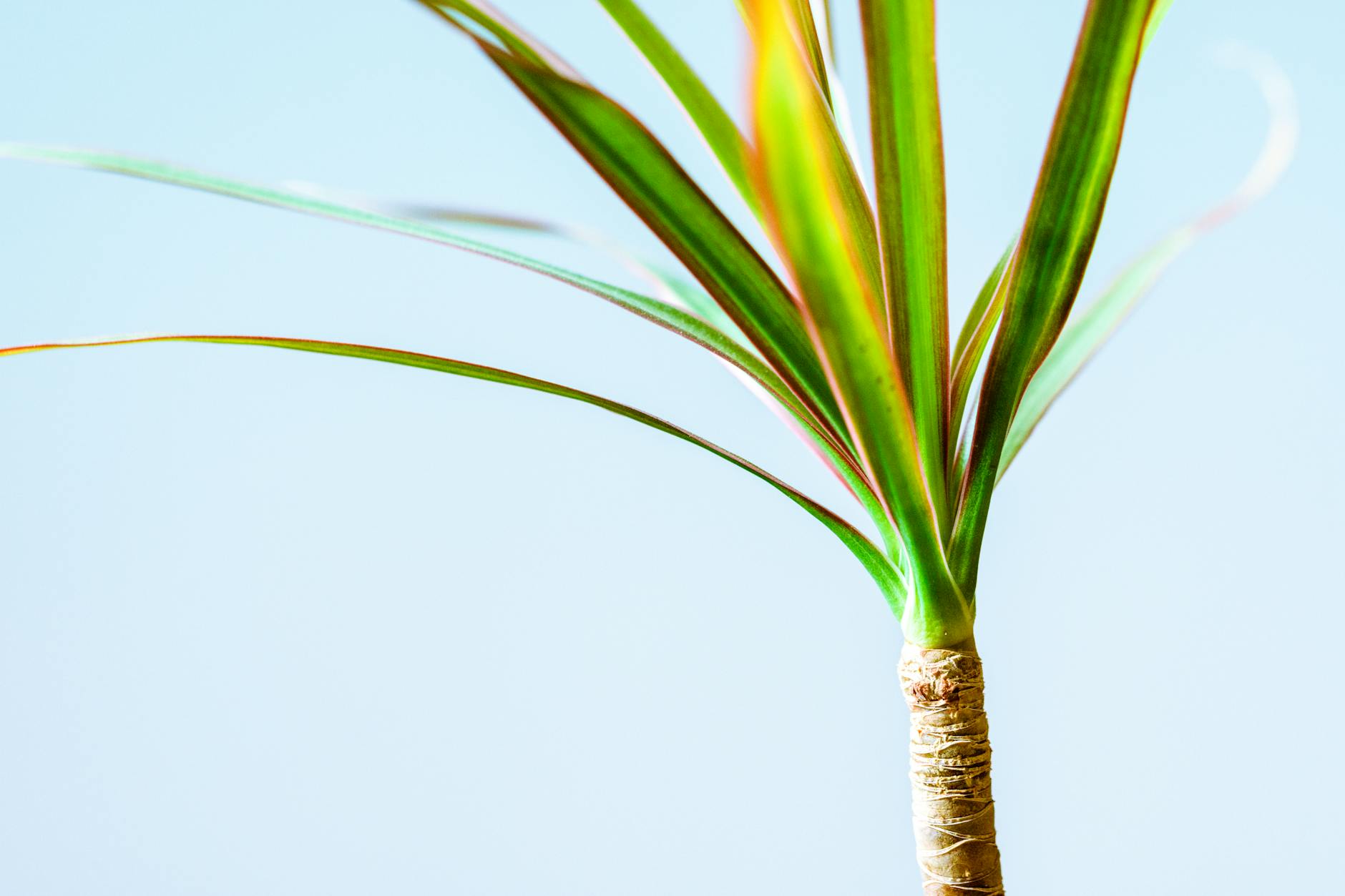
Dragon Tree (Dracaena marginata) is a slow-growing tree native to Madagascar, known for its slender stems topped with arching ribbon-like leaves edged in red, sculptural growth habit indoors, and exceptional tolerance of low light and occasional underwatering. Water when the top 3–5 cm of soil dries out, typically every 10–14 days.
Quick facts
Dracaena marginata — sold in most garden centres under the name Dragon Tree — is a slow-growing indoor tree that earns its space with very little effort. The narrow, arching leaves edged in dark red, growing from the tips of bare woody canes, create an architectural look that suits modern interiors, in the same category of statement indoor trees as the Rubber Plant. It tolerates low light, dry air, and neglect better than most plants its size. The main way people kill it is overwatering and fluoride sensitivity. This guide covers what actually matters.
At a glance: Dragon Tree care
- Light: Bright, indirect — tolerates medium light.
- Water: When the top 2-3cm of soil is dry.
- Humidity: Medium — tolerates average indoor air.
- Temperature: 12-35°C ideal.
- Toxicity: Toxic to cats, dogs, and horses — particularly toxic to cats.
- Difficulty: Easy. One of the most forgiving large houseplants.
What is a Dragon Tree?
Dracaena marginata belongs to the family Asparagaceae and is native to Madagascar. It is sometimes still sold or listed under the old name Dracaena reflexa var. angustifolia, or occasionally mislabelled as Dracaena aurantiaca — both refer to the same plant, with Dracaena marginata being the currently accepted name for the species commonly sold as Dragon Tree.
In the wild it grows in dry, rocky terrain and open scrub on Madagascar, where it develops into a tree up to 5 metres tall with multiple trunks. As a houseplant it grows much more slowly, typically adding 15-30cm per year in good conditions. The bare, ringed canes that develop over time are caused by the lower leaves naturally dying off as the plant grows — this is normal and not a sign of poor health.
The name “Dragon Tree” comes partly from a legend that the red sap of the related Dracaena draco was dragon’s blood, used historically as a dye and medicine. Dracaena marginata does not produce the same red sap, but the name has stuck across the genus.
How much light does a Dragon Tree need?
Dracaena marginata grows best in bright, indirect light but tolerates medium light better than most plants. In a bright position, it grows faster and maintains its characteristic dark red leaf margins. In lower light, growth slows considerably and the red edging becomes less intense.
A spot within one to two metres of a south- or west-facing window is ideal. An east-facing window also works. The plant tolerates a position further from a window — a common use is as a floor plant in a medium-light corner — but growth essentially stops in truly dim conditions.
Signs your Dragon Tree needs more light:
- Very slow or no new growth during spring or summer
- Leaves becoming greener with less red margin
- The plant leaning toward the nearest window
Signs of too much direct sun:
- Pale, bleached patches on leaves
- Brown, dry patches on sun-facing sides
How often to water a Dragon Tree
Water when the top 2-3cm of soil has dried out — feel the soil with a finger before each watering. Water thoroughly, then let the pot drain fully and empty the saucer. Dracaena marginata is moderately drought-tolerant and far more likely to be damaged by overwatering than by missing a watering — a trait it shares with the Snake Plant and Yucca, both from the same Asparagaceae family.
In summer, watering every 7-14 days is typical. In winter in a cool room, every 2-3 weeks is normal. The plant’s thick canes store some moisture, giving it a buffer against missed waterings.
Signs of overwatering:
- Yellow leaves, particularly lower ones
- Soft or discoloured sections on the canes
- A smell of rot from the soil
Signs of underwatering:
- Leaves looking slightly puckered or dull
- Dry, papery leaf tips
The right humidity for a Dragon Tree
Dracaena marginata manages well at medium humidity — the 40-60% typical of most indoor environments. It tolerates drier air better than many tropical plants, making it a practical choice for rooms with central heating.
Brown leaf tips are the most common humidity-related complaint, but on Dragon Trees they are more often caused by fluoride in tap water than by dry air (see below). A pebble tray is a reasonable precaution in very dry rooms, but it is rarely essential.
Best temperature range for a Dragon Tree
Dracaena marginata is comfortable between 12-35°C and handles typical indoor temperatures without complaint. Growth is strongest between 18-25°C. Below 12°C the plant suffers cold stress — leaves develop dark, water-soaked patches that later turn brown.
What to avoid:
- Temperatures below 10°C for sustained periods
- Cold drafts from windows or air conditioning vents blowing directly on the plant
- Placing against a cold exterior wall in winter
The plant can recover from a brief cold spell, but sustained exposure to cold causes leaf damage that cannot be reversed.
The best soil and pot for a Dragon Tree
A well-draining potting mix is all Dracaena marginata needs. Standard potting compost works fine; adding 20% perlite improves drainage if your mix is heavy. Avoid very dense, peat-heavy mixes that retain moisture for too long.
A drainage hole is essential. The plant is also sensitive to fluoride in tap water — fluoride accumulates in the soil and causes the classic brown leaf tip damage that is often mistaken for a watering or humidity problem. To reduce this, use filtered water, collected rainwater, or let tap water sit open overnight before use. Occasionally flushing the soil thoroughly with plain water removes accumulated fluoride and salt deposits.
Repot every 2-3 years, or when roots are visibly circling the pot or emerging from the drainage holes. Dragon Trees do not need large pots — a snug fit is fine and reduces the risk of excess wet soil around the roots.
When and how to fertilize a Dragon Tree
Feed every two months during spring and summer with a balanced liquid fertilizer at half the recommended strength. Stop in autumn and skip winter entirely. Dracaena marginata is sensitive to excess fertilizer salts, which worsen the tip browning caused by fluoride build-up. Less is more.
Do not fertilize a recently repotted plant for 6-8 weeks. Fresh potting mix contains sufficient nutrients.
How to propagate a Dragon Tree
Stem cuttings are the standard method and work reliably.
Stem tip cuttings:
- Cut a stem tip 10-15cm long from a healthy growing tip.
- Remove the lower leaves.
- Allow the cut end to dry for a few hours.
- Plant into moist, well-draining potting mix.
- Keep warm (above 20°C) and in indirect light. Roots form in 4-8 weeks.
Cane sections: Bare sections of cane without leaves can also be rooted by laying them horizontally on moist potting mix — new shoots emerge from the nodes within a few weeks. This is useful when cutting back an overgrown or leggy plant.
Is Dragon Tree toxic to pets?
Yes, Dracaena marginata is toxic to cats, dogs, and horses. The leaves and stems contain saponins, which cause:
- Vomiting (sometimes with blood in cats)
- Excessive drooling
- Lethargy
- Dilated pupils in cats specifically
Cats are particularly sensitive to dracaena toxicity — more so than dogs. If you have cats that chew on plants, keep the Dragon Tree out of reach or replace it with a pet-safe alternative. If a pet has ingested any part of the plant, contact a vet or animal poison control line promptly.
Cultivars at a glance
Dracaena marginata 'Tricolor'
Leaves striped in pink, green, and cream. Needs more light than the species to maintain the pink colouration.
Dracaena marginata 'Colorama'
Heavy pink-red colouration, almost entirely red-pink with thin green stripes. Striking but requires very bright indirect light.
Dracaena marginata 'Tarzan'
Broader, more arching leaves than the species. More architectural look; same easy care requirements.
Quick problem look-up
Brown leaf tips
Brown leaf tips on Dragon Trees indicate fluoride sensitivity from tap water chemicals, or salt accumulation from fertilizer. Use filtered water or collect tap water in an open container overnight to allow chlorine and fluoride to evaporate, and occasionally flush the soil with plain water to clear salt buildup. This simple adjustment prevents tip burn within two to three weeks. Trim affected leaves for appearance.
Yellow leaves
Yellow leaves signal overwatering, the most common Dragon Tree problem. These plants prefer dry conditions between waterings. Water only when soil feels dry 5 centimeters deep, typically every ten to fourteen days. Empty drainage trays immediately after watering to prevent root contact with excess moisture.
Fine webbing or stippled leaves
Fine webbing and stippled leaves indicate spider mites, thriving in dry indoor air. Shower the leaves with water to physically dislodge mites, then increase humidity by misting twice weekly or using a pebble tray. Treat with neem oil spray every seven days for three applications. Isolate the plant from others during treatment to prevent spreading.
Soft base or collapsed canes
Soft, collapsed canes indicate root rot from persistent overwatering. If caught early, remove the plant, trim away blackened, mushy roots with clean scissors, let the healthy cane sections dry for a day, then repot into fresh, well-draining soil mix. Use a pot with drainage holes and water only when soil is dry several centimeters down.
Do you ever wonder when your plant needs water or feeding?
GreenIQ tracks it per plant and reminds you at the right moment — adjusted to the season, not a fixed day.
Free, no account, no tracking.
Download GreenIQYou might also like
Dracaena marginata · Last updated May 2026 · Photo by Stanislav Kondratiev on Pexels