Plant Care Guide
Aloe Vera Care: The Complete Guide
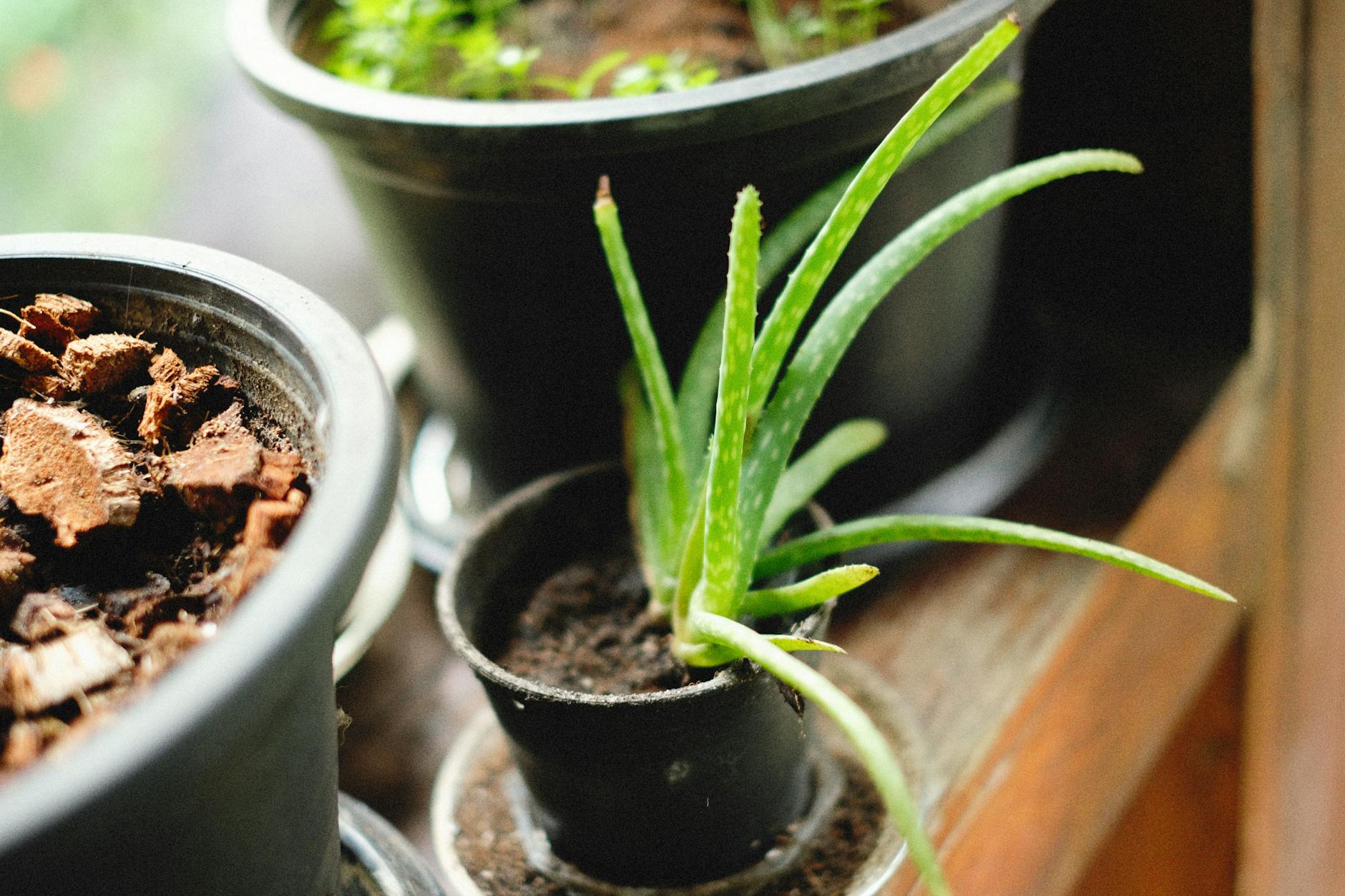
Aloe Vera (Aloe vera) is a succulent native to the Arabian Peninsula, known for its thick fleshy leaves filled with gel, rosette growth habit, and prolific production of offsets at the base. Water deeply every 2–3 weeks in summer and every 4–6 weeks in winter, allowing the soil to dry fully between waterings.
Quick facts
Aloe vera is simultaneously a medicinal plant and a houseplant — one of the very few where both descriptions are genuinely accurate. The clear gel inside its leaves has documented efficacy for minor burns, sunburn, and skin irritation, and a healthy plant provides a continuous supply without any processing. That function has made it a kitchen windowsill staple for decades. The care requirements are almost minimal: bright light, very infrequent watering, and fast-draining soil — the same undemanding profile as a Jade Plant or Zebra Haworthia. Neglect suits it better than attention.
At a glance: Aloe Vera care
- Light: Bright, direct to indirect. More sun-tolerant than most houseplants.
- Water: Allow soil to dry completely between waterings.
- Humidity: Low. No special requirements.
- Temperature: 15-35°C. Tolerates brief dips to 8°C.
- Toxicity: The inner gel is non-toxic; the yellow latex layer is toxic to pets.
- Difficulty: Easy. Thrives on neglect but does not tolerate overwatering.
What is an Aloe Vera?
Aloe vera is native to the Arabian Peninsula and has been naturalized across tropical and subtropical regions worldwide for at least 6,000 years — carried by traders and colonists because of its medicinal properties. It belongs to the family Asphodelaceae, not Asparagaceae, which is a frequent error. The name “Aloe barbadensis miller” is a synonym for the same plant; both names appear in scientific literature and on plant labels, and both refer to Aloe vera.
The plant is a monocot succulent, storing water in its thick, fleshy leaves rather than underground structures like the ZZ Plant. Each leaf is filled with a gel that is approximately 99% water, with polysaccharides, glycoproteins, and various bioactive compounds. This is the same substance refined for cosmetic and pharmaceutical products, though the home plant version is unprocessed and should be used fresh rather than stored.
The toxicity note requires precision: the clear inner gel of Aloe vera is non-toxic. The yellow layer immediately beneath the skin of the leaf — the latex, containing compounds called anthraquinones and specifically aloin — is toxic to cats and dogs. When using the plant medicinally, scrape only the clear gel, avoiding the yellow layer.
How much light does an Aloe Vera need?
Aloe vera prefers bright, direct to indirect light — more sun-tolerant than the majority of common houseplants. A south-facing or west-facing window is ideal. The plant tolerates several hours of direct morning or afternoon sun without leaf damage, which few houseplants can manage.
In insufficient light, the leaves lose their upright posture: instead of growing as a tight, upright rosette, the leaves flatten outward and elongate as the plant reaches for the available source. The grey-green colour may also shift toward a paler, washed-out tone. A plant with flat, floppy leaves that is being watered correctly almost always has a light problem.
Signs your Aloe Vera needs more light:
- Leaves lying flat rather than growing upright
- Leaf colour turning pale or yellowish green
- Very slow growth, even during summer
- The plant leaning heavily toward the nearest window
Signs of too much intense sun:
- Orange or reddish tinge to the leaves — the plant’s stress response (not harmful in mild cases)
- Brown, dry patches on leaf surfaces where direct midday sun has scorched them
- Leaves shrivelling despite adequate watering — rare but possible in extreme conditions
How often to water an Aloe Vera
Allow the soil to dry out completely between waterings — then water thoroughly until water runs from the drainage hole. In summer, this typically means every 3-4 weeks. In a cool room in winter, monthly or less is normal.
The thick, fleshy leaves store water, making the plant genuinely drought-tolerant. A hydrated Aloe Vera has firm, plump leaves. A thirsty plant will have slightly thinner, less plump leaves — the plant is drawing down its reserves. Both states are fine; the leaves recover their firmness after watering. What the plant cannot recover from is consistently wet soil.
Signs of overwatering:
- Leaves turning yellow and soft rather than firm and grey-green
- Mushy sections at the base of leaves or the centre of the rosette
- A sour smell from the potting mix
- The whole plant looking limp despite wet soil
Signs of underwatering:
- Leaves becoming noticeably thinner and slightly wrinkled
- Brown, dry tips on the oldest, outermost leaves
- Soil completely dry and pulling away from the pot sides
The right humidity for an Aloe Vera
Aloe vera requires no special humidity management. It evolved in arid conditions and is entirely comfortable at the 30-50% humidity typical of most homes, including in winter when central heating dries the air significantly. No misting, no humidifier, no pebble tray.
This is one of the few common houseplants that actively prefers the dry conditions that cause problems for most others.
Best temperature range for an Aloe Vera
Aloe vera grows best between 15-35°C and handles heat well — better than most houseplants. It tolerates brief dips to around 8°C but will be damaged by frost. Growth stops below about 12°C.
What to avoid:
- Frost or sustained temperatures below 5°C, which will kill the plant
- Cold drafts from open windows or doors in winter
- Placing the pot against a cold exterior wall in a north-facing room in winter
The plant handles the high temperatures of a sunny south-facing window without difficulty, provided the pot has adequate drainage and the soil is allowed to dry between waterings.
The best soil and pot for an Aloe Vera
A purpose-made cactus and succulent mix is essential. Standard indoor potting mixes retain too much moisture and will cause the roots to rot. If you only have standard potting mix, add 30-40% perlite or coarse grit to open the structure significantly.
Terra cotta pots are the best choice. Unglazed terra cotta allows moisture to escape through the pot walls, which further reduces the risk of overwatering. The weight also helps as the plant and its pups grow — plastic pots tip easily.
A drainage hole is non-negotiable. Aloe vera is highly prone to root rot in waterlogged conditions.
When repotting — typically every 2 years as the plant produces pups and fills its container — choose a pot only slightly larger than the current root ball. A pot that is much larger than the roots leaves wet, unused soil that the roots cannot dry out quickly.
When and how to fertilize an Aloe Vera
Fertilize once every three months during spring and summer with a balanced liquid fertilizer at half the recommended strength. The plant is a slow, minimal feeder and does not need or benefit from frequent fertilizing. Overfeeding causes salt accumulation in the soil, which eventually burns the root tips and causes tip browning.
Stop feeding in autumn and skip winter entirely. Skip the first 4-6 weeks after repotting.
How to propagate an Aloe Vera
Aloe vera propagation is straightforward: the plant produces offset pups at its base as it matures, each of which is a complete young plant growing from the mother plant’s root system.
- Wait until the pup is at least 5-10cm tall and has developed its own root system.
- Remove the whole plant from the pot and gently clear the soil from the base to see where the pup connects.
- Separate the pup by pulling it free or cutting the connecting root with clean scissors.
- Allow the cut end to air-dry for 24 hours to callous over.
- Pot the pup in dry cactus mix.
- Wait 1-2 weeks before first watering to let any root damage seal.
A mature Aloe vera can produce dozens of pups over a few years. Removing them regularly keeps the mother plant growing in its original pot without being overwhelmed.
Using the gel medicinally
To harvest the gel:
- Cut a lower, outer leaf close to the base — these are the oldest and most gel-filled.
- Stand the cut leaf upright over a container for a few minutes to let the yellow latex drain out (this is the toxic part — do not use it).
- Slice along one edge and scoop out the clear gel.
- Apply directly to minor burns, sunburn, or skin irritation.
- Use fresh — the gel loses efficacy within a few hours and should not be stored.
Do not ingest the gel. External use is documented and effective; internal use has mixed evidence and potential risks.
Is Aloe Vera toxic to pets?
Yes — partially. This plant has a nuanced toxicity profile that is worth understanding precisely.
- The clear inner gel: Non-toxic. This is the part used medicinally and in cosmetic products.
- The yellow latex layer (aloin and related anthraquinones): Toxic to cats and dogs. Causes vomiting, diarrhea, and occasionally tremors in significant quantities.
If a pet chews an Aloe leaf, they will ingest both layers. The result is typically gastrointestinal upset. Contact a vet or animal poison control line if symptoms are severe or the animal consumed a large amount. Place the plant out of reach of pets that chew houseplants.
Quick problem look-up
Yellow or mushy leaves
Overwatering is the primary cause of yellow or mushy leaves in Aloe Vera. The plant requires soil to dry completely between waterings. If root rot occurs, remove the plant from its pot, trim away dark mushy roots, and repot in fresh cactus mix. Reduce watering frequency significantly afterward to prevent recurrence.
Brown, dry leaf tips
Brown leaf tips result from underwatering or intense direct sun exposure causing scorching. The outermost oldest leaves naturally brown slightly with age—this is normal. However, extensive browning indicates either insufficient water or too many hours of harsh midday sun. Adjust watering and light exposure accordingly, keeping temperatures between 15–35°C.
Flat or drooping leaves
Flat or drooping leaves signal insufficient light. Aloe Vera requires several hours of bright light daily to maintain its upright rosette form. Move the plant to a brighter location near a sunny window. As light increases, the plant will gradually re-establish its characteristic compact, vertical growth pattern within weeks.
No offset pups forming
Young Aloe Vera plants under two to three years rarely produce offset pups. In mature plants, insufficient light is the primary barrier to pup formation. Ensure your Aloe receives several hours of bright light daily. Once established in ideal conditions, healthy mature plants will naturally generate pups around the base.
Do you ever wonder when your plant needs water or feeding?
GreenIQ tracks it per plant and reminds you at the right moment — adjusted to the season, not a fixed day.
Free, no account, no tracking.
Download GreenIQWant to multiply this plant?
Step-by-step methods to grow new plants from cuttings, leaves, or division — with timings, success rates, and common problems.
View propagation guide →You might also like
Aloe vera · Last updated May 2026 · Photo by Alexey Demidov on Pexels