Plant Care Guide
Burro's Tail Care: The Complete Guide
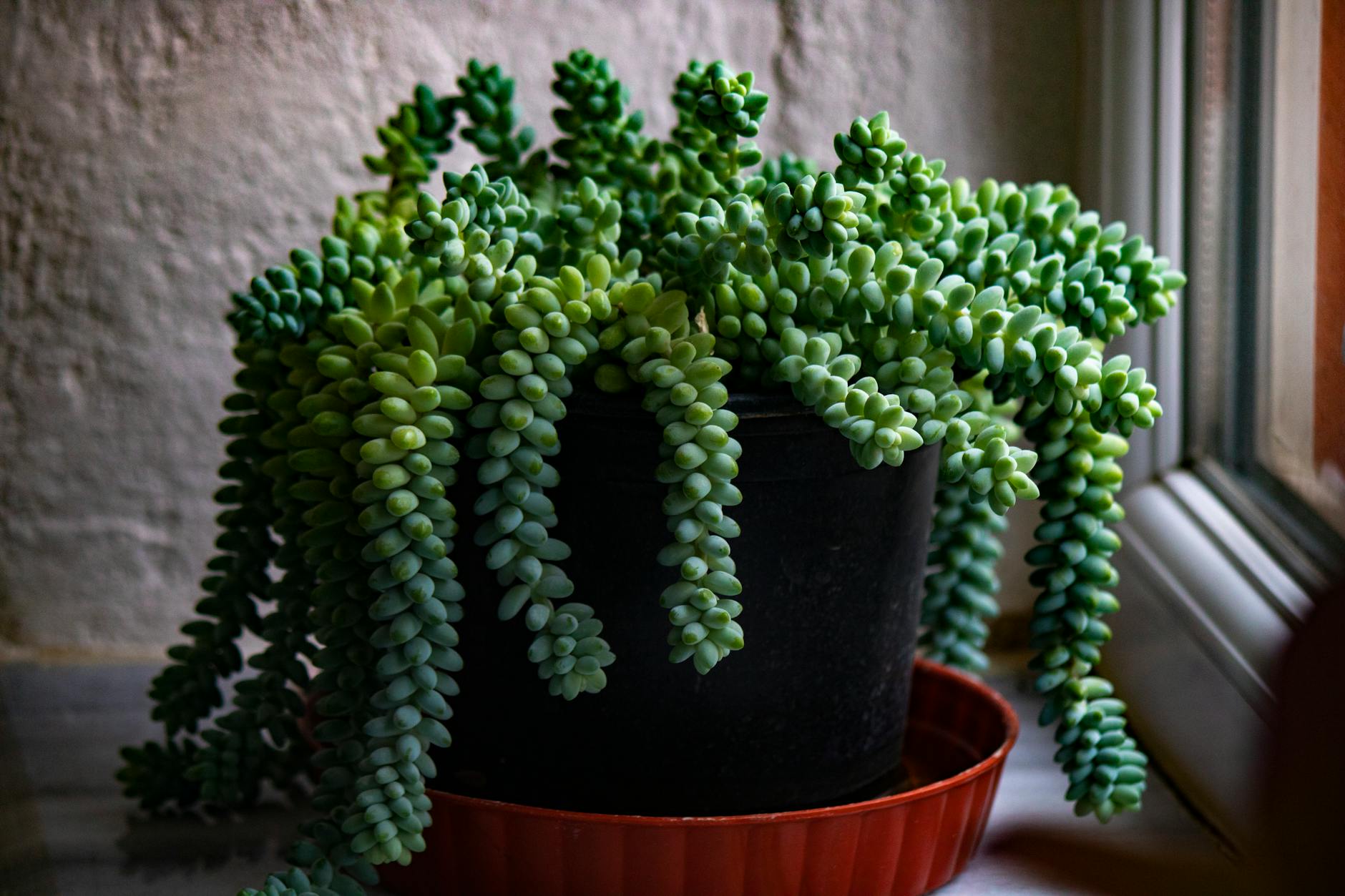
Burro's Tail (Sedum morganianum) is a trailing succulent native to southern Mexico and Honduras, known for its overlapping plump blue-green leaflets along long stems, extreme fragility of leaves that detach at the slightest touch, and capacity to propagate readily from dropped leaves. Water deeply every 2–3 weeks in summer and every 4–6 weeks in winter, allowing the soil to dry fully between waterings.
Quick facts
Pick up a trailing stem of Sedum morganianum and, before you have finished moving it, three or four leaves have already fallen. The overlapping, plump, blue-green leaflets that give the Burro’s Tail its rounded, rope-like appearance are attached by the thinnest possible connection — a leaf grazing another surface while the pot is carried across a room is enough to detach it. This extreme fragility is not a fault with the plant; it is the plant’s propagation mechanism. Each fallen leaf, placed on dry soil, roots and becomes a new plant. Sedum morganianum drops leaves to spread itself, and does so at the slightest encouragement. The first rule of Burro’s Tail care is not a watering interval or a light level — it is to choose a position and then leave it there.
At a glance: Burro’s Tail care
- Light: Bright, direct. At least 4–6 hours of direct sun daily. South- or west-facing windowsill ideal.
- Water: Soak when soil is completely dry — every 2–3 weeks in summer. Genuinely drought tolerant.
- Humidity: Low. Prefers dry air; high humidity combined with overwatering leads to stem rot.
- Temperature: 10–30°C, prefers warm dry conditions.
- Toxicity: Non-toxic to cats, dogs, and horses.
- Difficulty: Easy. Light and the no-touch rule are the two challenges; care itself is minimal.
What is a Burro’s Tail?
Sedum morganianum is native to the semi-arid forests of Veracruz, Mexico, where it grows on rocky outcroppings and hangs from cliffs and tree branches in warm, dry conditions. The natural habitat explains both key features of the plant: the water-storing leaves, which evolved for drought tolerance, and the hanging growth habit, which positions the stems over air rather than soil. Indoors, a hanging basket replicates that position most accurately.
Sedum morganianum is named after Dr. Meredith Morgan, an American plant collector who introduced the species to cultivation in the late 1930s from specimens collected in Mexico. The common names — Burro’s Tail, Donkey’s Tail, Horse’s Tail, Lamb’s Tail — all describe the same thing: the long, thick trailing stems covered in tightly overlapping leaflets that resemble the tail of an animal when hanging freely.
The closely related cultivar ‘Burrito’ (sometimes classified separately as Sedum burrito) has rounder, more compact leaflets than standard morganianum. Both share identical care requirements and the same extreme leaf fragility. The ‘Giant Burro’s Tail’ form produces longer stems and larger leaflets, though it is no less prone to leaf drop.
How much light does a Burro’s Tail need?
Sedum morganianum needs bright light with direct sun — at least 4–6 hours of direct sun daily. A south- or west-facing windowsill is the target position. In lower light, the stems etiolate: they elongate between leaflets, producing widely spaced beads instead of the tightly packed, rope-like form that characterises a healthy plant.
The Burro’s Tail requires more direct sun than most indoor succulents. Where a Zebra Haworthia or an Aloe tolerates a bright windowsill with indirect light, Sedum morganianum needs actual direct sun to maintain compact, well-packed leaflet arrangement and the characteristic blue-green colouration.
Signs your Burro’s Tail needs more light:
- Stems stretching with wide gaps between leaflets
- Overall colouration fading from blue-green to pale yellowish
- New leaflets arriving progressively smaller and less plump
Signs of too much sun:
- Leaf tips turning reddish or orange — a stress response to very intense sun at the edge of tolerance
- Leaflet tips drying and shrivelling in very intense afternoon summer sun
How often to water a Burro’s Tail
Soak thoroughly when the soil is completely dry — throughout the pot, not just the surface — then wait until it is completely dry again before repeating. In summer at normal room temperatures, this is typically every 14–21 days. In winter, once a month or less is appropriate. The Burro’s Tail stores significant water in its leaflets and suffers far more from overwatering than from drought.
The critical test: push a finger to the bottom of the pot before watering. If any moisture remains at root depth, wait. Watering while the lower soil is still damp is the most common cause of stem rot.
Signs of overwatering:
- Leaflets becoming soft, translucent, or mushy where they attach to the stem
- Stems blackening or softening at the base
- A sour smell from the potting mix
Signs of underwatering:
- Leaflets shrivelling and wrinkling rather than remaining plump and firm
- Overall stems appearing less full — individual beads becoming less round
- Colour becoming slightly duller
Unlike the collapse response of overwatered succulents, underwatered Burro’s Tail recovers quickly. Shrivelled leaves plump up within 24–48 hours of thorough watering.
The right humidity for a Burro’s Tail
Low humidity — the drier the better. In its native semi-arid habitat, humidity is low and air circulation is constant. High humidity combined with overwatering is the combination most likely to cause stem rot. Normal home conditions (40–60% humidity) suit the plant well. In a very humid bathroom or conservatory, reduce watering frequency to compensate for the slower evaporation rate.
Best temperature range for a Burro’s Tail
10–30°C is the comfortable range. Sedum morganianum handles cooler temperatures better than most houseplants — it can survive brief periods near 5°C without damage, making it suitable for a cool bedroom or unheated room. What it cannot tolerate is frost combined with wet soil, which causes cell damage in the leaves and root rot simultaneously.
What to avoid:
- Frost — while the plant handles cool temperatures, frost damages the leaf cells directly
- Cold and wet soil simultaneously — the damage is faster than either condition alone
The best soil and pot for a Burro’s Tail
A cactus and succulent mix with 20–25% additional perlite provides the fast drainage Sedum morganianum requires. Standard potting soil retains too much moisture and creates rot conditions even with a correct watering interval.
A shallow pot is preferable to a deep one. The Burro’s Tail has shallow roots that do not extend far into the pot — excess depth holds moisture at a level the roots cannot access, increasing rot risk without providing any benefit. A wide, shallow container suits the growth habit.
A hanging basket is the most practical container choice: it protects the fragile trailing stems from contact with surfaces that would dislodge leaves, positions the growth where it can hang freely, and allows air circulation around the soil for faster drying — the same reason a hanging basket is standard for String of Pearls. Once placed, leave the pot in position. The act of carrying or shifting it causes leaf drop regardless of care. Choose a permanent location before the plant is mature and established.
When and how to fertilize a Burro’s Tail
Fertilize every 3 months during the growing season (spring through early summer) with a diluted cactus and succulent fertilizer at half strength. Sedum morganianum is a light feeder — monthly feeding produces excess soft growth that is more prone to physical damage. Stop in autumn. Skip winter.
How to propagate a Burro’s Tail
The Burro’s Tail propagates prolifically from its own leaf drop. Every fallen leaf is a potential new plant.
From individual leaves:
- Collect leaves that have fallen naturally, or remove them by supporting the stem immediately below the detachment point to prevent additional drop.
- Allow each leaf to callous at the detachment end for 24–48 hours on a dry surface.
- Lay leaves flat on the surface of dry cactus mix — do not bury them.
- Place in bright indirect light. Do not water for the first week.
- Tiny pink roots emerge from the callous end within 1–3 weeks; small plantlets follow within 4–8 weeks.
From stem cuttings:
- Cut a stem section 5–10cm long with clean scissors. Support the stem below the cut to limit leaf drop during the cut.
- Allow to callous for 48 hours.
- Press the cut end into dry cactus mix.
- Water sparingly (once every 10 days) until roots establish, then water as normal.
Is Burro’s Tail toxic to pets?
No — Sedum morganianum is non-toxic to cats, dogs, and horses. The plant contains no known toxic compounds and is safe in households with animals. The trailing growth habit makes it physically accessible to pets, and a chewed leaf causes no harm — though a curious cat in reach of a hanging Burro’s Tail will cause cosmetic damage to the stems that takes months of slow growth to recover.
Cultivars at a glance
Sedum morganianum 'Burrito'
Rounder, more compact leaves than the standard species. Sometimes sold as a separate species (Sedum burrito). Same care requirements.
Sedum morganianum 'Giant Burro's Tail'
Longer stems and larger leaves. More impressive as a hanging specimen but requires the same careful handling.
Quick problem look-up
Leaves dropping when touched or moved
Burro's Tail naturally sheds leaves easily when jostled or moved, which is completely normal. This trait makes the plant fragile but not unhealthy. Once positioned in your preferred bright location, avoid relocating the pot frequently. When you must move it, carry the pot from directly underneath rather than by the rim, which dislodges far more leaves. Handle it minimally and place it on a stable surface where it won't be disturbed. You can propagate fallen leaves easily in dry soil.
Mushy stems or base
Mushy stems indicate root rot from overwatering, the most serious problem for Burro's Tail. If caught early, cut back mushy sections to firm tissue, let cut ends callous 48 hours, then repot in fresh, dry cactus mix and withhold water two weeks. This succulent otherwise needs very little water — allow soil to dry completely between waterings, typically every two to three weeks, in a pot with drainage holes and cactus or succulent mix. Reduce watering further in cooler months when growth slows.
Shriveled or wrinkled leaves
Shriveled leaves signal underwatering. Despite being drought tolerant, Burro's Tail still needs occasional water during the growing season. Water thoroughly when soil feels completely dry, allowing water to drain fully. Leaves should plump up visibly within a few days after proper watering. Check soil moisture regularly during hot months when evaporation increases.
Long bare stems with few leaves
Leggy growth with sparse leaves results from insufficient light. Burro's Tail requires bright, indirect light or several hours of direct sunlight daily to maintain compact, dense foliage. Move the plant closer to a south or west facing window. Once relocated to brighter conditions, new growth will emerge fuller within four to six weeks.
Do you ever wonder when your plant needs water or feeding?
GreenIQ tracks it per plant and reminds you at the right moment — adjusted to the season, not a fixed day.
Free, no account, no tracking.
Download GreenIQWant to multiply this plant?
Step-by-step methods to grow new plants from cuttings, leaves, or division — with timings, success rates, and common problems.
View propagation guide →You might also like
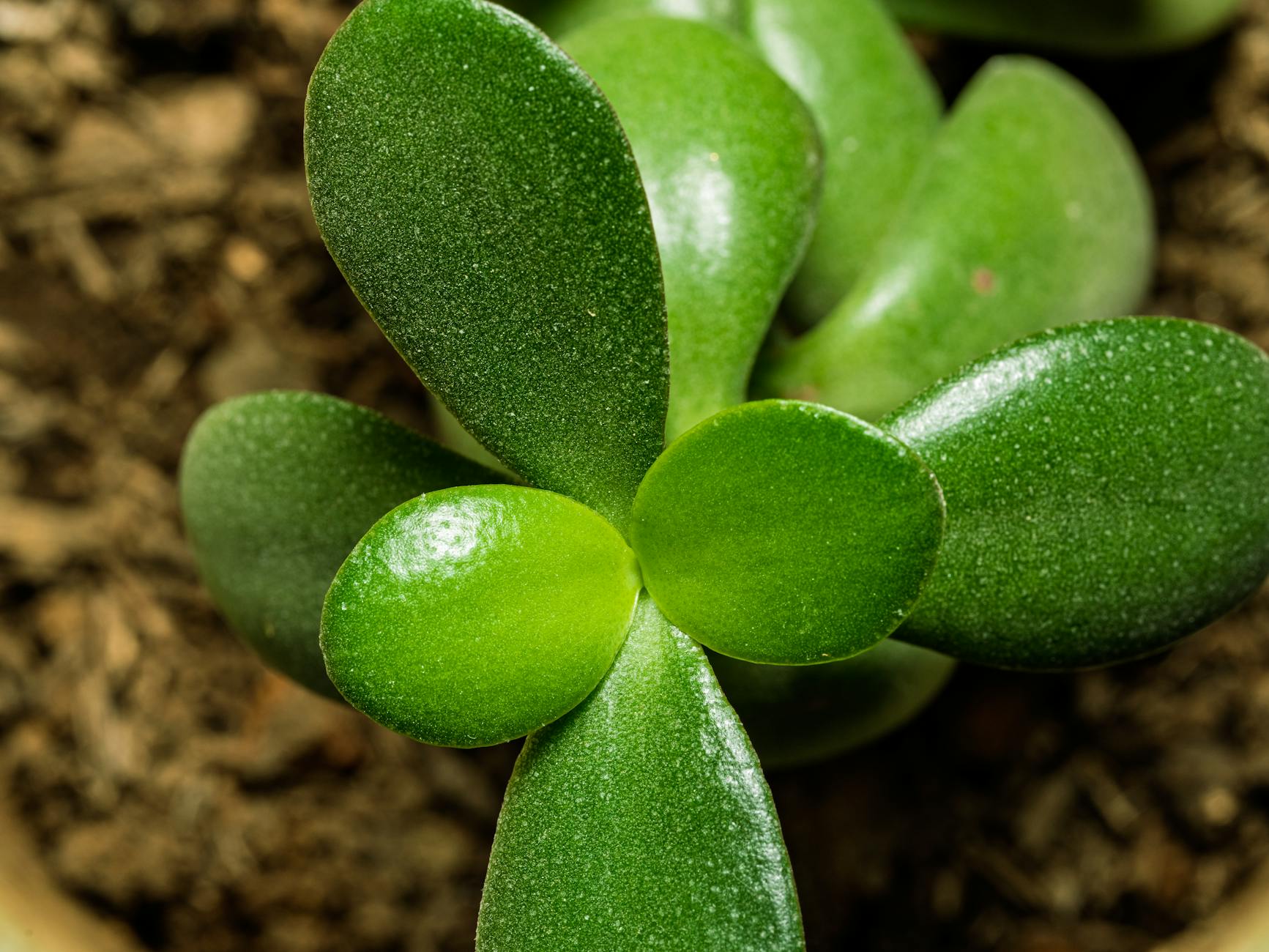
Sedum morganianum · Last updated June 2026 · Photo by Orhan Akbaba on Pexels