Plant Care Guide
Heartleaf Philodendron Care: The Complete Guide
Heartleaf Philodendron (Philodendron hederaceum) is a trailing tropical vine native to Central America, known for its glossy heart-shaped leaves, vigorous climbing or trailing habit, and high tolerance of low light. Water when the top 3–5 cm of soil dries out, typically every 7–10 days.
Quick facts
Philodendron hederaceum is the easiest climbing aroid available. It is frequently sold alongside Pothos and marketed as an identical type of plant — both trail, both tolerate low light, both root effortlessly in water. They are not the same plant. Pothos leaves have a waxy texture and a distinct ridge along the leaf stem; Philodendron leaves are thinner and matte with a smooth, round stem. The care requirements overlap considerably, but the Heartleaf Philodendron is faster-growing in bright conditions, more humidity-sensitive, and distinctly different when you know what to look for.
At a glance: Heartleaf Philodendron care
- Light: Low to bright indirect. Similar range to Pothos, with more noticeable reward in brighter light.
- Water: When the top 2-3cm of soil is dry.
- Humidity: High. More demanding than Pothos on this point.
- Temperature: 18-27°C ideal. Tolerates briefly to 8°C.
- Toxicity: Toxic to cats, dogs and horses.
- Difficulty: Easy. Forgiving on water and light; less forgiving on humidity.
What is a Heartleaf Philodendron?
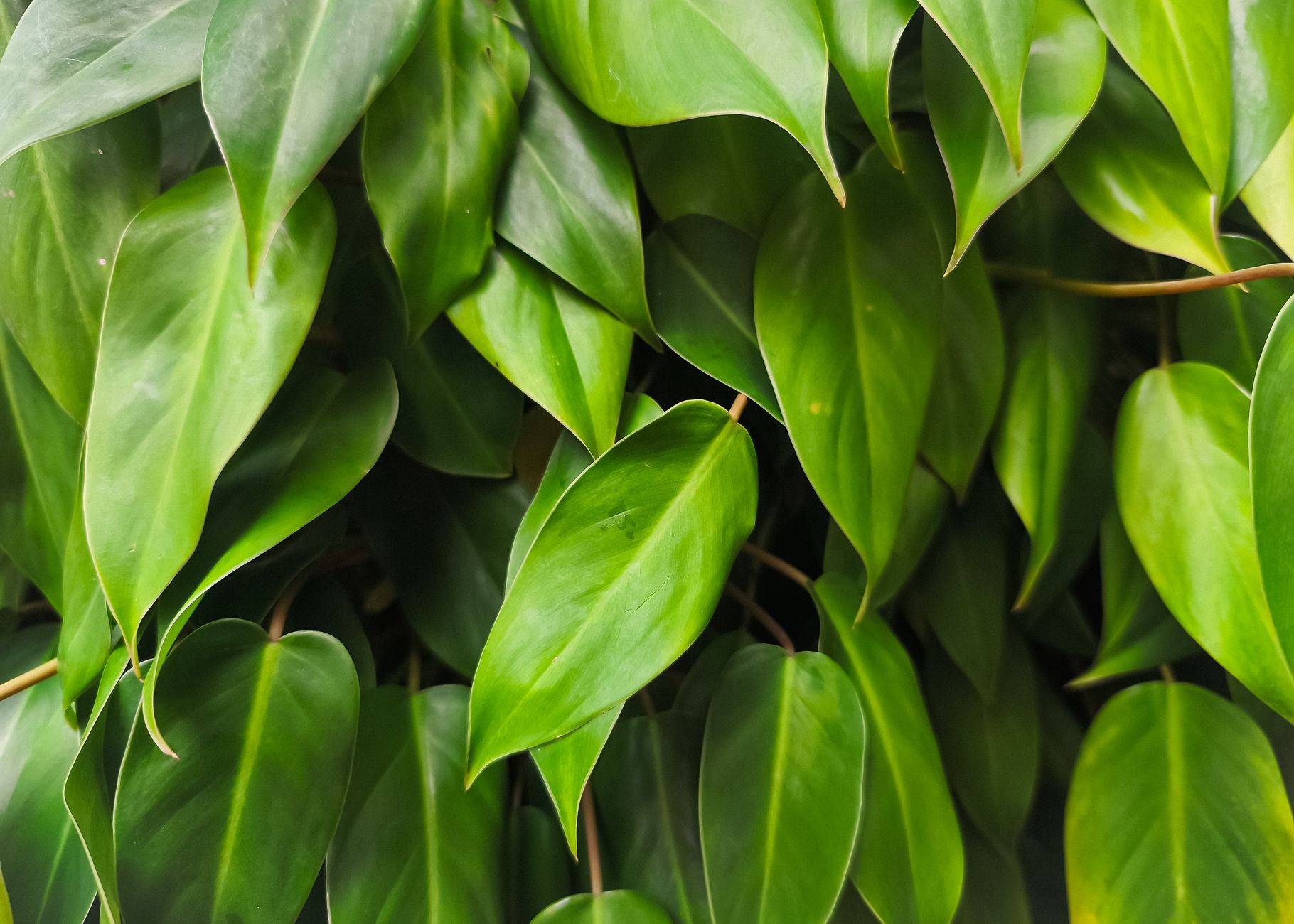
Philodendron hederaceum is native to tropical Central and South America, including Mexico, Brazil, Trinidad, and the Lesser Antilles. It grows in the forest understorey as a climber, using aerial roots to attach to tree trunks and reach higher light. The common name describes the leaf shape precisely: heart-shaped with a pointed tip and a deep notch at the base.
Within the Araceae family, Philodendron is a large genus of over 500 species, most of them tropical climbing or trailing vines. Philodendron hederaceum is the most widely sold species in the genus — the one that most people encounter when they buy a plant labelled simply “Philodendron” — as distinct from the similarly vining Arrowhead Plant, which belongs to a different genus entirely.
The confusion with Pothos (Epipremnum aureum) is old and widespread. Both plants trail from shelves, produce similar-looking heart-shaped leaves, and thrive in similar light conditions. The easiest visual check: Pothos leaves feel slightly waxy and have a visible ridge along the petiole (the stem connecting leaf to vine). Philodendron leaves are thinner, softer, and matte, on a completely smooth, round stem. New Philodendron growth also often emerges from a protective sheath called a cataphyll — a small papery leaf-like structure that wraps around the emerging leaf before it unfurls.
How much light does a Heartleaf Philodendron need?
Philodendron hederaceum handles low to bright indirect light — nearly as wide a range as Pothos. It will survive in a north-facing room and grow well near a bright east- or west-facing window. Unlike Pothos, which can maintain adequate growth in quite dim conditions, the Heartleaf Philodendron produces noticeably larger and darker leaves in brighter settings.
Variegated cultivars require more light. Brasil — with its yellow-green central variegation — needs consistent bright indirect light to maintain the pattern; in low light, new leaves arrive increasingly solid green.
Signs your Heartleaf Philodendron needs more light:
- New leaves arriving distinctly smaller than older ones
- Increasing gaps between leaves on new stems
- Variegation fading or disappearing on Brasil
- Stems stretching toward the window rather than growing outward
Signs of too much direct sun:
- Yellowing or bleached patches on leaves
- Brown, scorched edges
- Leaves wilting even when the soil is moist
Morning sun from an east-facing window is acceptable. Direct afternoon sun should be filtered or avoided.
How often to water a Heartleaf Philodendron
Water when the top 2-3cm of soil is dry, then water thoroughly until it drains freely. In a warm room in summer, this is typically every 5-7 days. In winter or a cooler room, every 10-14 days is normal.
The Heartleaf Philodendron is slightly more moisture-sensitive than Pothos — it does not handle prolonged drought as gracefully. Letting the soil dry out completely and stay dry for more than a few days causes brown tips and may trigger some leaf drop. The goal is consistently moist-but-not-wet soil, not extreme cycles of wet and dry.
Signs of overwatering:
- Yellow leaves, typically starting with older leaves at the base of the stem
- Mushy, soft stem sections near the soil
- A sour smell from the potting mix
- Soil staying wet more than a week after watering
Signs of underwatering:
- Leaves losing their firm, slightly waxy feel
- Stems drooping or lacking rigidity
- Brown tips appearing on newer growth
- Soil pulling away from the pot edges
The right humidity for a Heartleaf Philodendron
The Heartleaf Philodendron prefers high humidity — 60% or above — and is more demanding on this point than Pothos. In average home humidity (40-50%), it grows fine but the leaf tips are more likely to brown. In the dry air of heated winter rooms (below 30-35%), brown tips become consistent and growth slows.
Practical options:
- Group the plant with other plants to slightly raise local humidity
- Use a pebble tray with water beneath the pot
- Run a humidifier nearby in winter — the most effective solution for a humidity-sensitive plant
- Keep it away from radiators and heating vents, which dry the air aggressively
Misting has a negligible effect on actual humidity but is harmless.
Best temperature range for a Heartleaf Philodendron
Philodendron hederaceum grows best between 18-27°C and tolerates brief drops to around 8°C — more cold-tolerant than many tropical aroids. Growth slows significantly below 15°C.
What to avoid:
- Cold drafts directly on the plant
- Prolonged temperatures below 12°C
- Sudden temperature shifts
The plant handles warm rooms well. In warm, humid conditions it grows visibly faster than in cool or dry settings.
The best soil and pot for a Heartleaf Philodendron
A chunky, well-draining potting mix works best. A standard indoor mix improved with 15-20% perlite, or a purpose-made aroid mix, allows the roots to breathe and prevents waterlogging. Avoid dense, moisture-retaining mixes that stay wet for long periods.
A drainage hole is essential. Like most aroids, the Heartleaf Philodendron is susceptible to root rot in consistently wet conditions.
The plant grows moderately fast and will fill a pot in 1-2 years. When roots are visible at the drainage hole or circling the surface of the soil, move up to a container 2-3cm larger.
When and how to fertilize a Heartleaf Philodendron
Fertilize monthly during spring and summer with a balanced liquid fertilizer at half the recommended strength. The Heartleaf Philodendron responds well to regular feeding with noticeably larger leaves and faster growth. Stop in autumn and skip winter.
Skip the first 4-6 weeks after repotting into fresh mix.
How to propagate a Heartleaf Philodendron
Stem cuttings root easily in water — the same process as Pothos.
- Identify a healthy stem with at least one node — a small bump on the stem where roots will grow — and one or two leaves.
- Cut just below the node with clean scissors. Remove any leaves that would sit below the waterline.
- Place the cutting in a glass or jar of water in indirect light.
- Change the water every 5-7 days.
- Roots appear in 2-3 weeks — typically faster than Pothos under similar conditions.
- Pot up once roots are 3-5cm long.
The cataphyll sheath that wraps around new growth on the parent plant contains nodes — cuttings with a node but no visible leaf will still root and eventually produce new leaves.
Climbing on a moss pole produces larger leaves. Given vertical support to grip with its aerial roots, a Heartleaf Philodendron develops leaves noticeably larger than the trailing form. Attach the vines loosely and allow the aerial roots to find the pole — within a few months the plant anchors itself.
Is Heartleaf Philodendron toxic to pets?
Yes, Philodendron hederaceum is toxic to cats, dogs and horses. Like all aroids in the Philodendron and Epipremnum genera, the leaves and stems contain calcium oxalate crystals, which cause:
- Immediate burning and irritation in the mouth and throat
- Excessive drooling and pawing at the mouth
- Difficulty swallowing
- Occasional vomiting
The symptoms are painful but rarely life-threatening for healthy adult animals. If a pet has chewed on the plant, rinse their mouth with water and contact a vet if symptoms persist. Keep the plant out of reach of animals that chew houseplants — the trailing habit makes it particularly accessible.
Cultivars at a glance
Philodendron hederaceum 'Brasil'
Yellow-green variegation in the centre of each leaf. Vibrant and fast-growing. Needs more light than the plain species.
Philodendron hederaceum 'Micans'
Velvety, bronze-tinted leaves that catch light dramatically. Slightly slower growing but same easy care.
Quick problem look-up
Yellow leaves
Overwatering is the primary cause of yellow leaves in heartleaf philodendrons, especially if multiple leaves yellow at once. Check soil moisture before watering; it should feel slightly dry at the surface. Allow the top 2 centimeters of soil to dry between waterings. If roots are dark and mushy, root rot has begun and the plant needs repotting. In winter, reduce watering frequency significantly. Ensure pots have drainage holes.
Small or pale new leaves
Insufficient light produces small, pale new leaves. Move your philodendron closer to a bright window with indirect light for noticeably larger growth within 4 to 6 weeks. Bright, filtered light from an east or west-facing window is ideal. Avoid direct afternoon sun, which can scorch foliage. Distance from the light source directly affects leaf size and plant vigor.
Brown leaf tips
Brown leaf tips result from low humidity or inconsistent watering. In dry winter air, humidity management makes the biggest difference — maintain it by misting foliage weekly or placing the pot on a pebble tray above water. In other seasons, focus on not letting the soil dry out completely between waterings. Grouping plants together also raises ambient humidity naturally around all specimens.
Long stems with sparse leaves
Leggy stems with sparse leaves indicate insufficient light. The plant stretches toward available light sources. Relocate it to a brighter spot within 60 centimeters of a window receiving indirect light. Prune long stems to encourage bushier growth from lower nodes. New shoots develop faster with improved light conditions over several weeks.
Do you ever wonder when your plant needs water or feeding?
GreenIQ tracks it per plant and reminds you at the right moment — adjusted to the season, not a fixed day.
Free, no account, no tracking.
Download GreenIQYou might also like
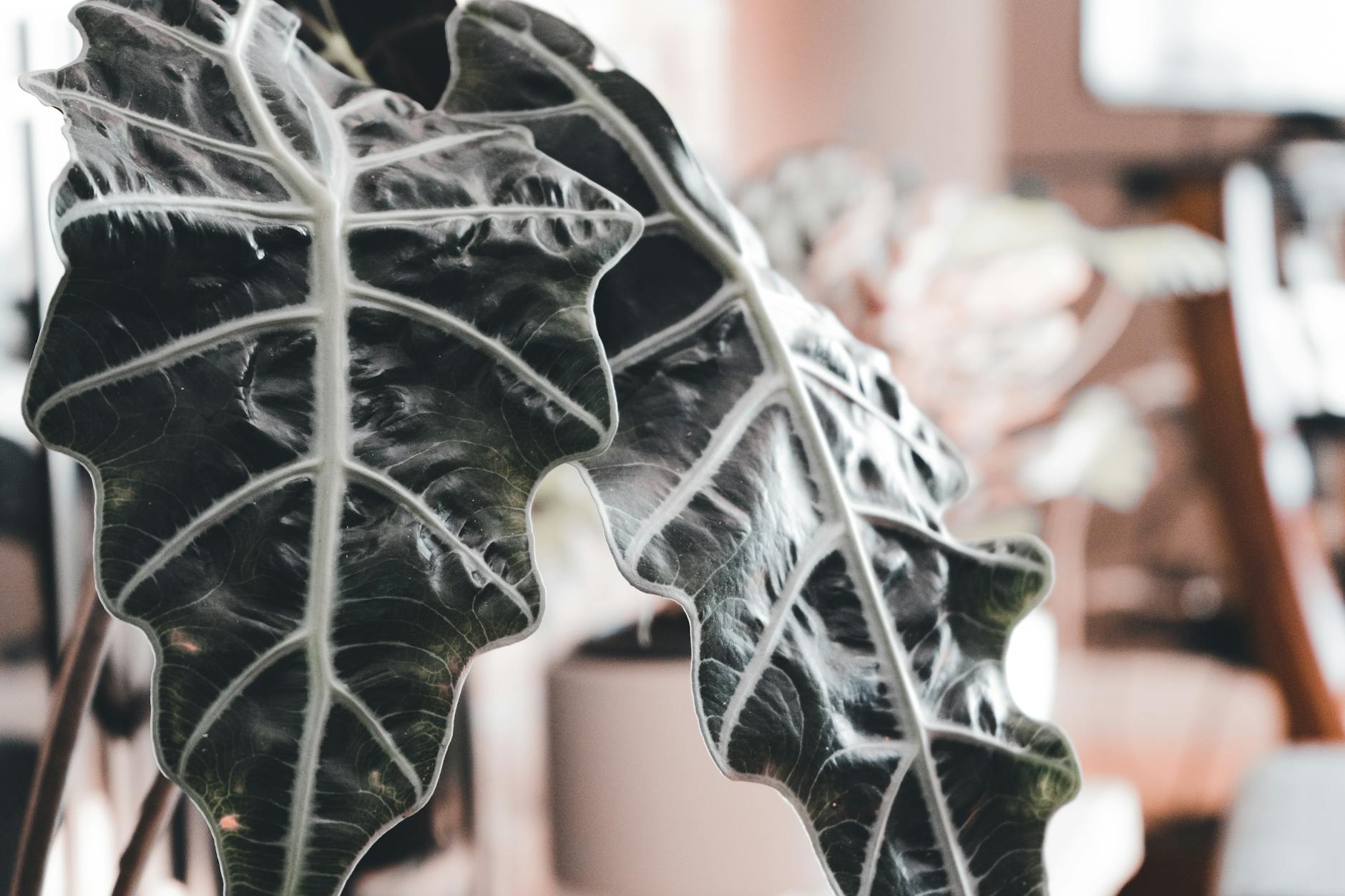
Philodendron hederaceum · Last updated May 2026 · Photo by Ahmad Fauzi Al Faridi on Pexels