Plant Care Guide
Chinese Money Plant Care: The Complete Guide
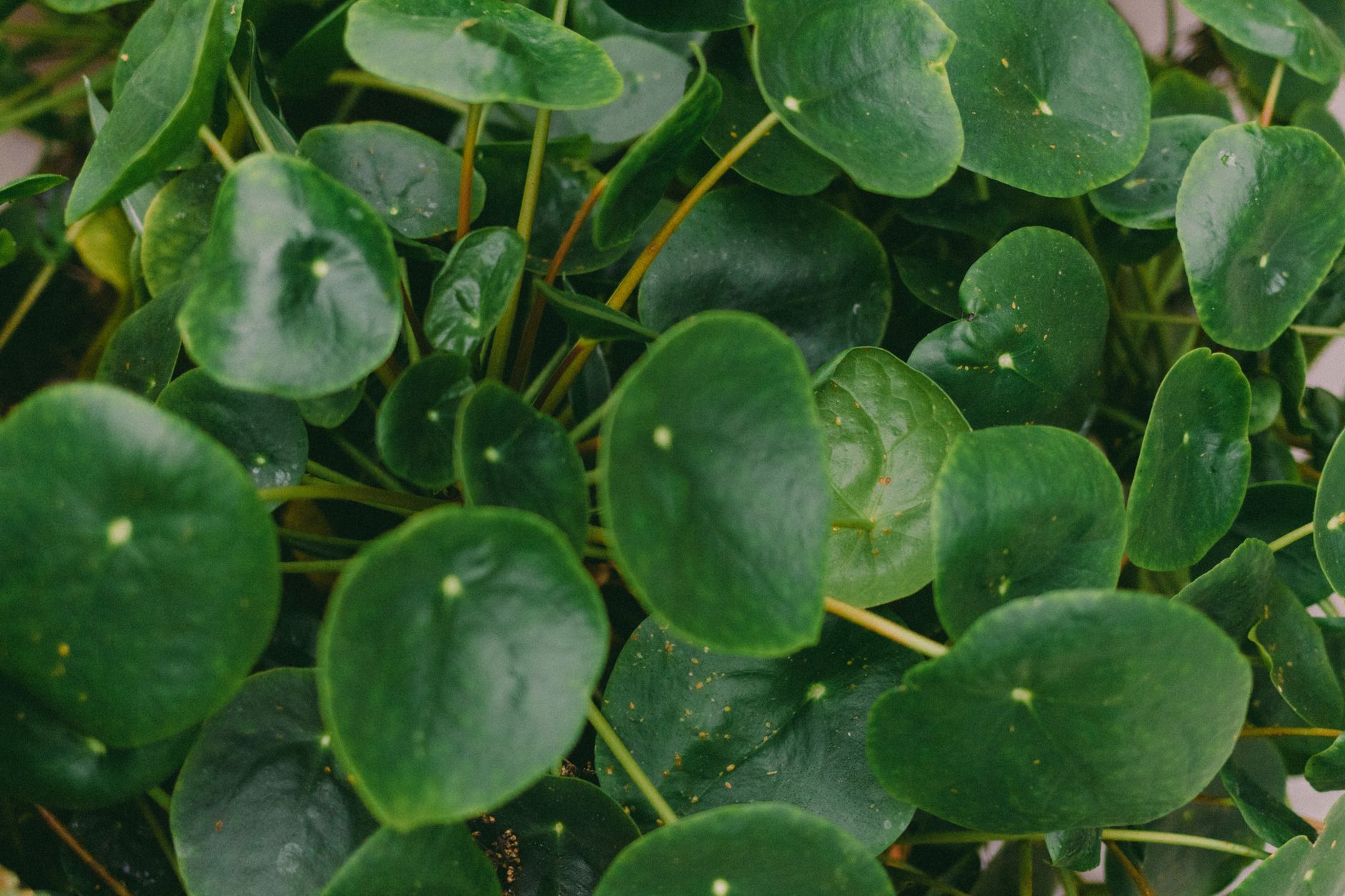
Chinese Money Plant (Pilea peperomioides) is a compact upright perennial native to the Yunnan province of southwest China, known for its round coin-shaped leaves on slender stems, prolific production of offsets, and tidy bushy growth habit. Water when the top 2–3 cm of soil dries out, typically every 7–10 days.
Quick facts
Until around 2014, Pilea peperomioides was almost impossible to buy in Europe. No commercial grower was producing it at scale, and the plant spread instead through a network of private cuttings — a small plant passed from one person to another, its origin often traced back to cuttings brought from China by a Norwegian missionary in the 1940s. The species had existed in botanical collections since George Forrest collected it in Yunnan in 1906, but it was not formally described until 1978. By 2010, it was a shared secret between collectors; by 2020, it was in every garden centre. That trajectory — from obscure to ubiquitous in under a decade — is the backstory behind every Chinese Money Plant sold today.
At a glance: Chinese Money Plant care
- Light: Bright, indirect. Needs more light than commonly assumed.
- Water: When the top 2-3cm of soil is dry.
- Humidity: Medium. More tolerant than most ornamental houseplants.
- Temperature: 15-27°C. Handles cooler temperatures better than tropical aroids.
- Toxicity: Non-toxic. Safe for cats, dogs and horses.
- Difficulty: Medium. The main challenges are light sufficiency and preventing the lopsided growth that happens without rotation.
What is a Chinese Money Plant?
Pilea peperomioides is native to Yunnan and Sichuan provinces in southwestern China, where it grows in the rocky, shaded understoreys of mountain forests at elevations of 1,500-3,000 metres. That altitude explains its tolerance of cooler temperatures — it is more accustomed to cool, humid mountain conditions than the warm tropical climates most houseplants come from.
Pilea belongs to the family Urticaceae — the nettle family — which is frequently confused with Araceae (the aroid family that includes Monstera, Pothos, and Philodendron). The two families are unrelated. Urticaceae is characterised by small, insignificant flowers and includes plants as diverse as stinging nettles, hemp, and mulberry. Pilea peperomioides is non-toxic to pets — unlike most visually dramatic houseplants, which are aroids with calcium oxalate crystals.
The name “peperomioides” means “resembling Peperomia” — a reference to the similar round, pancake-shaped leaves, though the two plants are unrelated. The various common names (UFO Plant, Pancake Plant, Chinese Money Plant, Amish Friendship Plant) all reference either the round leaf shape or the tradition of sharing cuttings.
The Amish Friendship Plant name reflects the plant’s spread through personal networks. In communities without access to commercial plant shops, it passed hand-to-hand — the same mechanism by which it spread through European houseplant collections decades before it reached garden centres.
How much light does a Chinese Money Plant need?
Pilea peperomioides needs bright, indirect light — more than many care guides suggest. In insufficient light, the round leaves become progressively smaller and the stems elongate as the plant reaches toward the nearest source. The characteristic lopsided, leaning shape that many owners accept as normal is a light and rotation problem, not the plant’s natural habit.
A spot near an east- or west-facing window is ideal. A bright south-facing window with a sheer curtain is also suitable. A north-facing room without supplemental light usually produces the leaning, undersized growth that makes the plant less appealing.
One specific requirement: rotate the pot regularly. Pilea peperomioides grows strongly toward the light source, and without rotation, it will lean decisively in one direction and produce leaves predominantly on the light-facing side. Rotating 90° every week or two maintains the symmetrical, upright shape.
Signs your Chinese Money Plant needs more light:
- Leaves growing progressively smaller on new growth
- Stems elongating rapidly between leaves
- The plant leaning toward the window at a significant angle
- New leaves arriving flat rather than slightly cupped upward
Signs of too much direct sun:
- Pale or bleached patches on leaf surfaces
- Leaf edges turning brown and crispy
- Leaves appearing washed out rather than deep green
How often to water a Chinese Money Plant
Water when the top 2-3cm of soil is dry, then water thoroughly until it drains freely. In a warm, bright room in summer, this is typically every 7-10 days. In winter, every 14-21 days is common.
The round leaves of the plant cup slightly upward when the plant is thirsty — a subtle but reliable indicator that watering is needed soon. More dramatically, the leaves begin to curl or droop when significantly underwatered. Both states recover quickly after watering.
Signs of overwatering:
- Yellow leaves, particularly affecting lower, older leaves first
- Soft, dark sections at the base of stems near the soil
- Soil remaining wet for more than 10 days
- A sour smell from the potting mix
Signs of underwatering:
- Leaves cupping more than normal, then curling or drooping
- Soil dry throughout, pulling away from the pot sides
- The smallest, newest leaves losing their firmness first
The right humidity for a Chinese Money Plant
Pilea peperomioides is comfortable at medium humidity — 40-60% — the range typical of most homes. Unlike Calathea, Alocasia, or Monstera adansonii, it does not require special humidity management in most indoor environments. It handles the drier air of centrally heated winter rooms better than most ornamental houseplants.
In very dry conditions (below 30%), the leaf edges may begin to brown slightly. Moving the plant away from heating vents is usually sufficient.
Best temperature range for a Chinese Money Plant
Pilea peperomioides grows best between 15-27°C — a somewhat cooler range than most tropical houseplants. It tolerates brief drops to 10°C. The mountain origin of the species means it is less sensitive to cooler temperatures than most houseplants, and can be kept in slightly cooler rooms (15-18°C) without problems.
What to avoid:
- Frost, which will kill the plant
- Cold drafts from open windows in winter, which cause leaf curl and drop
- Temperatures consistently above 30°C without adequate watering — the plant wilts faster in heat
The best soil and pot for a Chinese Money Plant
A standard, well-draining potting mix works well. Improve with 10-15% perlite to prevent the soil staying wet for extended periods. Avoid heavy, peat-dense mixes.
A drainage hole is essential. Root rot from accumulated moisture is the most common serious problem with this plant.
The Chinese Money Plant grows quickly when young and fills a pot with roots in 1-2 years. When roots are visible at the drainage hole or the plant is clearly root-bound, move up to a container 2-3cm larger.
When and how to fertilize a Chinese Money Plant
Fertilize monthly during spring and summer with a balanced liquid fertilizer at half the recommended strength. The plant is a moderate feeder and grows well with regular fertilizing. Stop in autumn and skip winter.
Skip the first 4-6 weeks after repotting into fresh mix.
How to propagate a Chinese Money Plant
The Chinese Money Plant is one of the most straightforward plants to propagate — the method that made it famous.
Mature plants produce plantlets at the base — small complete plants emerging from the soil around the main stem, growing from the root system. These are the “pups” that gave the plant its “friendship plant” reputation.
- Wait until the plantlet is at least 5-8cm tall with visible leaves.
- Clear some soil from around the plantlet to see where it connects to the root system.
- Cut the connection with clean scissors as close to the main root as practical.
- Pot the plantlet in fresh, moist potting mix in a small container.
- Keep in bright indirect light. The plantlet may droop for a few days while re-establishing — water lightly and wait.
A healthy, well-lit mature plant can produce 3-5 plantlets per growing season. Remove them promptly once large enough — leaving many plantlets in the parent pot crowds the root system and reduces the health of the main plant.
Is Chinese Money Plant toxic to pets?
No — Pilea peperomioides is non-toxic to cats, dogs and horses. The plant is not an aroid and contains none of the calcium oxalate crystals found in Monstera, Pothos, Philodendron, and related species. It is safe in households with animals.
This makes it a useful choice for plant owners who want an unusual, visually distinct houseplant without the pet-safety concerns that eliminate most ornamental options. The round-leafed, upright shape is distinct from everything else in a typical plant collection.
Quick problem look-up
Leggy or lopsided growth
Insufficient light causes stretching stems as the plant searches for brightness. Rotate your Pilea 90 degrees every seven days to ensure all sides receive equal exposure. Position it within 1.5 meters of a north or east-facing window. Leggy growth typically indicates the plant needs more illumination or consistent light distribution throughout its environment.
Yellow leaves
Yellow leaves result from overwatering or inadequate light. Allow soil to dry 2-3 centimeters between waterings. Check drainage holes function properly. Move your Pilea closer to bright, indirect light—ideally within 1.5 meters of a window. Remove severely yellowed leaves. Recovery typically takes three to four weeks with correct care adjustments.
Curling or cupping leaves
Curling leaves indicate underwatering or temperature stress below 13 degrees Celsius. Water immediately when soil feels dry 2 centimeters down. Maintain temperatures between 16-24 degrees Celsius consistently. Move the plant away from cold windows, heating vents, and air conditioning drafts. Leaves should uncurl within five to seven days after proper watering resumes.
No plantlets forming
Young Pileas rarely produce plantlets; wait until your plant reaches two to three years old. Mature plants in bright, indirect light naturally develop offset pups at soil level. Ensure adequate monthly fertilization during growing season at half strength. Once pups appear with two or three leaves, detach carefully and propagate in moist potting soil separately.
Do you ever wonder when your plant needs water or feeding?
GreenIQ tracks it per plant and reminds you at the right moment — adjusted to the season, not a fixed day.
Free, no account, no tracking.
Download GreenIQMore plants like this
Similar plants with comparable care needs or aesthetic.
You might also like
Pilea peperomioides · Last updated May 2026 · Photo by Maria Tyutina on Pexels