Plant Care Guide
Rubber Plant Care: The Complete Guide
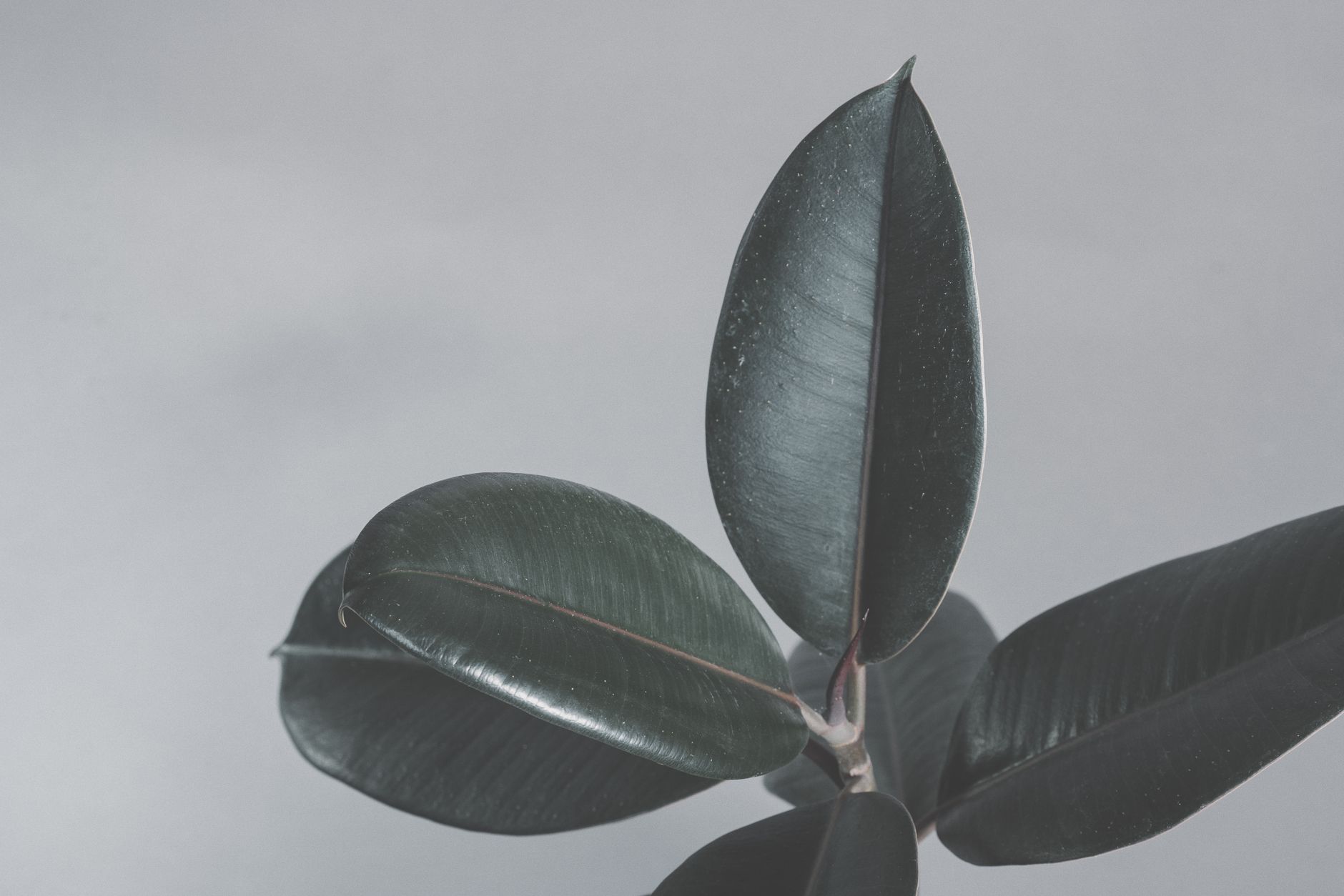
Rubber Plant (Ficus elastica) is a tropical tree native to northeast India and Indonesia, known for its large glossy oval leaves, upright tree-like growth indoors, and tolerance of medium to bright indirect light. Water when the top 3–5 cm of soil dries out, typically every 7–10 days.
Quick facts
The Rubber Plant has been a houseplant for over 150 years. Victorian conservatories kept it for its large, glossy leaves and its tolerance of uneven heat from coal-fired rooms. Those same qualities — wide light tolerance, forgiving watering, architectural presence — are why it remains in every garden centre today. The Fiddle Leaf Fig of the same genus dominated social media for a decade; the Rubber Plant has outlasted every trend without needing one.
At a glance: Rubber Plant care
- Light: Bright, indirect light. Tolerates lower light than variegated cultivars.
- Water: When the top 2-3cm of soil is dry.
- Humidity: Medium. More tolerant of dry air than most large-leaf houseplants.
- Temperature: 18-30°C ideal. Tolerates down to 10°C briefly.
- Toxicity: Toxic to cats, dogs and horses.
- Difficulty: Medium. Easier than the Fiddle Leaf Fig of the same genus, but sensitive to cold and drafts.
What is a Rubber Plant?
Ficus elastica is native to the tropical forests of northeast India, Nepal, and Malaysia, where it grows as a large canopy tree reaching 30-40 metres. Indoors it typically reaches 1.5-3 metres over several years, making it one of the larger houseplants that can be practically managed in a residential space.
The “Rubber” in its name comes from the white latex sap produced by all Ficus species. Before Hevea brasiliensis (the Para Rubber Tree from South America) became the commercial source of natural rubber in the 19th century, Ficus elastica sap was used for the same purpose — hence the common name. The latex in houseplant specimens is still a mild irritant and requires gloves when pruning.
Ficus elastica belongs to the same genus as the Fiddle Leaf Fig (Ficus lyrata). The two are frequently compared because they occupy similar visual roles in a room — tall, architectural, large-leafed. The Rubber Plant is the more forgiving of the two: it tolerates position changes better, handles lower light better, and recovers from underwatering without leaf drop. The care overlap is significant, but the Rubber Plant has a wider margin of error.
The cultivar range expanded significantly in the 2010s and 2020s. The green-leaved species has been joined by Tineke (cream and pink variegation), Ruby (burgundy to near-black), and Abidjan (deep dark green, almost black). Variegated forms require more light to maintain their colouring.
How much light does a Rubber Plant need?
Ficus elastica grows best in bright, indirect light. A spot near a south- or west-facing window, shaded from direct midday sun, produces the best growth and deepest colouring. An east-facing window with bright morning sun works well for most cultivars.
The green-leaved species tolerates lower light than the variegated forms. Tineke and Ruby need consistent bright light to maintain their colour patterns — in lower light, Tineke’s pink markings fade toward white or disappear, and Ruby’s burgundy leaves revert to darker green.
Signs your Rubber Plant needs more light:
- Stems growing leggy with increasing gaps between leaves
- Leaves arriving smaller than older ones
- Variegated cultivars losing their colour pattern
- Very slow growth during spring and summer
Signs of too much direct sun:
- Pale, bleached patches on leaf surfaces
- Brown, scorched edges or tips
- Leaves curling slightly in strong afternoon sun
How often to water a Rubber Plant
Water when the top 2-3cm of soil is dry, then water thoroughly until water drains from the bottom. Empty the saucer. In a warm, bright room this is typically every 7-10 days in summer; every 2-3 weeks in winter.
One practical note specific to Rubber Plants: the large, glossy leaves collect dust efficiently. Dust blocks light and reduces photosynthesis. Wipe the leaves with a damp cloth every few weeks — it is one of the more worthwhile maintenance tasks for this plant, and the visual improvement is immediate.
Signs of overwatering:
- Yellow leaves, typically starting with lower, older leaves
- Soft, mushy stem sections at the base
- A sour smell from the potting mix
- Soil remaining wet for more than 10 days after watering
Signs of underwatering:
- Leaves losing their glossy firmness, appearing slightly dull
- Older leaves dropping before newer ones
- Soil very dry, pulling away from the pot sides
The right humidity for a Rubber Plant
Ficus elastica is comfortable at medium humidity — 40-60% — and is one of the more tolerant large-leaf houseplants when it comes to dry winter air. It handles central heating conditions without the immediate deterioration that plants like Calathea or Monstera adansonii show.
In very dry conditions (below 30%), leaf edges may begin to brown. Moving the plant away from heating vents and radiators is usually sufficient.
Best temperature range for a Rubber Plant
Ficus elastica grows best between 18-30°C and tolerates brief drops to 10°C. Cold drafts — rather than sustained cold — are the more common trigger for leaf drop. A Rubber Plant in a warm room that gets occasional blasts of cold air from an opening window will drop leaves; a Rubber Plant in a cooler but stable 15°C room will not.
What to avoid:
- Cold drafts from exterior doors and windows
- Positioning against an exterior wall in winter
- Moving the plant repeatedly — like the Fiddle Leaf Fig, Rubber Plants prefer stability, though they handle moves better
The best soil and pot for a Rubber Plant
A standard, well-draining indoor potting mix works well, improved with 15-20% perlite. Avoid heavy, peat-dense mixes that retain moisture for a long time.
A drainage hole is essential. The latex-producing Ficus species are susceptible to root rot in waterlogged soil.
As the plant grows tall — which it will, over several years — pot stability becomes a consideration. Heavy ceramic or terracotta pots are better choices than lightweight plastic, which a 1.5-metre plant will tip easily.
When and how to fertilize a Rubber Plant
Fertilize monthly during spring and summer with a balanced liquid fertilizer at half the recommended strength. The Rubber Plant is a moderate feeder. During active growth in summer, you can increase to full strength if the plant is growing vigorously and has been in the same pot for more than a year.
Stop fertilizing in autumn and skip winter. Skip the first 4-6 weeks after repotting.
How to propagate a Rubber Plant
The latex sap is an irritant — wear gloves throughout. Allow any cut surface to dry briefly before placing in water or soil.
By stem cuttings:
- Cut a stem below a leaf node, leaving 1-2 leaves on the cutting.
- Wipe the cut end with a dry cloth to remove excess latex, then allow to air-dry for 30 minutes.
- Place the cutting in a glass of water or directly in moist potting mix.
- Keep in a warm spot with indirect light. Roots appear in 4-8 weeks.
By air layering (for an established branch):
- Select a healthy stem and remove a leaf below the chosen point.
- Make a shallow wound in the stem, apply rooting hormone, and pack with wet sphagnum moss.
- Wrap the moss in clear plastic, sealed at both ends.
- Roots develop in 4-8 weeks. Cut below the rooted section and pot up.
Pruning encourages branching. Left unpruned, Ficus elastica grows as a single upright trunk. Cutting the growing tip redirects energy to side buds, producing a fuller, branched plant. The removed top can be propagated immediately.
Is Rubber Plant toxic to pets?
Yes, Ficus elastica is toxic to cats, dogs and horses. The plant contains a latex-based sap that causes:
- Oral and gastrointestinal irritation if ingested
- Drooling, vomiting, and loss of appetite
- Skin and eye irritation on direct contact with the sap
The sap is released from all cut or damaged surfaces — including fallen leaves. If you prune the plant, collect the cuttings and fallen leaves promptly. If a pet has chewed on the plant, rinse their mouth with water and contact a vet if symptoms develop. Wear gloves yourself when pruning.
Cultivars at a glance
Ficus elastica 'Tineke'
Pink, green and cream variegation on each leaf. Striking but needs more light to maintain the variegation pattern.
Ficus elastica 'Ruby'
Burgundy red to near-black leaves. Brighter light develops the deepest colour.
Ficus elastica 'Abidjan'
Very dark, almost black-green leaves. The most dramatic of the non-variegated types.
Quick problem look-up
Leaves dropping
Leaf drop occurs from cold drafts below 13°C, overwatering causing root rot, or sudden environment changes. Rubber plants dislike disruption, but unlike the Fiddle Leaf Fig, they typically produce new leaves from the same stem after a drop rather than needing to regrow from scratch. Maintain consistent warmth, allow soil to dry between waterings, and avoid moving the plant frequently. Provide bright, indirect light and stable conditions.
Yellow leaves
Yellow leaves typically indicate overwatering or poor light exposure, especially during winter months. Check soil moisture before watering; it should dry out slightly between sessions. Ensure your plant receives bright, indirect light for at least 6 hours daily. Reduce watering frequency in cooler months and improve air circulation around the plant.
Brown leaf edges
Brown leaf edges signal low humidity or inconsistent watering patterns. Your rubber plant requires humidity around 50 percent. Mist leaves weekly, place on a pebble tray with water, or use a humidifier. Water thoroughly when top 2 centimeters of soil dry out, maintaining consistent moisture without waterlogging the root zone.
Leggy, stretched growth
Leggy, stretched growth results from insufficient light reaching the plant. Move your rubber plant within 1 meter of a bright window receiving indirect sunlight for 6 to 8 hours daily. Prune back long stems to encourage bushier branching. Rotate the plant every 2 weeks for even light distribution and compact development.
Do you ever wonder when your plant needs water or feeding?
GreenIQ tracks it per plant and reminds you at the right moment — adjusted to the season, not a fixed day.
Free, no account, no tracking.
Download GreenIQYou might also like
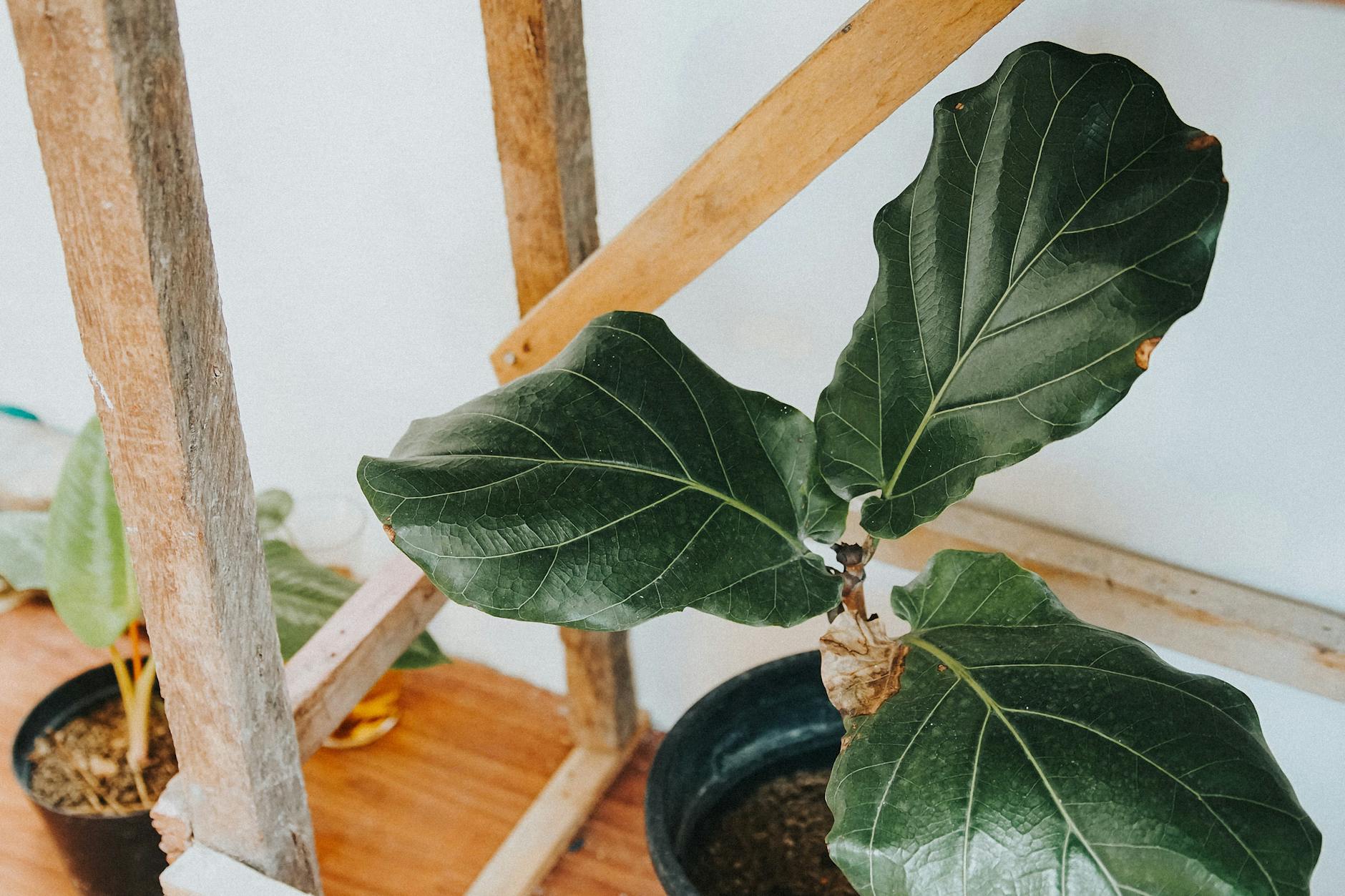
Ficus elastica · Last updated May 2026 · Photo by Scott Webb on Pexels