Plant Care Guide
Boston Fern Care: The Complete Guide
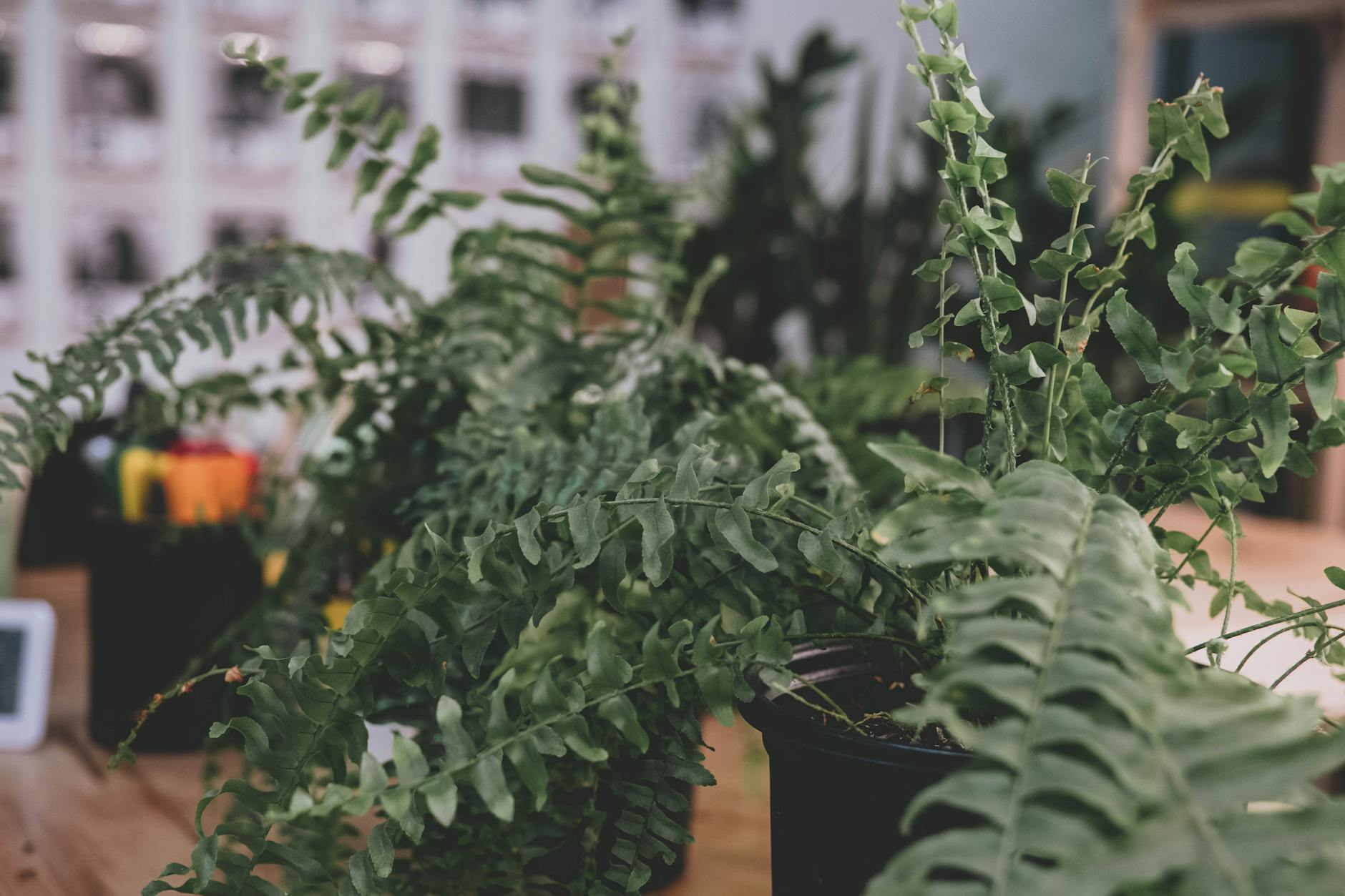
Boston Fern (Nephrolepis exaltata) is a humidity-loving fern native to tropical regions of the Americas, known for its arching feathery fronds, dense bushy growth habit, and demand for consistent moisture and high humidity. Water when the top 1–2 cm of soil begins to dry, typically every 4–7 days.
Quick facts
A Boston Fern sheds fronds when stressed, and it does so immediately and in volume. A plant that was full and lush in the shop can drop half its fronds within days of arriving in a dry home. This is not a sign that the plant is dying — it is a stress response to low humidity, and it reverses once the humidity problem is addressed — unlike a Maidenhair Fern, whose crisped fronds never recover. Understanding that response is the most useful thing to know about this plant before buying one: it communicates distress loudly, recovers quickly when conditions improve, and the care challenge is almost entirely about managing the air around it rather than the soil under it.
At a glance: Boston Fern care
- Light: Bright, indirect. More light than the Bird’s Nest Fern, less than most flowering plants.
- Water: Consistently moist. Never let the soil dry out completely.
- Humidity: High. 50-80% is the target range. This is the decisive factor.
- Temperature: 16-24°C ideal. Cooler than most tropical houseplants.
- Toxicity: Non-toxic. Safe for cats, dogs and horses.
- Difficulty: Medium. Forgiving on light and water; unforgiving on humidity.
What is a Boston Fern?
Nephrolepis exaltata is native to tropical and subtropical regions across the Americas, Africa, and Polynesia — a genuinely pantropical distribution that reflects the species’ age and adaptability. In its natural habitat it grows in humid understoreys and on forest floors, in conditions of high moisture, filtered light, and warm stable temperatures.
The “Boston” name refers not to any geographical origin but to a specific mutation. In 1894, a Boston florist named F.C. Becker discovered an unusually full-frond variant among a shipment of N. exaltata from Florida. This plant — now known as the Boston Fern or Nephrolepis exaltata ‘Bostoniensis’ — became the foundation of the cultivated fern trade and remained the dominant houseplant fern for over a century.
It was a staple of Victorian conservatories and parlours, where it thrived in the consistently humid, moderately lit conditions those spaces provided. It fell somewhat out of fashion through the mid-20th century but has returned to prominence in modern interiors, particularly as hanging baskets in kitchens and bathrooms where ambient humidity tends to be higher.
The Boston Fern featured in NASA’s 1989 Clean Air Study as one of the more effective plants at removing formaldehyde and xylene from enclosed spaces. The real-world air-purification effect in a well-ventilated home is modest, but the finding established a reputation that has persisted.
How much light does a Boston Fern need?
Nephrolepis exaltata needs bright, indirect light — more than the Bird’s Nest Fern, but no direct sun. A spot near an east- or north-facing window, or a metre back from a south- or west-facing window, is ideal. The fronds can handle the bright ambient light of a well-lit room; they cannot handle direct sun without scorching.
Signs your Boston Fern needs more light:
- Fronds becoming pale or yellowish rather than deep green
- New growth arriving sparse and small
- Very slow recovery after dividing or repotting
Signs of too much direct sun:
- Brown, scorched patches on individual pinnae (the small leaf segments along each frond)
- Fronds drying and curling at the tips despite adequate humidity
- Bleaching of the overall frond colour
How often to water a Boston Fern
Boston Ferns need consistently moist soil. Unlike most houseplants, the soil should not be allowed to dry out between waterings — the fronds are fragile and respond to drought stress quickly with browning and dropping.
Water when the top 1-2cm of soil feels dry, ensuring water penetrates the whole root ball and drains freely. In a warm room in summer, this may mean every 2-3 days for a large plant in a hanging basket — hanging baskets dry out faster than pots on surfaces. In winter, every 4-7 days is more typical.
Check the soil daily during the first few weeks in a new location — Boston Ferns in hanging baskets are easy to underwater because the volume of soil is small relative to the size of the plant.
Signs of overwatering:
- Yellow fronds throughout the plant rather than just at the tips
- Fronds becoming limp and dropping despite wet soil
- A sour smell from the potting mix
Signs of underwatering:
- Brown tips and edges appearing across the fronds
- Fronds curling inward along their length
- The soil pulling away from the pot edges and feeling dry throughout
The right humidity for a Boston Fern
High humidity — 50-80% — is the Boston Fern’s decisive care requirement. In humidity below 40%, frond drop is nearly inevitable. In the dry air of a centrally heated room in winter, the plant sheds fronds rapidly and consistently.
Practical approaches, in approximate order of effectiveness:
- A bathroom with adequate light is the most consistently suitable location — daily shower steam maintains high humidity naturally, the same trick that works for mounted ferns like the Staghorn Fern
- A room humidifier running nearby in winter is the most reliable active solution
- Grouping with other plants raises ambient humidity slightly
- A pebble tray with water beneath the hanging basket or pot contributes modest humidity at the leaf level
One commonly effective approach: place the Boston Fern in a humid location (bathroom, kitchen) through winter and move it to a brighter, more visible location in summer when central heating is not actively drying the air.
Best temperature range for a Boston Fern
Nephrolepis exaltata grows best in a slightly cooler range than most tropical houseplants: 16-24°C ideal. It handles temperatures up to about 27°C without damage, but above that the fronds begin to stress faster in combination with any humidity deficit.
What to avoid:
- Temperatures below 10°C for extended periods
- Cold drafts from windows, exterior doors, or air conditioning vents
- Hot, dry air from heating vents directed at the plant — a common cause of frond drop that is often mistaken for humidity problems
The best soil and pot for a Boston Fern
A peat-free, moisture-retaining mix works best. A standard indoor mix with 10-15% coir (coconut fibre) retains appropriate moisture while still draining adequately. Avoid very chunky, fast-draining aroid mixes that dry out too quickly.
Boston Ferns are commonly sold and grown in hanging baskets, which is well-suited to their arching, outward-spreading habit. Hanging baskets dry out faster than grounded pots — this is the main reason Boston Ferns in hanging baskets need more frequent watering.
A drainage hole is essential. Consistently moist does not mean waterlogged.
When and how to fertilize a Boston Fern
Fertilize every 2 months during spring and summer with a balanced liquid fertilizer at half the recommended strength. Boston Ferns do not need heavy feeding — excess fertilizer causes salt accumulation that burns the frond tips, adding to the tip-browning already caused by low humidity.
Stop in autumn. Skip winter. Skip the first 4-6 weeks after repotting.
How to propagate a Boston Fern
Two methods work reliably.
By division:
- Remove the plant from its pot and gently separate the root ball into sections, each with fronds and roots attached.
- Pot each section in fresh, moist potting mix.
- Keep in a humid, warm location out of direct sun for 2-3 weeks while roots re-establish.
- Expect some frond drop immediately after division — this is normal.
By runners:
Boston Ferns produce stolons — thin horizontal stems that grow out from the base and carry small plantlets at their tips, similar to strawberry runners. These plantlets can be:
- Pinned into a small pot of moist mix adjacent to the parent plant.
- Left attached until rooted (2-4 weeks), then cut free.
Runners are produced most prolifically in spring and summer. A healthy Boston Fern can produce dozens of runners in a growing season.
Is Boston Fern toxic to pets?
No — Nephrolepis exaltata is non-toxic to cats, dogs and horses. The Boston Fern contains no known toxic compounds and is safe in households with animals. It is one of the few large, visually impressive houseplants that can be placed without concern for pet safety.
The feathery fronds may attract cats in particular. A chewed frond is not harmful, though the fern itself will look worse for it.
Cultivars at a glance
Nephrolepis exaltata 'Kimberly Queen'
Upright, compact fronds that stand outward rather than arching down. More structured and less messy than the standard form.
Nephrolepis exaltata 'Dallas'
Compact variety with slightly thicker fronds. More tolerant of lower humidity than standard Boston Ferns — a good choice for drier homes.
Quick problem look-up
Frond shedding and drop
Boston Ferns shed fronds dramatically when humidity falls below 50 percent — but don't mistake normal frond replacement, where old fronds drop as new ones emerge, for this problem; some shedding is always normal. Increase humidity by misting daily, grouping plants together, or placing on a pebble tray with water. Keep the plant away from heating vents and air conditioning. Consistent moisture and warmth between 16 and 21 degrees Celsius help prevent further frond loss.
Brown or crispy fronds
Brown crispy fronds result from low humidity, inconsistent watering, or exposure to hot dry air — crisping from the tip inward points to humidity or watering, while brown patches in the middle of the frond usually mean direct sun. Water when the top 2 centimeters of soil feel slightly dry but never allow complete drying. Maintain humidity above 60 percent by misting twice daily. Remove brown fronds at the base and keep the plant away from heating sources.
Yellow fronds
Yellow fronds typically indicate overwatering or insufficient light. Check soil moisture first—it should feel like a wrung-out sponge. Reduce watering frequency and ensure the plant receives bright indirect light for six to eight hours daily. Yellowing lower fronds are normal and can be trimmed. Water less during cooler months.
Scale insects or mealybugs
Scale insects and mealybugs thrive in dry conditions. Inspect frond undersides and stem joints weekly. Spray affected areas with a 70 percent isopropyl alcohol solution or neem oil spray every seven to ten days for three weeks. Increase humidity to 60 percent to discourage pest populations. Isolate infested plants from other specimens.
Do you ever wonder when your plant needs water or feeding?
GreenIQ tracks it per plant and reminds you at the right moment — adjusted to the season, not a fixed day.
Free, no account, no tracking.
Download GreenIQMore plants like this
Similar plants with comparable care needs or aesthetic.
You might also like
Nephrolepis exaltata · Last updated May 2026 · Photo by Joshua Mcknight on Pexels