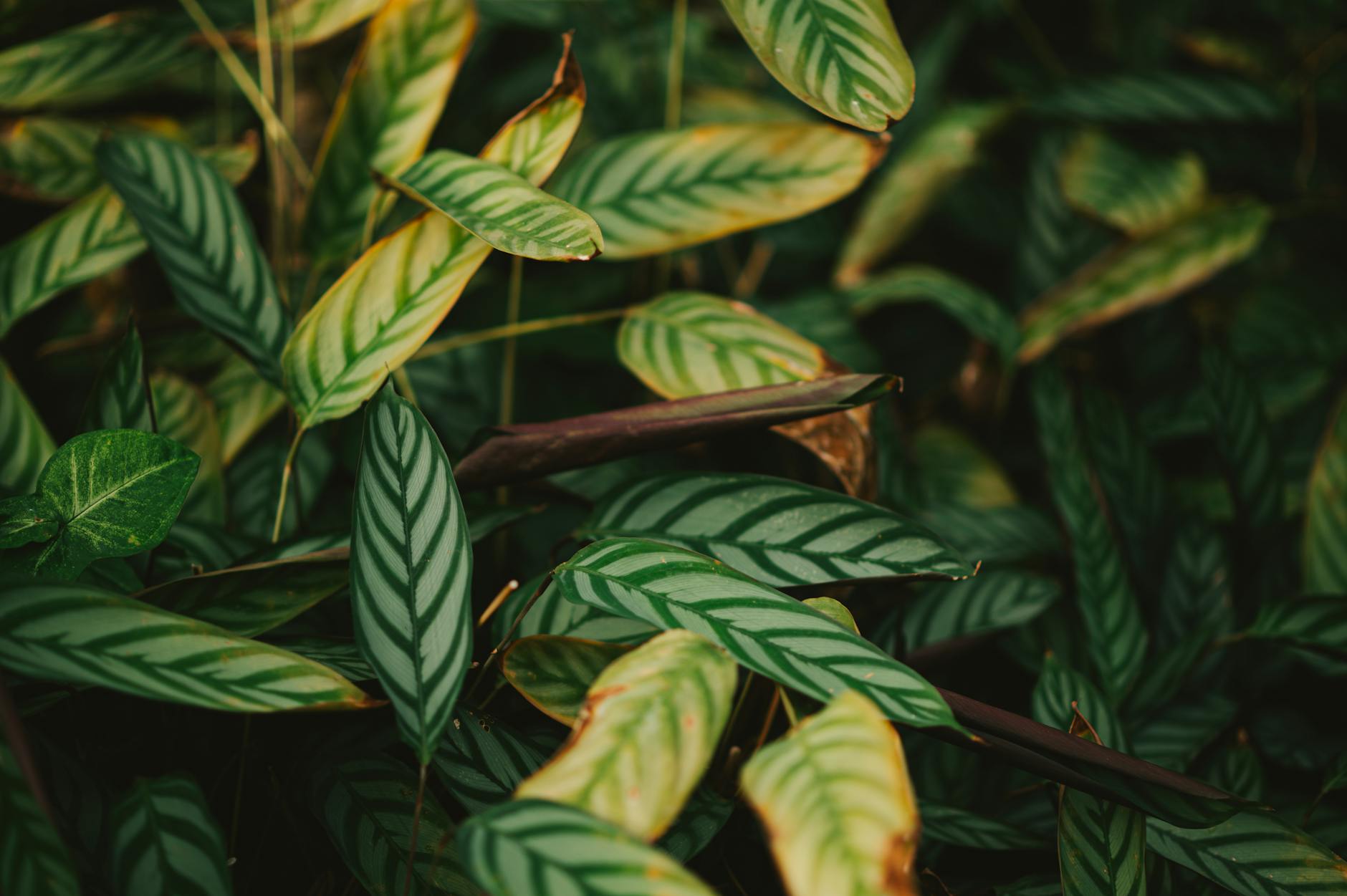
Plant Care Guide
Rattlesnake Plant Care: The Complete Guide
Rattlesnake Plant (Goeppertia insignis) is a tropical prayer plant native to the rainforests of northeast Brazil, known for its long wavy-edged leaves marked with alternating dark-green spots and purple undersides, distinctive nightly leaf-folding movement, and demanding humidity requirements above 60 percent. Water when the top 2–3 cm of soil begins to dry, typically every 5–7 days.
Quick facts
Every night, Goeppertia insignis folds its leaves upward and closes them toward vertical. By morning they have opened again. This movement — nyctinasty — is common to all prayer plants, but in the Rattlesnake Plant the leaves are long and wavy enough that the folding is visible from across the room. A plant that stops folding at night is a plant under stress, almost always from low humidity. It is also non-toxic to cats, dogs, and horses, which sets it apart from most other ornamental foliage plants. The challenge is humidity. Get that right, and the rest is straightforward.
At a glance: Rattlesnake Plant care
- Light: Medium, indirect — no direct sun.
- Water: Keep soil consistently moist, never soggy.
- Humidity: High — 60%+ required for good leaf condition.
- Temperature: 15-30°C, no cold drafts.
- Toxicity: Non-toxic to cats, dogs, and horses.
- Difficulty: Medium. Demanding about humidity, straightforward otherwise.
What is a Rattlesnake Plant?
Goeppertia insignis belongs to the family Marantaceae and is native to the tropical rainforests of Brazil. It was classified as Calathea lancifolia for most of its horticultural history, and that name is still widely used in commerce and online — both names refer to the same plant. The reclassification of many Calathea species into the genus Goeppertia occurred in 2012 based on molecular analysis. If you are searching for care information online, either name will return the same plant.
The species name insignis means “remarkable” or “distinguished” in Latin — a reference to the distinctive leaf pattern. The common name “Rattlesnake Plant” describes the dark green blotching on the leaves, which resembles the scale pattern of a rattlesnake’s skin.
Like all members of the Marantaceae family, Goeppertia insignis is a “prayer plant” — the leaves fold upward at night in a movement called nyctinasty. This is a normal response to light changes and an indicator of a healthy plant. A Rattlesnake Plant that no longer folds its leaves at night is often a sign of very low humidity or stress.
How much light does a Rattlesnake Plant need?
Goeppertia insignis needs medium, indirect light. Unlike many houseplants, it is genuinely adapted to lower light conditions — in its natural habitat it grows in the deep shade of tropical forest understorey. Direct sun will bleach and scorch the leaves within days.
A spot a metre or two back from a south- or west-facing window, or near an east- or north-facing window, works well. Avoid positions in direct sunbeams. In very low light (deep interior rooms with no natural light), growth will essentially stop.
Signs your Rattlesnake Plant needs more light:
- Very slow or no new growth during spring or summer
- Leaves becoming smaller and losing their pattern intensity
- The plant producing new growth but remaining very compact
Signs of too much direct sun:
- Bleached, pale patches on the upper leaf surface
- Crispy, papery leaf edges
How often to water a Rattlesnake Plant
Goeppertia insignis wants consistently moist soil — not saturated, but never allowed to dry out completely. This places it in a different category from succulents, dracaenas, and pothos, which prefer to dry out between waterings. The goal is even, consistent moisture.
Water when the top 1-2cm of soil begins to feel dry, before the soil dries deeper. Use filtered, distilled, or collected rainwater if possible — Goeppertia insignis is sensitive to the minerals (fluoride, chlorine) in tap water, which accumulate in the soil and cause the brown leaf edges and tips that are one of the most common complaints about this plant.
In summer, watering every 4-7 days is typical. In winter, every 7-10 days.
Signs of overwatering:
- Yellow leaves, starting with lower leaves
- Soft, mushy stems near the soil
- Soil staying wet for more than a week between waterings
Signs of underwatering:
- Leaves curling or rolling inward along their length
- Slightly limp stems
- Soil dry 2-3cm down
The right humidity for a Rattlesnake Plant
High humidity is the most critical care factor for Goeppertia insignis. It needs 60% relative humidity or higher to maintain leaf condition. Below 50%, the leaf edges begin browning. Below 40%, the leaves deteriorate quickly and the night-folding movement becomes less pronounced.
A humidifier positioned near the plant is the most effective solution — the same fix used for a Calathea Ornata or Maidenhair Fern. A pebble tray filled with water beneath the pot provides some local humidity but is rarely sufficient on its own in centrally heated rooms. Grouping plants together helps. Bathrooms with bright windows can work well.
Misting is generally not recommended for Goeppertia insignis — the fine droplets evaporate quickly and do not significantly raise ambient humidity, but they can leave mineral spots on the leaves (particularly with hard tap water) and create conditions for fungal issues.
Best temperature range for a Rattlesnake Plant
Goeppertia insignis is comfortable between 15-30°C. It is not cold-tolerant — below 15°C growth slows, and below 10°C the leaves develop cold damage and may collapse. Drafts, even warm drafts, cause stress and brown edges.
What to avoid:
- Temperatures below 15°C for sustained periods
- Cold drafts from windows, air conditioning, or doors
- Placing near a radiator — the dry, hot air causes the same browning as low humidity
- Sudden temperature changes
The best soil and pot for a Rattlesnake Plant
A well-draining peat-based mix with 20-30% perlite works well. The peat retains moisture between waterings while the perlite ensures the roots never sit in truly saturated soil. Standard potting compost without amendment tends to hold too much moisture.
A drainage hole is essential. Choose a pot that fits the root ball snugly — excess soil retains more moisture than the roots can use, increasing the risk of root rot. Terracotta dries out faster than plastic; plastic or glazed ceramic retains moisture longer and may require less frequent watering.
Repot every 2 years in spring, or when roots begin circling the base of the pot.
When and how to fertilize a Rattlesnake Plant
Feed monthly during spring and summer with a balanced liquid fertilizer at half the recommended strength. Goeppertia insignis is sensitive to salt build-up in the soil — always use half strength. Stop in autumn and skip winter. Flush the soil with plain water every few months to wash out accumulated mineral salts.
How to propagate a Rattlesnake Plant
Division is the only practical method for home propagation.
- Remove the plant from its pot in spring.
- Gently separate the root clump into sections — each section should have at least 2-3 stems with roots attached.
- Cut any connecting roots between sections with a clean sharp knife if needed.
- Pot each section in fresh moist potting mix.
- Keep warm (above 20°C) with high humidity for 2-4 weeks while the divisions establish. A clear plastic bag over the pot helps maintain humidity.
Divisions typically recover quickly and produce new growth within 4-6 weeks.
Is Rattlesnake Plant safe for pets?
Yes — Goeppertia insignis is non-toxic to cats, dogs, and horses. This is one of the few genuinely pet-safe houseplants with interesting, patterned foliage. It is a safe choice for households with animals that chew on plants.
The Marantaceae family as a whole is non-toxic — other prayer plants like Maranta leuconeura (Prayer Plant) and Stromanthe sanguinea are also pet-safe. If you are specifically looking for pet-safe options with dramatic foliage, this family is worth exploring.
Quick problem look-up
Brown leaf edges
Brown edges develop when humidity falls below 50 percent or when mineral salts from tap water accumulate on leaf tips. Switch to distilled or filtered water immediately, and flush the soil periodically with plain water to clear existing salt buildup. Place your plant on a pebble tray filled with water, ensuring the pot sits above the waterline. Mist leaves twice weekly with distilled water. Consider running a humidifier to maintain 60 to 70 percent humidity.
Brown leaf tips
Brown tips indicate either low humidity or fluoride sensitivity from tap water. Replace tap water with distilled water completely. Increase ambient humidity above 60 percent using a humidifier, pebble tray, or grouping plants together. Trim affected leaf tips with clean scissors. The plant requires consistently moist air to thrive, so misting every two to three days helps prevent new damage from developing.
Yellow leaves
Yellow leaves signal overwatering and root stress. Allow the top 2 centimeters of soil to dry between waterings. Ensure your pot drains freely with drainage holes. Use well-draining indoor plant soil mixed with perlite. Water only when the soil surface feels dry to touch, typically every seven to ten days depending on light and temperature conditions.
Curling or rolling leaves
Curling leaves indicate the plant is conserving moisture due to underwatering or extremely low humidity below 40 percent. Water thoroughly when the top centimeter of soil feels dry. Increase humidity immediately by misting daily with distilled water and placing a humidifier within one meter of the plant. New growth should uncurl within two to three weeks once conditions improve significantly.
Do you ever wonder when your plant needs water or feeding?
GreenIQ tracks it per plant and reminds you at the right moment — adjusted to the season, not a fixed day.
Free, no account, no tracking.
Download GreenIQYou might also like
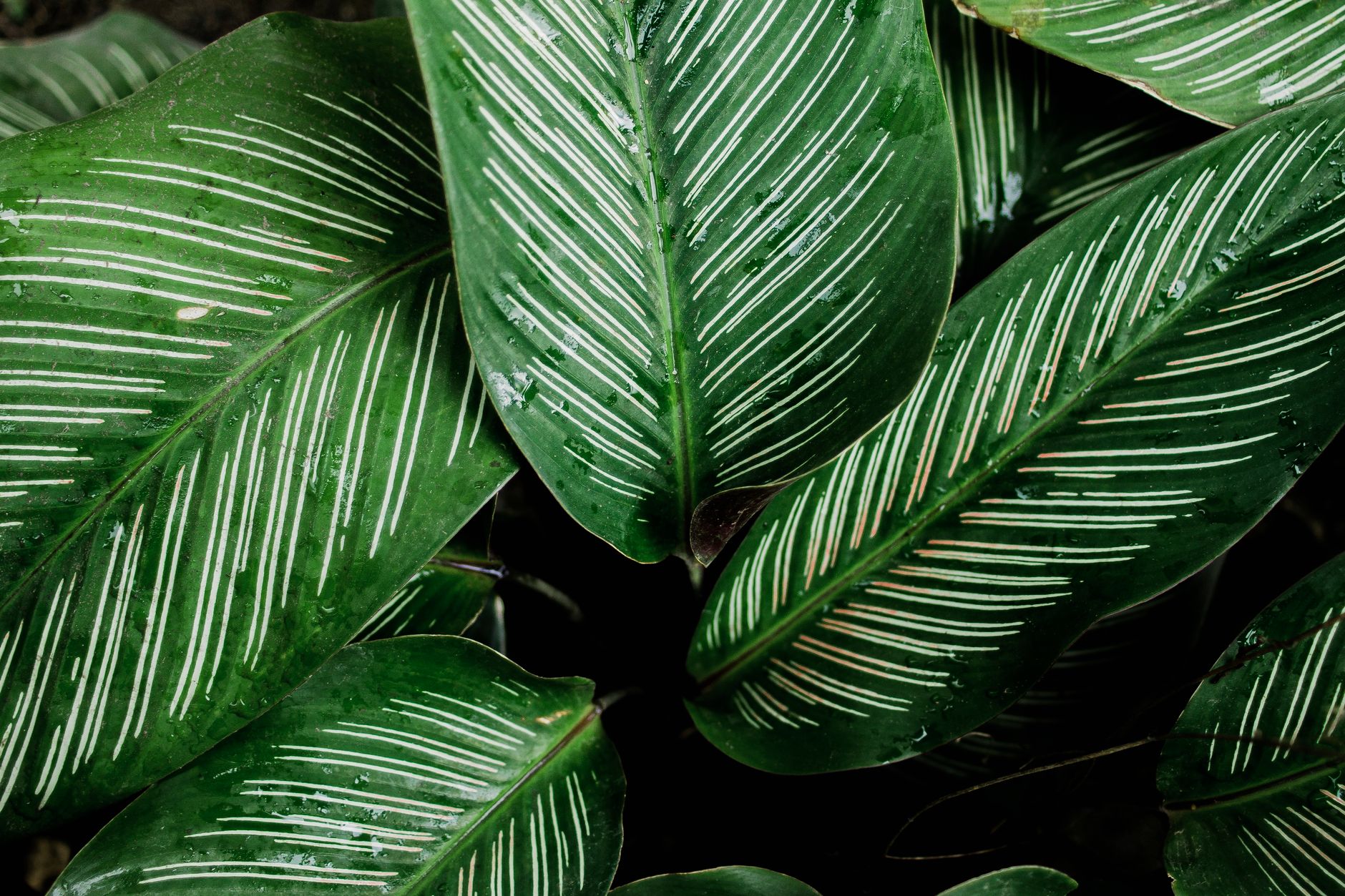
Goeppertia insignis · Last updated May 2026 · Photo by Jilly Noble on Pexels